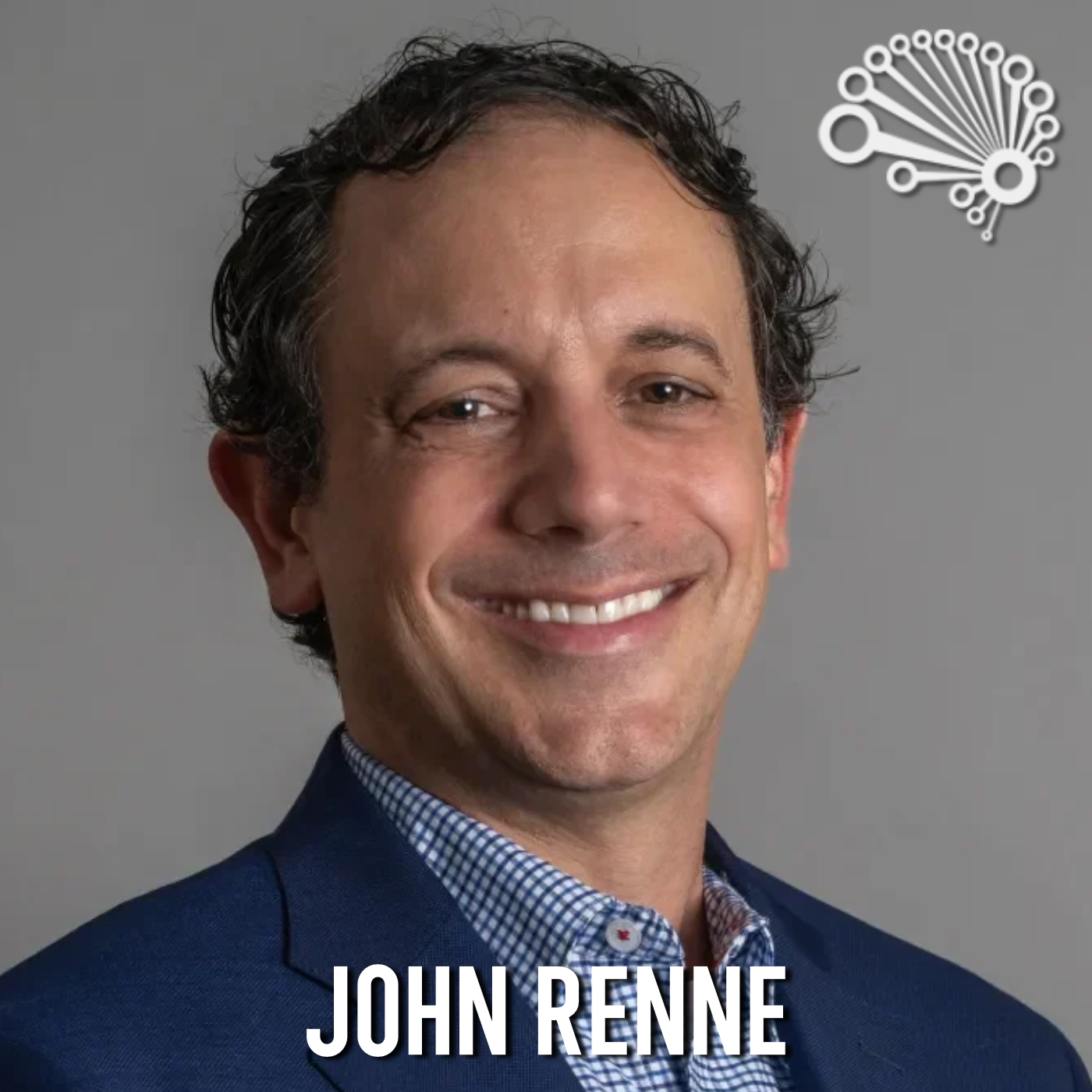
Jon Krohn: 00:00:00 What if two hours of work could replace a multi-year half million dollar research grant? Today’s guest, a professor at a prestigious university says AI has made that his new normal. Welcome to episode number 1039 of the Super Data Science podcast. I am your host, Jon Krohn. Today’s guest is Dr. John Renne, professor of real estate and urban planning at Tulane University, where he directs the real estate development program. John is a world-leading expert on walkable communities, and even though he was already a tenured full professor, he went back to school for a master’s in AI. In this episode, John explains how AI let him scale up his urban planning research by orders of magnitude, how computer vision is playing a role in real estate, and how his startup uses AI to tackle the scourge of students’ AI-written essays. Enjoy this one. This episode of Super Data Science is made possible by Anthropic, Dell, Nvidia, Origin, and Palo Alto Networks.
00:00:55 John, welcome to the Super Data Science podcast. What a treat to have you on the show. How’s it going?
John Renne: 00:01:00 Great, John. It’s wonderful to be here. I’ve been a longtime listener, so it’s a real pleasure and honor to be a guest on your show.
Jon Krohn: 00:01:09 Yeah, that’s how we actually know each other, I suppose. So through you listening to the podcast, you reached out to me about a year ago and then I did an hour long presentation. Well, I did a half hour presentation plus half an hour of Q&A with you on stage at a Tulane University event in the Northern Hemisphere spring of this year. And that led to you asking me to teach with you an innovative new course at Tulane. And so now I’m adjunct faculty at Tulane. We’re going to talk about that course later on, but I really appreciate the connection, really appreciate you reaching out.
John Renne: 00:01:44 Yeah. It’s interesting the power of telecommunications. I learned about you because my professor assigned your book, Deep Learning Illustrated, and then recommended your podcast. And that was about five or six years ago. I started listening and learning a tremendous amount because it was brand new to me. Everything was brand new to me. I don’t have a background in computer science until I started this journey as a second master’s. But as an avid listener, I was at Tulane and we were planning a AI conference and I said, “Well, we got to have John Crohn as a speaker and you certainly did not disappoint. So thank you for coming to New Orleans.”
Jon Krohn: 00:02:37 It was great. Also, my first trip ever to New Orleans and had a great time as well. Stayed for a weekend after. It was not the Jazz Fest. That was a week or two later. It was a French Quarter Fest,
John Renne: 00:02:48 Which was great. A lot of people don’t know the French Quarter Fest is better than Jazz Fest in many ways because it is free. Jazz Fest is expensive. I highly recommend Jazz Fest as well and Mardi
Jon Krohn: 00:03:01 Gras. Yeah. It’s not like it was small. It’s hard for me to imagine that Jazz Fest would be bigger than French Quarter Fest because everywhere you went in the French Quarter, there were stages. There were dozens of stages with music playing all day. And because it was free, you could just go around anywhere you wanted and just take a punt. Yeah, really cool experience. But let’s talk about how you’re a professor and you were just talking about how you recently had a professor. So it’s kind of an interesting thing. So you are a professor of real estate and urban planning at Tulane and you direct Tulane’s real estate development program. But while you were already an academic, so established for decades as a university professor going climbing up the ranks assistant associate to full professor, you decided at some point during your career that you needed to go back to school and do a master’s in AI while keeping your full-time role as a professor.
00:04:01 So tell us about the thought process behind that and whether everyone should be doing that if they’re interested in AI.
John Renne: 00:04:08 It’s interesting. I don’t know if everybody needs to do it just because the way in which learning is happening these days, there’s many different ways to learn. I didn’t immediately expect or think about doing a second master’s. What happened was I was supervising PhD students, master’s students, working with junior colleagues from other universities who were assistant professors, kind of new to the field. Like you said, at that point, I was a full professor, tenured and had been basically working for 15 years in those roles. At the time I was at Florida Atlantic University and COVID hit and I had this realization that my data science skills and my statistical skills were really, really out of date. I was using SPSS mainly, and I was also learning other programs like a program called HLM 7.0 and a little bit with a few other major, major statistical packages.
00:05:27 I didn’t know how to code at all. I was asking around, a lot of my colleagues were using R, and some of my students, the younger ones had learned Python and they were just telling me Python is the way to go. I said, I want to be able to be competitive, not be competitive, but to have the same skills that a freshly minted PhD student coming out was having. I really feel like I need to learn Python. I started looking around at these different online certificate programs and I was about to do one of, I think Stanford has a pretty popular online data science program at the time. I decided I was about to start that. Around the same time, Florida Atlantic University launched the first master’s in AI, which is in their computer science department in the state of Florida. So it was the first master’s program offered in the state of Florida.
00:06:31 I kind of knew this, but I didn’t even think about it. I was like, well, I could take classes for free because I was working there and I could take up to six credits, which is basically two classes a semester. I don’t recommend doing two classes a semester. I tried that once and my wife was like, “I don’t know if that’s a good idea.” I had to tell her, “Yeah, you were right like most things.”
Jon Krohn: 00:06:51 It was too much.
John Renne: 00:06:52 It was too much. But I did one class a semester and that was perfect because I really enjoyed learning Python. And so I took two undergraduate classes in Python to be able to be qualified to apply for the master’s program. And then once I got into the master’s program, the first class I took was intro to data science and then I went on from there with a bunch of classes. I’m still just wrapping up right now, literally as we speak, wrapping up my master’s thesis. So I did this very slowly because in all honesty, I didn’t really need it for my career. I’ve really been doing it out of the ability to, A, because I enjoy it and B, because it’s giving me a tremendous boost in my knowledge, which is helping me in all aspects of my career, both inside academia and in several outside academia entrepreneurial projects I’ve been working on.
Jon Krohn: 00:07:55 And we’re going to talk about those too. And so yeah, when you say you didn’t need it, you didn’t need it in the sense of it wasn’t going to affect your tenured faculty position. You already have a PhD, you already have 25 years of research in urban planning under your belt. It’s not like a master’s in AI is going to in that, in your day job, give you some kind of boost, but it’s given you huge amounts of new abilities, magical powers really, as you and I have discussed before.
John Renne: 00:08:31 I think it certainly helped. I’ve been at Tulane now for nearly two years and I had some connections to New Orleans because I spent the first 10 years of my career at what’s now LSU New Orleans. Back then it was called the University of New Orleans, but spent the next 10 years at Florida Atlantic University. And I do think that it did make me very competitive to be able to be selected for the position that I have at Tulane right now. Oh,
Jon Krohn: 00:09:01 Really?
John Renne: 00:09:02 Yeah, because I’m probably one of the first academics out there that was really talking about AI in real estate because I was learning AI. I started really learning AI before it became popular, not long before, but it was certainly before ChatGPT was released and not a lot of people were talking about AI when I first started studying it for the first couple of years. And then obviously now it’s the topic that everybody talks about. So my cousin Nikki always tells me it’s better to be lucky than smart, but it’s even better to be lucky and smart. So I guess I was fortunate to get both.
Jon Krohn: 00:09:47 What inspired you about AI before the ChatGPT moment? What was it about AI that made you certain that this was the future or something that really excited you about it?
John Renne: 00:09:59 In all honesty, I was interested in data science. I have been analyzing for many, many decades large data sets and I love big data, increasingly trying to get as much data as possible. I was mainly using Excel, SPSS and hitting limitations as to what I could do with that data. So I’ve listened to so many of your episodes and bought so many of the books that your guests have recommended. I think it’s Stephanie Moline’s book on pandas and a bunch of other ones that I was exposed to through listening to your show. And so I learned all of so many… I got them sitting here next to me. I learned so many of that. And it’s interesting now because it’s so different with vibe coding today than it was even say a year and a half or two years ago. And I’m so grateful that I have the foundation in understanding things like pandas and geo pandas and all of the network architecture and models for deep learning and machine learning because I think nowadays it’s so easy with vibe coding to just basically get behind the wheel, turn the key and drive the car.
00:11:23 But now I really feel like to me, these models are not as black box because I really feel like I understand how the transmission works and I understand how to understand how the brakes and the intricacies of the engine works. And that gives me a tremendous amount of confidence in doing the work that I’m doing now because obviously we’re not doing pandas today like we were doing three or four years ago.
Jon Krohn: 00:11:51 Yeah. You’re not writing each character in your pandas data frame queries or lines of code anymore, but it is still helpful, I imagine, in the now vibe coding era to not just be, to use your car analogy, to be sitting behind the wheel. You’re not just sitting behind the wheel. You can look under the hood and make sure that everything’s running as you anticipated.
John Renne: 00:12:15 Yeah, exactly. And I could look at the code and I understand what it means. I imagine if somebody was kind of a mid-career professional like myself and doesn’t understand Python and they’re running these models and looking at the output and the coding, it’s like, well, if you don’t understand how to read Python, it’s really hard to understand whether or not your models are doing what they want to do because it’s so dangerous with vibe coding because it does it all for you. But I do think having that fundamental knowledge is so, I feel so grateful that I was able to get that knowledge before this current era. And I went from a data science era to the ChatGPT era, and now we’ve entered the vibe coding era. So I’ve seen this tremendous transition that if we were to look and think about this could have taken decades, but it just happened just a few years.
Jon Krohn: 00:13:22 Yeah. It’s wild to think what we’ll be coming in the coming decade. I recently had Richard Socher on the show who has a bestselling book called The Eureka Machine, and he’s talking about the next decade having as much progress as the previous century.
John Renne: 00:13:40 It’s unbelievable.
Jon Krohn: 00:13:41 Yeah. And we’ve talked about there’s people who think that that’s what they call a slow takeoff scenario.
John Renne: 00:13:49 Well, it’s interesting because I see it in my day-to-day work. So one of my hats that I wear is that I’m a real estate developer and the stuff that I see AI doing now with planning out floor plans and designing buildings, I mean, I would’ve never guessed that it could have ever done what it’s able to do today.
Jon Krohn: 00:14:16 Same. I’ve said online before how finishing my PhD in 2012 in AI, if people had told me in 2026, we’d have these magical abilities to be able to just dictate into our computer and have a web app built in minutes, I’d say that’s crazy. There’s no way we’re going to have that. And it’s interesting because I think when you started data science as well, when you started doing these courses a decade ago, everything was very narrow. You would build a model to do something so specific. You were like, “Okay, we have this training data set that’s labeled in this way, and so it will very narrowly be able to help us out in this very specific situation.” And so this idea of intelligence being so generalizable by taking an architecture like the transformer architecture and just scaling it up, not really having that many breakthroughs in terms of the science of learning, but really just saying, “Okay, this transformer architecture, this ability to attend over large sections of text or pixels, let’s just scale that up and see what happens.” And yeah, OpenAI were the leaders in that initially and just scaling this thing up by orders of magnitude, having more and more transformers on more and more NVIDIA GPUs.
00:15:48 And every time they did that, GPT-2, GPT-3, GPT-4, they were shocked. The people developing these systems were shocked at the heightened levels of intellectual ability, of generalizability that came out of that scaling.
John Renne: 00:16:06 I think that’s incredible. And what I find to me, which is so useful, is how you can ask the model, I don’t understand. I review a lot of academic papers and historically OLS regression models, that’s kind of like the old standard that goes back many decades now. And then increasingly things get more complicated. The models have gotten more complicated. And statistical models, this is even really before the current modern era. And one of the things that’s always bothered me as an academic is how much jargon there is in the academic world. So when you read a paper in a peer reviewed journal, there’s all these terms that it’s hard to understand what they mean. And interestingly, those jargony terms change from subfield to subfield. So if you’re an economist, you may call one thing a certain thing. And if you’re an urban planner, an engineer, or whatever discipline you’re in, those terms change.
00:17:28 And what I find incredibly useful is how you can ask the model, “I don’t understand what that means. Can you explain it to me?” And then it’ll explain it to you and you can say, “Well, just give me an example. Explain it to me like I’m a middle schooler.” And that to me is what’s I call finding a magic genie in a bottle. It answers every question you want. Now it’ll do pretty much any analysis that you want, but it’s just incredible because for many, many decades, academics, the ivory tower academic protected themselves against, I guess, any threats by surrounding themselves by a bunch of jargon. And I’ve never, never liked that of the academic world. And especially when you’re trying to explain it to a bunch of undergrads, you have to be able to explain it in a way that they can understand it because that’s really what learning is all about is understanding and having a common language.
Jon Krohn: 00:18:35 That is the reality that a lot of us are facing now. I mean, for me as a hands-on data science or AI or machine learning practitioner, you talked about Stephanie Molin’s Pandas book, and it was the case five years ago that if you wanted to be working in Pandas, you’d have to read a book like that. And you’d have this knowledge, reading books like that would give you this moat, this technical moat around what you’re doing that would make you difficult to replace, that these are highly desirable skills, relatively complex concepts that not enough people were learning relative to how much demand there was for people with those kinds of data science skills. And now as of, I would say specifically Claude Opus 4.6, which came out in I think February of this year or around that time, since that model’s release, the technical moat around my career is gone.
John Renne: 00:19:33 It’s threatening, but it’s also exciting at the same time. I mean, I think everybody is afraid that AI is going to wipe out every job. And at the same token, we can see a pessimistic future and a bright future. And my wife comes from a farming family in Nebraska, and I always kind of put myself in the mindset if I lived in the late 1800s when the majority of Americans were farmers, could I envision what life would be like today? And probably the answer is no. So how do we envision what life is going to be like in 10, 25, 50, 100 years from now? It can be scary, it can be exciting, but at the end of the day, I think we just got to make the best of it. And we certainly can’t put the genie back in the bottle. That’s not going to be possible.
Jon Krohn: 00:20:26 No. And it’s hard to imagine it slowing down.People talk about scenarios where we’ve got to slow AI research down or we’ve got to have more guardrails, but it’s hard to imagine that happening because if you imagined a scenario where, and this is already a politically impossible situation to imagine, but you say, okay, every Chinese lab, every American lab, even every Russian lab, somehow they all put all their geopolitical issues aside, they agree that AI is such a big threat that they need to stop doing research on it, then there’s still going to be North Korea or somebody who picks up the baton, smuggles some GPUs into North Korea and is able to create this next level of frontier intelligence. Like you’re saying, there’s no way to keep the genie out of the bottle and there’s no way to slow down what’s happening. At least you can’t slow it down everywhere.
John Renne: 00:21:32 So I’m an optimist. I’m probably an eternal optimist, but I do think that I’m very excited for using these tools to help solve very complex problems such as climate change, which I think is one of the biggest existential threats facing everyone in the world equally, whether it’s wildfires or flooding or droughts or whatever it might be. A lot of my work that I’ve done over the years in transportation planning and in trying to build and envision sustainable cities, all of the forecasts are very, very dire about the direction that we’re heading. And having lived both on the Gulf Coast and the Atlantic, I see king tides impacting my hometown here in West Palm Beach, Florida. I split my time between West Palm Beach, Florida and New Orleans, homes in both places, two cities that are very much threatened by climate change. But it’s not just these cities.
00:22:44 I mean, look at the floods that hit North Carolina a couple years ago. All over the world, we’re facing these issues, and I’m hopeful that we can figure out a way to reduce carbon emissions. And part of that, I think the market-based society, the market-based economy is stronger ultimately than political forces. Now, political forces are very important, but I do think ultimately at the end of the day, we do live in a market-based economy, global economy. And when companies can figure out, which I believe is happening, how to create sustainable, renewable energy, how to build cities to be able to be more sustainable and do it in a way that is profitable and hopefully improves the wellbeing for the vast majority of people, then I think we’re going in the right direction. And that’s kind of where I’ve been focusing my efforts and my career is how do we use AI to create more sustainable development?
Jon Krohn: 00:24:01 100%. And I sit in the optimist camp as well. AI is another tool for people to use, and I think the vast majority of people on the planet have good intentions and want, in their immediate circle, in their household, in their workplace, in the world in general, I think the vast majority of people, like 95% or more, want things to be peaceful and easy, don’t want conflict. And you see that maybe people who have never been to New York City have this idea of it being so rough and tumble, but then when you’re in Manhattan and you’re crowding onto subways or crowded on the sidewalks, everybody’s trying to be nice to everybody for almost 100% of the time. And so yeah, I also am an optimist because it’s going to be that vast majority of people who are using AI tools to defend ourselves against the attacks that become easier because of AI.
00:25:04 I hope lots of our listeners, as I am regularly encouraging them, are trying to come up with positive ways of making an impact with AI. Let’s dig into some of the ones that are specific to you. So you’re a world leading expert on something called transit oriented development, T-O-D or TOD, I guess you might say for short, to have some jargon to give you a little bit of a moat in your subfield, we can call it TOD. Tell us about transit oriented development.
John Renne: 00:25:34 Yeah. So first of all, what I’ll say is that if you go to other parts of the world like Europe or Asia, nobody really calls it transit oriented development because it’s just the way that the cities are built. And in the United States, even North America, before cars became to dominate our cities, you go to older cities like New York or Boston, Philadelphia, Toronto, I haven’t been to Toronto, but I know you’re from Toronto, these communities were built… Well, first of all, if you go back far enough, cities were built around walking cities. So medieval cities were walking cities. And basically there’s been research that shows that the distance across cities is generally about a one hour based on the mode of transportation that you’re using. So if you walk from one side of the city to the other, you may have a city that’s maybe three to five miles, and the medieval cities are pretty compact, anywhere from two to maybe five or six miles in diameter.
00:26:57 The transit city expanded that, right? There were train stations put in the middle and rail lines built out into the forests and farmlands at the time, and they would build little walking cities around the train stations. And so now you could move out of the city center, live in a suburb that was itself a little mini walking city. Think of Scandinavia, think of lots of European cities, Japan, all these different places around New York, and your distance from one side to the other side would be about an hour of travel time. Well, then after World War II, we really started building a massive amount of highways and we abandoned walking in transit in favor of building automobile oriented cities and suburbs, and we created a sprawl. And sprawls had a lot of unintended consequences, one being that once you get a lot of people living in the suburbs, your traffic builds up and that creates a lot of congestion that’s hard to solve.
00:28:20 So think of cities like Atlanta, Miami, Houston. Once you get so much traffic, it’s hard to build your way out of traffic. You could build another freeway or you can widen the freeway, but that actually leads to more traffic. Studies show it’s a concept called induced demand, right? You build more supply, it encourages people to build more low density suburbs, and that actually creates more traffic. It takes 10 or 15 years, but at the end of that cycle, you actually get more traffic than before you actually widened your road or your highway. So going back in history, in the late 1800s, there was this concept called garden cities. It started out of England and Ebenezer Howard built these two suburbs, Wellwind and Letchworth, and they connected into London and they were what we now call transit orient developments. That kind of morphed into what was called the New Town movement that happened even before World War II and then after World War II.
00:29:33 But it was predominantly in Scandinavia, Europe, Japan, other cities like Korea, they kind of adopted some of these new town movements. Again, it was focusing on building these transit oriented communities around train stations and connecting them to the center city. We were very late in the United States to pick up on this concept, but it started in the 1980s with a movement called the New Urbanist movement, and that was really put together by a group of architects, developers, and environmentalists that said, “We just need to do differently. We can’t build our way out of suburban sprawl.” And so the New Urbanist Movement, one of the members of the New Urbanist Movement was an architect, an urban planner out of California named Peter Calthorpe. He wrote a book in the early ’90s called The Next American Metropolis, and in that book, he defined this term transit-oriented development.
00:30:31 Again, a new term for an old concept. I was a student in the 1990s studying urban planning and was assigned his book in 1995 or 1996, so it was relatively fresh off the presses, and worked on some urban planning studios on this trans-orient development concept. And I kind of fell in love with the idea. It made a lot of sense. I had grown up in a suburb of New York City. I was very familiar with taking Metro North to and from New York City, but where I lived, it was so car dependent. As a teenager, it was so isolated. I couldn’t get anywhere without being able to be driven by a parent. And then the day I turned 16, I signed up for my driving test and license, and that was like freedom. But in studying it as a college student, I began to realize how much sprawl and car dependence.
00:31:27 And I got the great benefit of working with two of the leading experts in the world from Australia, Peter Newman and Jeff Kenworthy. They wrote a book in the 1990s called Overcoming Automobile Dependence. And then they launched their second major book in 1999 at the White House with Al Gore called Sustainability in Cities. I was super lucky that they came and were visiting professors when I was a student at the University of Colorado, and they invited me to come to Australia and work with them. And I took them up on their offer and I went there and I worked with them.
00:32:03 They were beaten up by academics in the ’90s. I mean, there’s published journal articles that basically call them terrible names for introducing these concepts, saying that people don’t want to live in compact cities. But the reality is that at the time, it was not all that popular in the United States. The Great Recession hits 2007. And coming out of the Great Recession, all of a sudden, the real estate industry in the United States, all of a sudden coming out of that in the early teens and up to the present decides we’re not going to build suburban sprawl the way we used to. We’re going to build new urbanism. Why do they do it? They want to build new urbanism, transit oriented communities. Why do they do it? Because it is the most profitable type of real estate development. So it was the profit motivation that has really now propelled TOD to become more the conventional way of real estate development than the exception.
00:33:12 It used to be the exception. And the benefits are way better in terms of carbon emissions and economic development. I mean, there’s some major consequences, one of them being gentrification. They’re so popular that they get so expensive and there’s a supply and demand mismatch. The demand to live in these places is so high. The supply in the United States is so limited, so the prices go through the roof. But that’s a problem that we need to solve through creating more supply. And there was a major book called Abundance written by Thompson and Klein a year or two ago, and that really gets to the heart of what I’m talking
Jon Krohn: 00:33:55 About. Yeah, that abundance book is extremely popular, not just in your discipline, but I think in general. Thank you for that introduction to everything you do in transit oriented development. That was a really, you obviously know this space really well, you’re a professor in it. So for you to talk for five minutes about the area, it’s nice to have so many specific names and papers and books to be able to dig into. So really appreciate that. Now, given that background, what kinds of things does AI, does having these magical abilities allow you to do in transit oriented development or in urban planning in general?
John Renne: 00:34:35 Yeah. So the leader, the academic leader who was out of Berkeley, Robert Severo, who retired, I don’t know, maybe about six or eight years ago now, he had worked on a lot of studies on transit orient development and certainly by far the most popular researcher associated with the term trans-orient development. I admired him and got to know him and he was gracious enough to… I was a PhD student at Rutgers at the time, the early 2000s, and he served as a advisor on my PhD committee as an external advisor. And he was doing a study at the time where he identified about 104 trans-oriented developments around the United States that were as a part of a survey. These were mostly newer developments, not old historic communities. But I took that list and I used that list for my PhD dissertation and I started looking at how do these neighborhoods compare to the metropolitan as a whole?
00:35:46 What was different in terms of travel behavior, car ownership, incomes, race, ethnicity, housing tenure, which means percentage of people that own versus rent. And so I did this very extensive demographic and economic analysis of how these neighborhoods compared to basically the average. And it was very interesting. And then after that, when I was an assistant professor, I decided these neighborhoods, these 104 neighborhoods, they’re not that unique because they look very similar to a lot of neighborhoods that I… My parents both grew up in New York City. I mean, they looked very similar to a lot of neighborhoods that I saw in Brooklyn and Queens and of course most of Manhattan and of course a lot of other older cities. And so I said, “There’s got to be a way to look at all train stations in the United States to define whether or not they have these built environment characteristics.” I decided that I would classify every train station area in the United States, and there’s about 4,500 give or take, based on walkability.
00:37:06 So if it’s walkable, then it would meet that classification and whether it has enough density to support transit ridership. It so turns out that you need to have about 4,000 households within a half mile circle. That’s about 500 acres. That’s eight dwelling units per gross acre. So you need about 4,000 housing units to have the minimum density to support transit systems. And then walkability, other researchers more or less said that there’s walk score, which has become a fairly popular measure of walkability. You can go on to walkscore.com and type in any address in the country and it’ll give you a score from zero to 100. Researchers were saying, “If you have above 70, it’s basically a neighborhood that really supports walking.” Transit orient development is kind of a misnomer. It really should have been called… Well, Peter Calthorpe called it a pedestrian pocket before he called it a transit orient development, but that term pedestrian pocket just didn’t catch on.
00:38:25 So he called it trans-orient development. That name caught on, but in reality, it’s the pedestrian and the walkability, the nature of that neighborhood being walkable, which is actually way more important than transit. And so using that classification of 70 or greater walk score and more than 4,000 housing units, I classified every train station in the United States and I analyzed them similar to what I did for the 104 stations and was able to see major, major changes. So places –
Jon Krohn: 00:38:59 And to be clear, so doing a hundred or so of them, you were able to do that manually, but then once you wanted to do it across the entire United States, that required automation. There’s no way for an individual to do that, right?
John Renne: 00:39:11 Correct. And at that time I was using Excel and SPSS to do it. And so what I did at the time when I went from 100 to 4,500 is I was using SPSS and Excel and I was coming up with lots and lots of data that shows that these roughly, let’s call it a third of the train stations in the United States are TODs. They are way more sustainable than the non – TOD stations, and then orders of magnitude more sustainable than the average or other neighborhoods that are mostly auto dependent. So for example, in a TOD, it’s not uncommon to have 60 to 70% of your trips be walking, cycling and transit trips, and maybe 30 to 40% of your trips being driving trips. It also turns out that because a lot of these TODs are focused close to downtown locations, you have a lot of jobs in these locations.
00:40:22 So folks like Christopher Leinberger, who’s a major researcher and expert in my field, did a lot of research showing that a ginormous disproportionate of GDP is generated and created in what he calls walkable urban places. And walkable urban places is basically like another name for trans development. So you have just a tremendous amount of economic activity, you have way more sustainable patterns. And if you take that and theoretically imagine building future cities like that, you get to the point where you can make a huge dent in reducing carbon emissions with regards to transportation, which are some of the hardest carbon emission reductions to achieve.
Jon Krohn: 00:41:16 Right. Now that you have AI tools, I understand that you’ve scaled this up even more, right?
John Renne: 00:41:23 Yeah. I started to collect a lot of data on these 4,500 train stations. I started to see other databases. I got a database from… The National Park Service has datas on all historic properties. I started analyzing it from historic preservation perspective. I started to get data on property values. So I merged that data into it. I started to get data on a company called spatial.ai creates really cool data sets that geocode social media data and their main clients are retail businesses. So if you want to open a restaurant or if you want to open up some sort of a boutique store or something, their data uses social media data to geocode it and to determine what are the best census blocks, which is a fairly fine grain unit of analysis to be able to locate that store. I saw tremendous connections between their data and my data.
00:42:32 I got to the point where it was data overload. I couldn’t handle that data using Excel and SPSS anymore, and that’s where I needed to reach for other tools. At that point, my choices were R and Python, and I decided to go down the route of Python.
Jon Krohn: 00:42:47 Nice. To go into a specific AI project that would also probably have been impossible to do manually or extremely expensive to hire people to kind of annotate in this way, you and a collaborator at the University of Florida recently did a project where you used deep learning on aerial imagery, on Google Street View data, on data of parcels of land, on open street map data, transit schedule data, and you use that to measure the built environment around transit stations in five dimensions, density, diversity, design, destinations, distance to transit. That’s the kind of thing that… We talked about the genie being out of the bottle. That’s probably an example of a project that if you wanted to do that without a deep learning model to do the machine vision or to analyze the tabular data that you have for that project, you’d probably be talking about a grant that would be like millions of dollars to hire people to be able to annotate it by hand.
00:43:48 And then now you can analyze it probably near instantaneously for almost nothing.
John Renne: 00:43:53 Yeah. So actually I have to say my collaborator at the University of Florida is Professor Shillie Zhao and her husband, Jacob Yan are incredible. And Shillie was giving a presentation on some of the research that she was doing. This is, I don’t know, maybe six years ago, seven years ago. Watching her present was the spark that I needed to be able to say, “I need to learn data science.” She at the time was an assistant professor. She did her PhD, I believe at Johns Hopkins, was doing incredible work at the time. Again, at that time it was more data science before we really called it AI.
00:44:40 She inspired me to really go back and really study computer science because I wanted to do what she was doing. She was an inspiration to me, even though maybe I was a senior professor and I might have been an inspiration to her, but she was certainly an inspiration to me. I started collaborating with her and we started working and I’m continuing to do this work on using Google Street View images and lots of other data. So for example, just yesterday I was analyzing for my master’s thesis, I was using TAB PFN, which was another model I learned from one of your episodes and comparing it to XG Boost and comparing it to OLS.
00:45:27 I created a way to take a street view image and to rate it. And so imagine looking down Main Street and that main street’s beautiful. Brick sidewalks, flowers hanging from the light poles, beautiful benches, outdoor cafes, very vibrant versus let’s call some arterial where you barely have sidewalks, you got tons of cars, wide streets, you feel like you’re taking your life and your hands just across the street. So I was able, working with Shile and building on that and using guidance from her team and others, we now can basically use AI to train models and to rate those two images just as we would intuitively say, yes, that image is better than that image and it’ll rate those images on lots of different dimensions. And now for my master’s thesis, I’m using retail leases to show that retail stores are more valuable in higher rated places than low rated places.
00:46:40 And from an urban planning perspective, this is interesting because imagine you are a local elected official, you’re a mayor of a community and you’re working with your urban planners and they say, “Well, we want to invest $5 million to improve Main Street because we’re losing ground to our neighboring communities because they have a much better main street.” One of the questions might be, “Well, what’s the cost benefit analysis of that?” The reality is that we have a hard time measuring the cost benefit analysis, but now with these AI tools, we can much better connect the cost benefit analysis of making that investment to create a much more attractive place. Because previously we though these were very subjective things, but in reality with AI, they’re becoming a lot more measurable.
Jon Krohn: 00:47:33 Brilliant. And so now to segue from your research to your teaching, so you and I in this current semester at Tulane University, we are co-instructing, although you do the lion’s share of the work for sure in this course, and it was your vision to create a course like this. So I’m honored to be along for the ride and able to contribute where I can, but you devised this brand new type of course. As far as you’re aware, I think it’s the first AI course in any undergraduate real estate or urban planning program and you’re using vibe coding basically. These students, they are not computer science students, they are not math students, they are not data science students, they are urban planning students. And so there’s no requirement for them to be… They don’t have to know SQL, they don’t have to know Python, they don’t have to know command line interfaces, but you nevertheless were able to come up with a curriculum that allows these students to be taking the genie out of the bottle and pushing the boundaries of what they thought was possible.
John Renne: 00:48:49 Correct. So about two years ago, I transitioned from spending 20 years as an urban planning professor to going into a real estate program and running the real estate program. And I’ve been a real estate developer for over 20 years now, but there are urban planning programs out there that have integrated AI and data science into their curriculum, but real estate has been slower. And the difference is our students in real estate at Tulane, they are often going into making the decisions about what to build. So in the United States, unfortunately, urban planners don’t do a lot of planning, they do reacting. This is a debate that goes back to a couple of journal articles from the ’90s by Reid Ewing, who’s another one of my mentors. And he says that in the United States, we do reacting, not planning. And what that means is that real estate developers are the ones that are putting the plans together.
00:49:57 They’re going to a city for approval and the planners react to those plans and they say, “Yes, it works according to the code or no, it doesn’t.” And then if it doesn’t work according to the code, it’s really up to the real estate developers to go back and figure out how to either change the zoning or to amend their plans to make their projects work. And so being in real estate, I really love because we are training in our class the students that are going to go on to really be the city builders of the future. And so I really wanted to bring my AI expertise to real estate. There were a couple of, obviously some articles, but not really hardly any books on the topic, nothing that I thought was decent. And so I said, “Gosh, I want to teach one of the first AI in real estate classes.” You fortunately came and gave the talk at Tulane last spring.
00:51:00 I said, “Gosh, I would love to bring one of the leading experts in the world on AI to co-teach the class.” And fortunately you said yes, and here we are. I think the class has been so exciting because one or two of the students of the 15 or 20 students in the class has had any exposure to coding. So basically hardly any of the students have any exposure to coding. We have several Tulane football players that are… And not to be disparaging against football players, they’re actually one or two of them are some of the smartest kids in the class.
00:51:41 I blew myself away because using some of the content from Ed Donner’s Udemy class that you recommended, we’ve had our students creating a video game the very first time they ever opened up a vibe coding application, a cursor in that case, and it was incredible. I mean, it blew me away. It blew the students away as to what it could do. And so we’ve been building upon that, building a Kanban board, building personal websites, and now we’re going to be embarking on a final project to create this really cool project with the students to build a tool for the public in New Orleans, hopefully, to better understand what their real estate assessments are. And this has come from my colleague, Cassius Peeler, who ran for assessor of New Orleans unsuccessfully, but he is very interested in getting the public to better understand their assessments. And so we’re going to try to create a chatbot that is based in real data, and that is our semester project between now and the end of the semester.
00:52:57 And it’s a little scary. I think with AI and vibe coding, things are a little scary at first. You’re like, “I don’t know if I’m going to achieve what I want to achieve, but somehow it works out and I’m excited for this journey.”
Jon Krohn: 00:53:08 Yeah, to dig into that project a little bit more, because I think it’s pretty exciting. So assessments are… Who carries out assessments? The government carries out assessments of your property. It gives you a sense of how much tax you have to pay. That’s what those are?
John Renne: 00:53:21 Yeah. So every property owner gets an assessment of how much their property is worth, and based on that assessment, it determines how much property tax you pay. And so if you have a house and the government says that your house is worth $800,000 and you think your house is only worth $700,000, now all of a sudden you’re going to be paying higher property taxes. And so there’s the ability to challenge that value. These values, depending upon the community, they could change every year or they may change once every four or five years. And so in New Orleans, it’s I believe once every four years. So when these new assessments come out, the individual properties can vary wildly. And so you may be going from paying $3,000 a year in property taxes to all of a sudden now you got to pay $6,000 a year your property tax is double.
00:54:24 And so it’s like, well, what can you do about that? Well, there’s something you could do about it, right? The first thing is get educated about what the process is and how it works. So that’s the first thing we’re going to have our students do is to build a tool that educates the public as to what is an assessment, how does it work, how is it calculated? Who do you go to and ask questions if you’re not happy with your assessment? The next question I think that we’re going to ask them is, well, how does it relate to my assessment? And the assessment is created by the assessor based on some complicated models that they use, but then you may be going onto Zillow or Realtor when you get your assessment and comparing your property to other similar properties nearby, and that may or may not actually relate to what the assessor uses to calculate the value.
00:55:18 So the third step, if we can get there, is to figure out how can we build in comparable data using databases like Zillow and other major databases like that to be able to ground truth your assessment for the property owner’s assessment to see whether or not it makes sense or not.
Jon Krohn: 00:55:37 I gotcha. I gotcha. And this matters because the value of properties changes pretty rapidly. A stat that I have here from my research is that in Orleans Parish where New Orleans is, citywide values were assessed to be 23% higher in 2023 than in the previous assessment. So 165,000 owners receive new valuations and the city saying, “Hey, your property’s worth 23% more than it was last time we looked at it.” Guess what? This year you’re going to have to pay 23% more tax, which could be a lot.
John Renne: 00:56:15 Well, and that’s correct. But one of the things that’s interesting about that is it’s typically not done on a uniform basis. And so that 23% isn’t just applied uniformly to every property. Some properties increase significantly more than that average and some properties don’t increase at all. And so if you’re one of these people that all of a sudden you wake up and now your assessment is 50 or 60% higher, you’re going to start asking questions. And so that’s really what this tool that we’re going to try to develop with. And the cool thing about it is that Cassius, who has been… He actually ran the real estate program at Tulane before I came in, and he still is a professor in our program.
00:57:13 Even though he didn’t win the assessor’s election, he had a very successful campaign, and I certainly think he’ll have a shot at winning in the future if he decides to run again. But he raised a lot of public awareness about these issues. And for example, renters, renters pay property taxes, but they don’t realize it because they pay rent. When that property tax goes up on their rental, it gets passed to the renter in the form of higher rents. So he’s been doing a lot of educating on this topic, and he asked us if we could build a tool that could really help raise awareness to these issues so it can be a fair process. Nobody likes property taxes going up. Of course, sometimes when your property value goes up, you do need to pay more property taxes because the city has services and they’re faced with inflation just like everybody else.
00:58:13 So they need more money to be able to repair the roads and do all the things that they do. But nobody likes… I don’t think I’ve met anybody or very few people that love it when their property taxes go up.
Jon Krohn: 00:58:27 Right, exactly. So that’s a relatively narrow example. And I would say all of the examples so far that we’ve discussed in this episode, the past 20 minutes or so, we’ve been talking about ways that AI could be used in real estate, in urban planning, and they’ve been relatively narrow in terms of, “Okay, I can assess the value of my property more accurately and maybe save some money on my taxes.” John, what excites you really big picture in this space? When you talk about things like being able to tackle climate change and AI playing a role in that, what are some of the big ideas that excite you about how AI could accelerate human development and improve the world?
John Renne: 00:59:11 Yeah, so I’ll give you two examples, very different examples. One is this global TOD database that I’ve been working on, and the other one is kind of an existential crisis facing education right now, which is students using AI to write their papers and do all their work and figuring out a way to be able to improve the educational system through expanding the use of oral exams. So to get into the first one, I did a sabbatical three years ago at Oxford University where I know you had been and I love Oxford I did my first sabbatical there in 2013 and my second one in 2023. And when I was there, I had talked about my American database of 4,500 train stations. I started working with some colleagues in France and England, and I previously did a postdoc in Australia. And so I’ve gotten to know folks from all different parts of the world in my field.
01:00:28 And I thought to myself, what if I start going to my colleagues in different parts of the world and say, Hey, what if you kind of do the similar analysis that I’ve done in the United States with this TOD database in the United States that I have? And what if we do it in France and England and in Australia and other countries? And so I thought to myself, I could create a network, explain to colleagues about how I did the work that I was doing and get them to replicate that in their own countries. And I even started having conversations with folks who thought it was a great idea and they were interested. But coordinating that kind of research across the whole world is very challenging. So at best I though, well, maybe if I could just get five or six countries, that would be a huge improvement over just having data from one country.
01:01:27 So that was three years ago. Then all of a sudden, about a year ago, just over a year ago, this was even before I started using vibe coding, I started using coding using ChatGPT at the time to help me write code that I would use. And I said, “Gosh, can I extract data from a global database to be able to create…” So for example, there are global databases out there with lots of geospatial information. So one of them is open street maps. That’s the biggest one. And that’s the one I’ve been using mostly, but there are other ones out there that I will increasingly integrate into my new global TOD database. I was able to extract information on over 110,000 train stations across the entire world. And now I have this global TOD database. I’ve been working on it with my colleague, Billy Fields. We’re writing a book on it called Green TOD.
01:02:38 Should be coming out hopefully next year with Cambridge University Press. And it is mind blowing the kind of work that we are doing and what we’re able to achieve that would’ve never been fathomable, like I said, just a few years ago.
Jon Krohn: 01:02:55 Yeah. I think you’ve expressed to me that you can be doing work for that book, like international TOD analysis that would’ve taken years and postdocs, hundreds of thousands of dollars to be able to do. And you get it done in hours
John Renne: 01:03:13 For a few dollars. Billy and I were working a few weeks ago and he said to me, and I fully agree with him, he said, “The work that we just did in the last two hours probably would’ve taken a $500,000 grant in at least two or three years. And we would’ve had to collaborate with probably a half a dozen people, experts in different fields, postdocs, PhD students.” And literally the work that we did just in a couple of hours was equivalent to what it would’ve taken about a half a million dollar grant to do just a couple of years ago.
Jon Krohn: 01:03:56 It’s pretty wild. I wonder if that will shift researchers from kind of mentoring their postdocs, their PhD students to just sitting alone at a Claude code session.
John Renne: 01:04:08 Well, I do have a fear about that and I am looking into setting up a new doctoral program in the Tulane School of Architecture and Built Environment where I run the real estate program. We also have a sustainable urbanism program and architecture and historic preservation. So there’s a lot of interdisciplinary thinking and we are excited to think about creating a new PhD program. I think on the one hand, you can absolutely make the argument that I do not need to work with other folks and I can sit and chat with a bot. However, I don’t think that that will happen because I do think that I went into this field as a professor because I literally enjoy working with students, mentoring students. We all want to leave a legacy. We all want to help folks that are earlier in their careers or get them going.
01:05:10 Now, do I need to go get a half a million dollar grant to do this task? Well, probably not. But if I were able to get a half a million dollar grant, think about what I can actually achieve now. It’s like building a 386 computer back in the 1990s versus now having supercomputing capabilities. And so I have so many ideas about where we can take this to. And I did just apply for a major grant with colleagues at TU Delph, Oxford University and Cranfield University in the UK to do this. And that study would basically take my global TUD database and do a lot of energy modeling around transportation, land use and building systems to figure out how we can create carbon free or significantly reduced carbon communities to achieve a future goal to where we can bring down global warming. And so I don’t think we’re at the point where we could just say, yeah, we could just sit around and do it ourselves because the challenges that we’re facing externally out there in the economy and mother nature necessitates us to have the super computing because we don’t have a lot of time if we want to figure out how to bring down global warming.
01:06:42 We’ve already surpassed a lot of the temperature targets that we said we shouldn’t surpass.
Jon Krohn: 01:06:48 Right. Yes. So AI helping with climate change and the ways you’ve detailed in this episode with better planning. And the second area that you’re talking about is education. And this is an exciting one, a very interesting one. People talk a lot. In fact, the day of us recording, I published a podcast episode, a Friday episode. I’m just quickly looking up the number here. Yes, the day that you and I are recording this episode, we published episode 1036 of this podcast and the whole episode is just me after having done research and scripting an episode about how AI is impacting how kids learn. Now, most of the focus for me was around elementary and secondary school education, but the same kinds of problems face tertiary education in universities where historically you used to be able to assign a research paper, somebody would write a paper and unless I guess they paid another human to do the work for them, they would have to do it themselves.
01:07:58 And now you don’t. And now one of the things that I said in that episode 1036 was that teachers today report getting the same paper from many of their students back because that’s the most generic answer that ChatGPT would churn out on that particular topic. And so you have partly leveraging AI yourself, co-founded a business called oralexam.ai that is an AI driven solution to this AI created problem.
John Renne: 01:08:29 Yeah. So let me just kind of go back to how this all started. So about a year and a half ago, we have what’s called student learning outcomes and assessments. And as a program director, I have to look at all of our courses and our different degree programs. We have a bachelor’s program, a minor, we have a master’s program, we have a grad certificate. So for each one of those, in order to be accredited university, you have to understand what do you want your students to learn and how do you measure if they are achieving those goals? And every university has to do this. And so I’ve always struggled with this because I was always thinking to myself, gosh, we have what’s called learning management software. We use one called Canvas. And so all of your Google Classroom is one that’s typically used at the K through 12 that my kids use in their schools.
01:09:42 And so the teachers increasingly are posting all their notes, posting their exams, posting their lectures in these LMS systems. And so rather than trying to figure out what the student learning outcomes were based on just looking at the grades, because you’re not really supposed to use grades, you’re supposed to really have a question on these learning outcomes that’s not just like, oh yeah, the kid got an A on the final exam. That doesn’t really speak to what they’ve learned itself. So I wrote a program using Python and I extracted the entire course output from Canvas into a text file and I uploaded that text file into ChatGPT at the time. And I said, why don’t you tell me what the student learning outcomes are? I mean, this has all the stuff in the course, including all the grades and everything. And I did this for every class in my program and I emailed it to all the professors who teach in my program thinking that they were going to say to me, John, this is not good.
01:11:06 AI is crap and you cannot use it to understand student learning outcomes. Well, that did not happen. I got back a bunch of, yeah, it looks pretty good to me. Yeah, I don’t see any issues. There was one or two comments, but they weren’t all that significant. And the data that I got back from that was incredible. And so I started using AI to help me with assessing our student learning outcomes. Well, at the same time, my colleague, Daryl Glade, who teaches in my program, he’s a professor of practice, he and I are working and we’re talking about, of course, every professor’s talking about what do we do about ChatGPT and students using it to write their papers. And of course at that point it’s like, well, we ban the use of it. We have them write in blue books. And so if you go back hundreds of years, the educational system was based on the Socratic method.
01:12:13 And to this day, if you get a PhD or if you go through medical boards, you have to do an oral exam. And the oral exam is a compliment to the written exam, or in some cases, a multiple choice exam, but it is really to make sure that you know your stuff. Well, the reason that writing became a popular form of assessment and evaluation at universities is because you can’t really conduct oral exams for more than a handful of students in a class. So writing became a way to have a class with 30, 40, 50 students in that class and still be able to teach what you want to teach and test the student’s knowledge. Well, now all of a sudden we can’t trust writing anymore. And so Daryl and I, we saw that there were some folks that were talking about scaling exams, oral exams using AI, and we thought that was a brilliant idea.
01:13:19 And so we really jumped on it very quickly. And with connecting the oral exams with oralexam.ai to be able to connect that to student learning outcomes and assessment really, I think, allows me as a program director to have much greater confidence that we have a pathway into the future that can allow students to preserve the integrity of the learning process without outsourcing their learning to an AI model.
Jon Krohn: 01:13:56 Right. So the idea is students can submit an essay as they normally would. So you can now assign an essay and feel confident that the student knows what they’re talking about because when they submit it in real time, they get asked questions by an AI model, which is something that is very easy to imagine an LLM being great at. And then they have to answer on video what those questions are. And then you provide back to the instructor or the professor who signed the paper some assessment of whether it seems like the student actually understood what was in the essay or not.
John Renne: 01:14:30 Yeah, exactly. So what happens is that you can connect it to your LMS or you can basically just have the system send out an email to a student so they can upload their paper or the paper can be pre-uploaded that they wrote. And then the student gives them a short, typically five to seven minute interview about what they wrote. So it’s asking them about the details of what they wrote and it’s using AI to help determine whether they authored it and whether they understand it. So in some ways it’s using AI to combat AI, but it’s previously, or I don’t know if previously it’s still the current model I believe, is that a lot of professors are using AI detectors and AI detectors are notoriously bad and AI is getting so much better at being able to evade the detectors. And what happens is you have students who are accused of cheating by using AI to write their papers.
01:15:33 And in one or two cases, there’s been lawsuits where universities have been sued because the students, they say, “I did not use AI to write this and I got a zero on my paper.” And so that breaks a fundamental trust between a student and not only their professor, but the entire university. And it’s a terrible situation. And some research shows that these false positives are very significant. It might be up to four to 5% of detectors are creating false positive. You multiply that times all the papers submitted across a major university with 30,000 students, now all of a sudden you’re creating a nightmare to figure out, you’re talking about hundreds and hundreds, if not maybe thousands of papers a year that you got to adjudicate whether or not the student actually wrote it or not. It’s a horrible situation that we call an arms race.
Jon Krohn: 01:16:33 Yeah. I think your solution is more elegant than those kinds of detectors, which I don’t think that the detector system is the way to go. So yeah, so oralexam.ai. Great solution, John. And thank you for giving us so many interesting ideas for AI in education, urban development, climate change, real estate. Really interesting episode. Do you have a book recommendation for us? As a regular listener, you probably expected I was going to ask you for one.
John Renne: 01:16:58 I do have a book recommendation, although I would like to put in one plug. So I myself have launched a new podcast called Building Places, and it’s on all the major platforms and our website is buildingplaces.io. And I hope to have you on as a guest on my show, which is focusing on real estate. So it’s basically focusing on a lot of Tulane alumni and students and faculty are mostly my guests, but it’s been a lot of fun being a podcast host for the first time, been enjoying it. But yes, so my book recommendation is a book that I picked up just last week at the airport by Adam Grant called Hidden Potential: The Science of Achieving Greater Things. I think it’s the perfect book in this era because what it basically says is you don’t need to be naturally gifted at things in order to be great at them.
01:18:03 You just need to unlock the hidden potential in what you’re good at. I have the book right here. I read the endorsements by Serena Williams, Mark Cuban, Malcolm Gladwell and Yo-Yo Ma. And I said, okay, if these people say this is a good book and I’ve been reading it has not disappointed it, it reads very much like a Malcolm Gladwell type of prose.
Jon Krohn: 01:18:29 Excellent. Sounds like entertaining and educational at the same time. Now, John, thank you for plugging the Building Places podcast, but I always end. My final question is always, how should people be following you after this podcast? So yeah, so the Building Places podcast is one thing you can look at for me on an upcoming episode of yours as well. And I know I’m going to see you in class every Monday, every Wednesday for the rest of term and hopefully be on this term as well. But for our listeners who enjoyed hearing from you today, what are the best ways for them to follow you?
John Renne: 01:18:59 Probably at this point, the best and only way is on LinkedIn. So John, Renne, and I just have gotten so busy and have not really been able to keep up with or just really keep up much with the other social media platforms. And so I pretty much predominantly stick to LinkedIn.
Jon Krohn: 01:19:20 Yeah. LinkedIn is where most of our guests are posting these days. John, thank you so much for taking the time with all the things you do, being a professor, co-creating an AI startup, doing all of the real estate investment. We didn’t even get into that, but you run a firm called Priority Funds that does real estate development and investing. That’s a big part of your life. So amazing that you could take the time out and do this episode with us. Also, again, grateful to be working with you.
John Renne: 01:19:50 One more thing. One of the best ways, if you’re interested in real estate, which I know is probably a very small percentage of your listeners, is we have a phenomenal grad program that has now been transitioned to a hybrid, mostly online program. So you can be a student anywhere in the United States, but we do meet in person several times a year. And so you get to meet myself, you get to meet my fellow faculty members and your fellow students. So if you’re interested in real estate development, check us out. Tulane Master of Sustainable Real Estate Development Program. And you could live anywhere, really anywhere in the world and be a student in our program. But our courses are synchronous, so you pretty much do have to live in the United States unless you want to stay up really late at night and take our classes.
Jon Krohn: 01:20:47 Nice. All right. Great tip there for folks who are interested in that graduate program. All right. Thanks again, John, for taking the time and I’ll catch you in class soon.
John Renne: 01:20:55 All right. Thanks, John. Have a great weekend.
Jon Krohn: 01:20:58 Inspiring episode today with Dr. John Renne. In it, he covered why profit not policy made walkable transit-oriented development communities mainstream after the great recession, how AI models trained on street view images can rate how attractive a street is, letting a mayor weigh the cost and benefit of a $5 million main street upgrade, how open street map data and AI coding tools let him build a global database of over 110,000 train stations where two hours of work now matches what once took a half million dollar grant in several years. He talked about how the undergraduate AI and real estate course we co-teach at Tulane together had students with no coding experience vibe coding a video game in their very first session and how his startup oralexam.ai gives students a five to seven minute AI-led oral exam on the essay they just submitted, a fairer alternative to AI detectors whose false positives can reach four or 5%.
01:21:51 All right, I hope you enjoyed today’s episode. As always, you can get all the show notes, including the transcript for the episode, the video recording, any materials mentioned on the show, the URLs for John’s social media profiles as well as my own at superdatascience.com/1039.
01:22:08 That is today’s episode number 1039. And if you’d like to engage with me in person as opposed to just through social media, I would love to meet you in real life this week at the Open Data Science Conference, ODSC AI West, running from October 27th to 29th in San Francisco. I’ll be delivering a keynote on how to thrive in the agentic AI era, amongst other fun duties like hosting fireside chats and emceeing. I hope to see you there. Thanks to everyone on the Super Data Science podcast team, our podcast manager, Sonja Brajovic, media editor, Mario Pombo, our partnerships team Natalie Ziajski, our researcher, Serg Masís and our founder Kirill Eremenko. Thanks to all of them for producing another super episode for us today for enabling that super team to create this free podcast for you. We are deeply grateful to our sponsors. You, yes, you can support this show by checking out our sponsor’s links, which you can find in the show notes.
01:23:01 And if you’d ever like to sponsor an episode yourself, you can get the details on how by making your way to johnchrohn.com/podcast. Otherwise, please share this episode with other people that would be interested in AI applied to urban planning and real estate. Review this episode on your favorite podcasting platform. Subscribe if you’re not already a subscriber, but most importantly, I hope you’ll just keep on tuning in. I’m so grateful to have you listening and I hope I can continue to make episodes you love for years and years to come. Until next time, keep on rocking it out there and I’m looking forward to another round of the SuperData Science podcast with you very soon.