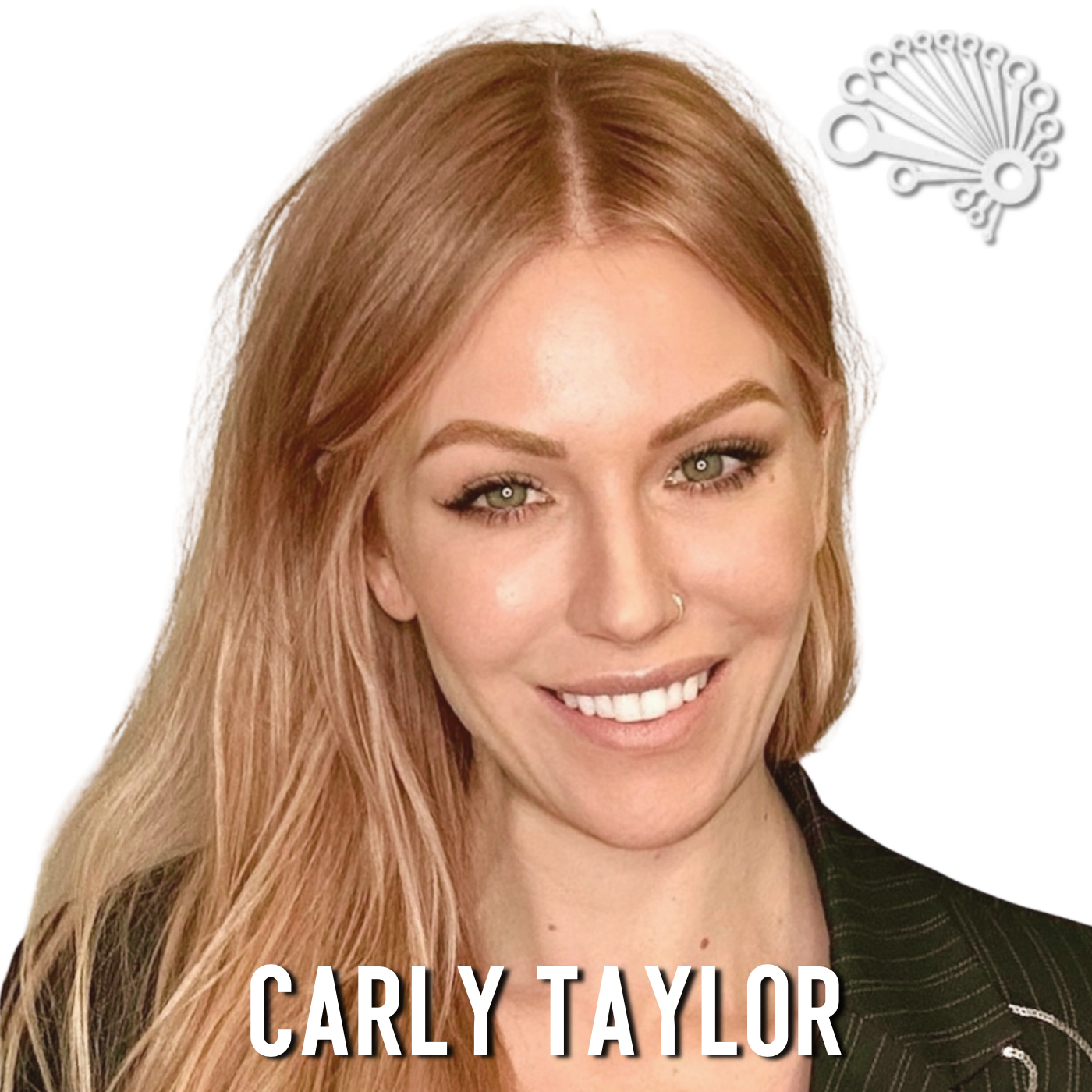
Jon Krohn: 00:00:00 Over 200,000 people follow her fearless, unhinged, her word, posts on production AI systems, and yet she often can’t sleep the night before she speaks on stage. Welcome to another episode of the Super Data Science Podcast. I’m your host, Jon Krohn. Today’s returning guest is Carly Taylor, the founder of Rebel Data Science. Carly shipped nine Call of Duty titles in five years at Activision where she led game security. Other previous roles include being director of engineering at Microsoft and field CTO for the gaming vertical at Databricks. In today’s fun and wide-ranging episode that ranges from technical AI tips to general career advice anyone can make use of in these fast moving times, Carly explains why she deliberately chases the situations that scare her and why no organization can afford not to innovate right now. She also shares her tips on how to use AI to sharpen your thinking.
00:00:56 Enjoy this one. This episode of Super Data Science is made possible by Anthropic, Dell, Nvidia, Origin, and Palo Alto Networks. Carly Taylor, welcome back to the Super Data Science podcast. How’s it going?
Carly Taylor: 00:01:10 Thank you for having me. It’s going well. I cannot remember how long it’s been, but I think it’s been at least a couple years.
Jon Krohn: 00:01:18 I am looking that up right now. You were last on the show in January 2023, so three and a half years ago.
Carly Taylor: 00:01:25 Wow. And look at neither of us have aged. That’s incredible.
Jon Krohn: 00:01:28 It’s all AI actually. That’s how I do it. For me it’s
Carly Taylor: 00:01:32 Botox, but same.
Jon Krohn: 00:01:36 People see me in real life and they’re like, “Wow, that guy is a lot heavier and not in the good way than he is on camera.” I doubt that. I don’t know why, but with all this AI stuff, I haven’t been able to simulate good hair on my head. The hat’s a nice
Carly Taylor: 00:01:54 Touch though. It makes it look like you’re casual, but then the polo’s like you’re here for business.
Jon Krohn: 00:01:59 Yeah. I usually actually am in a Lululemon top or something, but I had a business meeting with a financial firm, so I had to be wearing a collar just before this. Finance love the collar. Enough about me. They love… Yeah. It’s super hot in New York today, so it would be ridiculous for me to be wearing an actual suit. But anyway, we’re not here to talk about my clients. We’re here to talk about yours and sully their names. No, but we will talk about you and what you’re up to. You’ve been leading engineering teams for massive franchises for years, and you’ve had a front row seat to how we can be innovating with data and with AI. And so you’ve described online as building zero to one engineering organizations and developing concepts in ambiguous spaces while also writing that AI is moving so fast, it’s making our 2024 strategies look like dial up internet.
00:02:58 So what are you seeing on the front lines? And I should also say that you are my favorite person to follow online. You say the funniest stuff on LinkedIn and everyone should be following you. That is not something I say when most of my guests are on the show.
Carly Taylor: 00:03:15 Oh my gosh. Well, thank you. That’s so kind. I love that. Did I really say that about dial up internet? That’s a…
Jon Krohn: 00:03:23 Yeah, I can pull up the specific post. It looks like you said that seven months ago.
Carly Taylor: 00:03:34 I love that. I feel like someone smarter than me said that. Sorry, I lost
Jon Krohn: 00:03:39 Track of the
Carly Taylor: 00:03:40 Question and all that back and forth.
Jon Krohn: 00:03:41 Yeah, definitely. So the question, maybe I didn’t even ask one. The question is, so the idea is with your huge amount of experience developing engineering organizations in this data and AI environment, what are the kinds of patterns or mindsets that we need to have today as people who are looking to make the most of these innovations? What are the kinds of mindsets we need to have to succeed in 2026?
Carly Taylor: 00:04:07 Oh man, that is it. We could talk about that for the next hour and I think maybe not even scratch the surface. You know what I’m seeing a lot of though is I see people reaching for someone, maybe it’s you asking me, maybe it’s me asking somebody else, someone who can help them understand where we think we’re going to be. For me, I think the way that I’ve managed to try to keep my eye on the future while also not losing my mind completely is to understand that nobody really has that answer. And so making an estimation, like an estimate, a guess, an educated guess of where you think you’re going to be is as good as you’re going to get.
Jon Krohn: 00:04:50 Why not?
Carly Taylor: 00:04:51 Yeah. Where I’ve seen this go wrong, it looks a lot like what we’ve always seen in data is analysis paralysis where you spend so much time thinking about the possibilities of the future that you either make no decision at all or you become kind of like a weird doomsday scenario theorist online who’s spiraling out and crashing out publicly. And so I’d say if you avoid that scenario of spending too much time looking into the future trying to find the crystal ball, the fundamentals, I think Joe Reese says this perfectly, fundamentals are gravity. And I think we all understand from being in data for so long that there are a few fundamental truths that will always be true. There is a ground truth in terms of your data, your data state, keeping your data clean, understanding your stakeholders and their needs, trying to anticipate their needs, not in terms of AI and how their workflows will change, but fundamentally what their problems are.
00:05:53 When you think about your customers, understanding your customer’s problems sometimes doesn’t require a tenure elegant solution involving AI. Sometimes it’s a simple change that is something that was in front of you the whole time. And so I’d say sticking to fundamentals is probably the easiest thing to do right now because there are just some things that will never change, I think.
Jon Krohn: 00:06:19 That makes a huge amount of sense. One that I was thinking of is you were talking about fundamentals that never change. I feel like another one is kind of like a change is the only constant thing around AI capabilities where you need to be… The things that you’re doing today, you need to be prepared for better AI models in the future. So for example, there are a lot of scenarios now where it would be silly… I mean, in almost any scenario now, you’d be silly to be trying to train a foundation model from scratch. Very, very few people should be doing that. And the number of use cases in some ways are… There’s some ways where you can make the case that it’s expanding and in other cases decreasing, but you need to be careful about thinking about even fine tuning models for your particular use cases because the frontier models or the open weight models of six months from now could be very likely to be able to do the things that you spent all this time on personnel and compute fine tuning.
00:07:20 And so I think maybe another… So data, absolutely. Having your data correct, like you mentioned, I think that’s a really critical fundamental for everyone to be getting rate all the time. The second thing is definitely knowing your customers, knowing your users, and I don’t think that that is something that we can outsource easily to AI agents. Definitely
Carly Taylor: 00:07:39 Not.
Jon Krohn: 00:07:41 And then the first thing that came to mind for me, and I’d welcome your thought, but I think being prepared in this environment of constant rapid improvement in AI. And so having your strategy, having your data approach, kind of everything you do about your strategy and operations reflect that inevitability.
Carly Taylor: 00:07:58 Yeah, I think that’s true. I think there’s a piece of that that also does lead back to the analysis paralysis and it ends up being kind
Jon Krohn: 00:08:07 Of circular
Carly Taylor: 00:08:07 Wherein you
Jon Krohn: 00:08:08 Think,
Carly Taylor: 00:08:08 Okay, I should never innovate in a space where I think that the foundational models might take away my moat, which I hate that word by the way, but your edge in any given situation might be monopolized by some of the frontier labs. And so you’re thinking, well, should I even align against a specific model? What if I, in my personal capacity, really, really like Claude for coding, but Codex is doing better? How is it possible for me as a user to just constantly be switching between bouncing back and forth and kind of… It’s a difficult place to be because you always want to be reaching for the next thing and you want to stay up to date on the next thing. And as a leader, trying to do too much of the next thing, you can take your eye off the ball and then your team can feel a lot of thrash where you’re like, “Oh, but what if we did this?
00:09:07 What if we did this? What if this was cool?” For sure. And I think there’s almost, you need to just commit to the bit in some ways and just make decisions and commit to them and there might be something that’s marginally better. But also when we look at benchmarking results, I don’t know that we’ve seen… We’ve seen some acceleration in capabilities, but in terms of what I do in my personal time, I’ll say that the difference between what I’m trying to do with a model like Sonnet versus Fable comes down to maybe some edge cases where there’s a huge advantage, but fundamentally my workflows haven’t changed that dramatically yet. And so we’ll see. I don’t know. Does it make sense to be worried about that? Then you’ll never pick something.
Jon Krohn: 00:09:59 Yeah. I mean, you’re right. I understand all your points there, but I do… I mean, I find I’m blown away by Fable all the time.
Carly Taylor: 00:10:07 It’s really good.
Jon Krohn: 00:10:08 It’s really good. So in terms of… I’m writing a book right now called Engineering AI Agents with an amazing longtime colleague of mine, Ed Donner, whom I know many of the listeners will know because he shows up on my LinkedIn as the most other viewed person.
Carly Taylor: 00:10:26 You two just bounce back and forth off each other.
Jon Krohn: 00:10:28 Well, I mean, we co-founded our last business together.
Carly Taylor: 00:10:33 Oh, cool.
Jon Krohn: 00:10:35 Yeah, but he’s… So I don’t know, two years ago almost, I left that. So there were three of us on the co-founding team. We tried it for four or five years, and two years ago I decided it was time for me to try something else. And Ed followed along not that long after me. And I introduced him to people like Sokira Leromenko, who co-owns this podcast with me. He also runs a Udemy course marketing business called Literacy. So he co-owns one of those. And Ed was starting to record some videos of stuff he was doing, and he’d been doing courses in O’Reilly. And so he started to build up a lot of content. The O’Reilly introduction was one that I made as well, doing those with amazing people. So Pearson were actually the publishers of his courses in O’Reilly, but then introduced him to these Udemy marketing people.
00:11:31 Now, he’s only been making these Udemy courses for about 12 months. He’s had over a million students buy his courses. It’s insane. People love his agentic AI stuff.
Carly Taylor: 00:11:42 Oh, agentic
Jon Krohn: 00:11:42 AI. Agentic AI. Yeah.
Carly Taylor: 00:11:44 Good for him.
Jon Krohn: 00:11:45 Yeah, he’s unreal. And the point of this is him and I are writing a book together, which I don’t even know if I talked about on air before or I rarely have. It’s called Engineering AI Agents. And I can point Claudecode with Fable at… So we’re doing all of it in Laytech. And so we’ve got this repository of code that leads to the book as well as a GitHub repo with Python notebooks and that kind of stuff in it. And you can just point Fable at it and it’s unreal. It just makes it so easy to come back to the book and be like, “Okay, what’s the next section? And here’s what we put in the syllabus of what to cover next.” And it makes it so… I don’t know. I hate working alone. I have collaborators on everything I do. And now it’s like anytime of day, I have this amazing genius who’s aware of all of the context on my most important project and can chat with me about it and push me along.
Carly Taylor: 00:12:41 Yeah. It’s so awesome. I built a silly game using Claudecode probably, I guess it was January of this year. So it’s been a little while. Back then, I don’t even know what models we were using. Is that Opus?
Jon Krohn: 00:12:59 I think there would have been an Opus model, but it wouldn’t have been anything near because it was this February, March that I think me and a lot of guests that I had on the show, maybe as well, that we were like, “Oh my goodness, this actually…” I think it was Opus 4.6 in February or March that all of a sudden we were like, “You know what? Any technical skill that I ever had in my 20 years doing a PhD in AI and then working in the industry for 15 years after that, I have no moat anymore from a technical skill perspective.” Exactly.
Carly Taylor: 00:13:31 Yeah. No, I think I remember. It was right before, so it would have been right before that. And it was just the funniest experience because there was a time in doing this project where I realized, number one, that was when it really fully, I think, sunk in for me that the tech had gotten as incredible as it had gotten. And you’re right, Opus 4.6 even, or 5.6 changed the game right after that time period too. But I also realized how easy it is, if you don’t know what you’re doing, to start building extremely strange backends. And I don’t know that that’s wrong. I feel like in a world where humans need to understand the backend infrastructure, obviously it matters that it’s coherent and makes sense and there’s a good plan. But I remember reading this article about one of the first AI kind of video games, and it was like an RPG.
00:14:35 It was running in a Google Collab notebook and the creators of this, this would have been in 20… I don’t even know, maybe 2012. It was pretty early on. The creators of this wrote a blog about that experience and the title was How to Spend $10,000 on GCP, just running a game in a notebook. And it was funny because when I was done with my game, I realized, oh my gosh, I put this in my Google Cloud account.This was all just a personal fun project in my spare time. I was looking at some of my GCP costs and trying to maintain state between users and the browser. I was like, “Oh no, I too am coming up against this how to build a game, AKA how to spend $10,000 in Google Cloud without realizing it.”
Jon Krohn: 00:15:27 As I already said at the beginning of the episode, your social media posts are my favorite. I always know you bring a lot of… Many of your posts, I don’t know if most of them, but many of your posts do have a big insight associated with them. Some of them are just silly, but even your ones that have a big insight associated with them, they’re still presented in a humorous way, and you always manage to pull that off. But I remember you posted years ago that you decided for one day to be unhinged on LinkedIn and that it got a tremendous reaction and then you’re like, “Okay, I’m just going to start doing this forever.” I think that was after the last time you were on my show, and you and I haven’t spoken since then. I’ve only been interacting with you online. So it seems like that was a pretty big moment for you.
00:16:18 It looks like so much fun to be able to post whatever you want. Now you’ve got 200,000 followers on LinkedIn alone, very nearly, probably by the time this episode comes out, you will. And it seems to be an effective strategy. I think people really crave a kind of authenticity that you are saying things that an LLM just would never suggest for LinkedIn.
Carly Taylor: 00:16:47 Yeah, an LLM trained on acting normal definitely would not. I think it’s a holdover, Jon, of being a millennial. I remember back in the day getting on AIM and learning the way that we wanted to interact with each other as the internet was also being born. Somewhere along the way, we all decided that, especially on LinkedIn, that you weren’t allowed to have a personality because that was just the social contract with LinkedIn was like LinkedIn was a place to go if you were trying to sell something or if you were trying to get a new job. So the feed was always just some vendor with some solution and then a bunch of people who were trying to network because they thought you could get them a job. When I first started posting on LinkedIn, it was when I was learning data back in the day.
00:17:46 I remember having a conversation in 2015 with a friend in grad school and he was talking about how a lot of people we worked with, because I was working in a chemistry lab, but we were working with a lot of physicists and mathematicians, and they were saying, “A lot of our peers are getting swooped up by financial firms.” We were like, “What? What does finance want with a physicist?” They were like, “They’re doing this new thing, building algorithms for trading.” We were like, “What?” They were like, “Yeah, they figured if they could actually manipulate data at scale the way that we do to model systems, they could model financial systems and make money.” And it was like, “Oh, that’s so cool.” And he was like, “The’re calling it data science.” And I was like, “Oh, that’s so cool.” And so that was my introduction back then.
00:18:30 I started on LinkedIn just sharing my experiences in data science because it was something everyone was talking about, but no one had really well defined.
00:18:40 There wasn’t a learning track to getting into it. I was a chemist who just stumbled into it after this singular conversation with my friend who was in the know. And so it started from there. So it was very authentic to me from the beginning, but there was always a part of me that was like, “But I also need this place to get a job, and so I need to be a version of myself that’s not truly me. It’s not the gamer, online personality, person who spends too much time on Reddit. That person doesn’t fit in the corporate world.” And then one day I realized, “Screw it, maybe she does.” It’s so hard for me to not be me in that way, because I think that way of just saying what’s on your mind and being hyper direct, obviously it’s not always good for me, but it has led me to places where I feel like I’m in rooms where I can speak the truth, I can lead teams and be innovative because I’m not second guessing who the world needs me to be at any moment in time.
00:19:44 So I’d say it’s very freeing, but it’s also a privilege to be able to do that, right? I don’t necessarily… I’m not in the beginning of my career where I need to twist myself into someone who’s hireable. I’ve proven myself to be good at what I do, so I kind of have a lot more latitude now.
Jon Krohn: 00:20:03 Well, yeah, it’s seriously inspiring. Before we started recording, I was saying how people like you, Joe Reese, Jepsen Taylor, all three of you like doing unhinged things on LinkedIn. And it means that some of the people that I find most entertaining there, because it isn’t just the norm that I’m seeing. Yeah, I don’t know. I should probably try to find some way of just being a little less hinged or something like that. I don’t know if I need to completely remove things. I want to see
Carly Taylor: 00:20:34 Jon
Jon Krohn: 00:20:34 Unhinged. Well, you just need to hang out with me in person.
Carly Taylor: 00:20:38 Yeah, that’s true.
Jon Krohn: 00:20:39 I’m basically unhinged all the time in real life. Okay,
Carly Taylor: 00:20:42 Great. Next time you’re
Jon Krohn: 00:20:45 Not wearing
Carly Taylor: 00:20:45 A polo, I’ll make
Jon Krohn: 00:20:47 Sure. Exactly. I was like, “Except in business meetings.” Exactly. Although there’s nothing more fun than being unhinged in a suit. I love being unhinged in a suit. It’s great.
Carly Taylor: 00:20:57 Yeah, that’s awesome. You should go hang out in Manhattan and just throw people for a loop. You look like the suit business dude, but you’re actually the guy in the corner busting out dance moves or something.
Jon Krohn: 00:21:09 Yeah. Closer to reality than you think there. So something you’ve been talking about a lot online recently is AI slop in the workplace. And that’s something that we’ve actually… The most recent guest episode, so the one that would’ve aired just before yours airs, is with a Stanford researcher and a colleague of his who together coined the term work slop a year ago. I
Carly Taylor: 00:21:40 Love that.
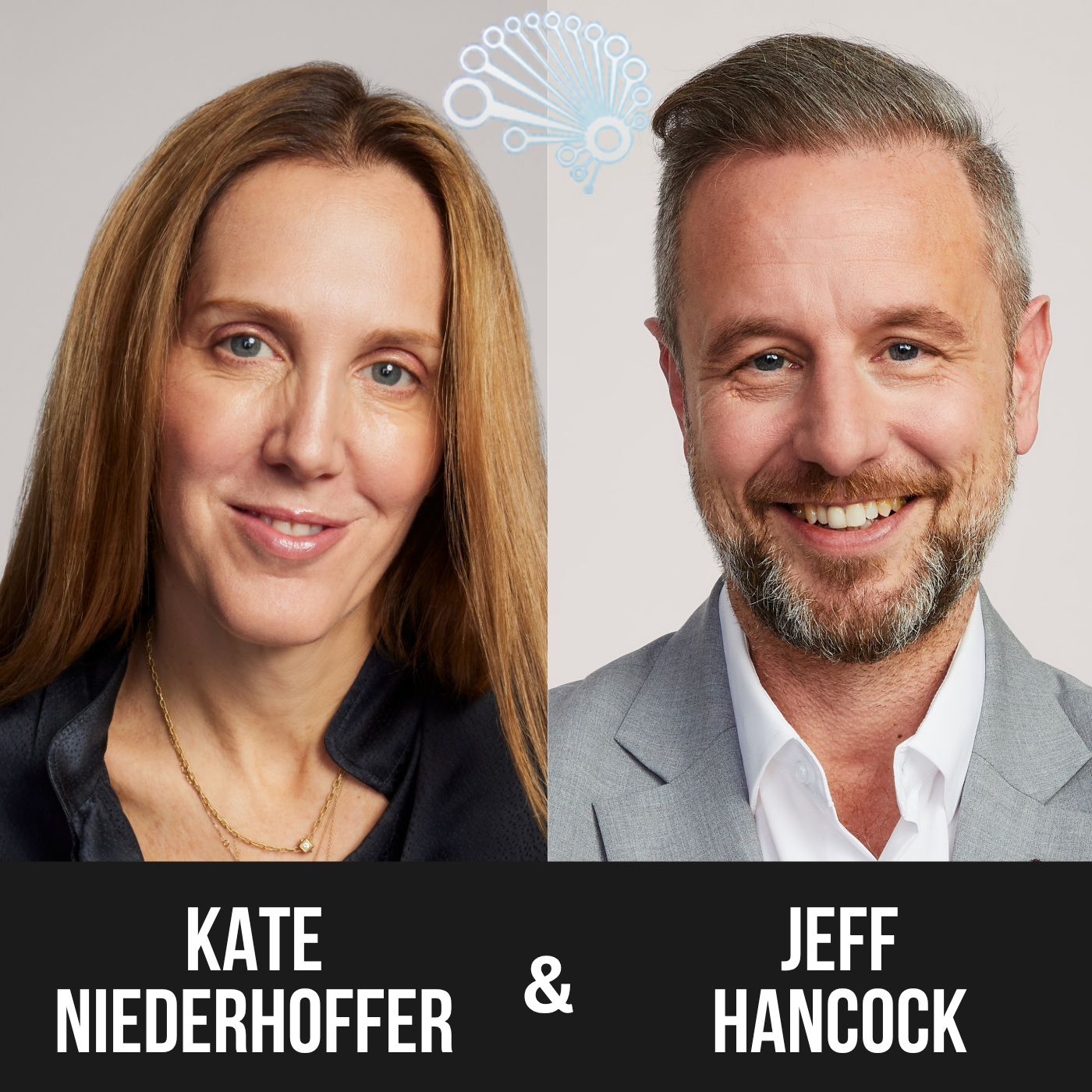
Jon Krohn: 00:21:42 Yeah. So it’s Jeff Hancock and Kate Niederhofer who coined work slope
Carly Taylor: 00:21:47 Thank you Jeff and Kate for
Jon Krohn: 00:21:47 Giving
Carly Taylor: 00:21:48 Us a term for something we’re all fed up with.
Jon Krohn: 00:21:52 They wrote a paper about it in the Harvard Business Review, September 2025.
Carly Taylor: 00:21:57 Actually, I feel like
Jon Krohn: 00:21:57 I
Carly Taylor: 00:21:58 Read that. I didn’t realize we
Jon Krohn: 00:21:59 Interviewed them.That’s
Carly Taylor: 00:22:00 Cool. Yeah.
Jon Krohn: 00:22:02 Well, it hasn’t come out yet.
Carly Taylor: 00:22:03 Well… Everyone could be liked out by this one after the awesome high that is talking to two people from Stanford. So you get two people from Stanford and then you get Carly and my guest star who’s been in my lap this whole time, Corduroy.
Jon Krohn: 00:22:20 Oh, Corduroy.
Carly Taylor: 00:22:21 He has a
Jon Krohn: 00:22:22 PhD from
Carly Taylor: 00:22:22 Stanford actually.
Jon Krohn: 00:22:24 Yeah. I’ve heard that there’s lots of cats getting in lately. Cool cats, actually. Well, to be technically precise, Kate Niederhoffer is actually… She is not at Stanford, but she is at a really cool organization called BetterUp that seems to give her a lot of latitude on doing research. She’s a chief scientist there. But yeah, they coined Workslop. You’ve been talking a lot about Workslop on social media recently and kind of strategies for calling people out for it. So you were talking there, this is what made me think about this topic, is you were talking about how your being unhinged, your words, online has allowed you to get into rooms and maybe say things that other people can’t say. It seems like maybe you’re one of the chief cops calling out work slop. Don’t call me a cop. Everyone thinks of that as a compliment. Everyone wants to be a cop.
Carly Taylor: 00:23:25 I don’t want to police anyone. No, I think the thing with work slop is that to me, it violates a social construct. And our social contract is that if you send me something, it’s either your thoughts or you have reviewed those thoughts, right? The burden is on the generator, not the receiver to do the hard work of ensuring that whatever is being put out is either factually correct or at least in alignment with what we’re discussing. And I see this on LinkedIn a lot where people will post something that is not just factually incorrect, but it goes to a place of… If you were to ask them to defend the logic in what they’re saying, they wouldn’t even be able to do that because I doubt they even read it before they posted it. And so you’re putting the burden on me to read this and be like, “What is this?
00:24:30 Here’s all the ways that this is wrong.” Right?
Jon Krohn: 00:24:32 That’s basically the definition of work slop from this past week’s episode, episode 1033, is that if you think you’re saving time by using an AI tool to generate something, but then you’re not reviewing it, you’re not making sure that it did cover the points that you had, you are just shifting the… Yeah, you’re making things more efficient for you, but making things in the organization as a whole much worse because you’re sending maybe 10 people an email with 10 times more stuff in it than was ever needed to be there. So you’re 100 X-ing the amount of work for your organization while reducing by maybe 80% the work for you as an individual.
Carly Taylor: 00:25:18 I didn’t even think about the way that it spiders out like that. The compounding of the shifting of the cognitive load is crazy. Who was it that just… Was it the CEO of Shopify who also just came out and talked about this and people are posting all about it on LinkedIn? I think it was just yesterday
Jon Krohn: 00:25:36 Or the day
Carly Taylor: 00:25:36 Before.
Jon Krohn: 00:25:36 My LinkedIn feed is just post of view after post after you post of you. Well, I mean,
Carly Taylor: 00:25:40 That’s the
Jon Krohn: 00:25:40 Best way to live your life. That’s all I get. I don’t know if anything else is happening. But I remember, so on a recent post of yours about this, you had one of the things that you could do. This is a good example. So I think you had three or four serious suggestions of things you could write to people. And then the last one was also, I think the instinct that a lot of people have. And I have seen instances of people doing this in real life where you get this crazy long email and you respond with a 40 page attachment. Like an
Carly Taylor: 00:26:09 Even longer one. Yeah.
Jon Krohn: 00:26:10 Exactly.
Carly Taylor: 00:26:12 Yeah. I
Jon Krohn: 00:26:12 Think that’s the way to do
Carly Taylor: 00:26:14 It. If you can’t deescalate, escalate.
Jon Krohn: 00:26:21 I’ll
Carly Taylor: 00:26:21 Give you 75% of my advice is how to deescalate. 25% is if that fails, lean in, make it worse.
Jon Krohn: 00:26:30 I love it. We’ve been recording for about half an hour and I asked one question that I had planned for you and then everything else has just been completely organic conversation. But I’m going to bring it back to my original planned thread, which is going to tie in. So you are a lifelong gamer, kind of famous online for being big into gaming and you worked at Activision for years in the past, famous maker of Call of Duty, which was your responsibility there. So games have been a big part of your life personally and professionally for a long time. And when you’re playing video games, you are often presented… Let’s say you’re in some kind of… You would know how to describe this better than me. What’s it called when you’re able to just explore a map? So like a Zelda kind of layout. Like an open
Carly Taylor: 00:27:22 World. Yeah.
Jon Krohn: 00:27:23 Yeah. I don’t really know games that well. You can pretend. So when you’re in that kind of situation, you can either explore a new environment and maybe discover something great and new, or it could be scary and you could just get killed and you kind of lose all your progress. Or you could continue to exploit areas of the map or areas of the game that you’re already familiar with and just continue to kind of do the exploitative strategy that you had and continue to succeed. So in real life, how do you balance exploring new possibilities? So this could be for any of the various kinds of things that you do professionally, there’s managing teams, there’s creating products, there’s all the social media stuff you do. At any given point with any of those pursuits, you could continue to exploit what you know already works or you could spend some of your time exploring.
00:28:31 Some of that explore time is going to be completely wasted, but some of it might discover some gold, some metaphorical gold probably. How do you get that right? How do you balance exploration and exploitation in the work that you do?
Carly Taylor: 00:28:49 I’m always exploring, I would say. The
Jon Krohn: 00:28:51 College avoid
Carly Taylor: 00:28:52 For me
Jon Krohn: 00:28:53 Is too strong. Carly Taylor never exploits. Never.
Carly Taylor: 00:28:56 I’m not a grinder. I don’t love that. That’s the closest terminology I would say to what you were describing where you just kind of do the same thing over and over and grind to maybe get to the next level or gain something. I’d rather go off into uncharted territory almost constantly. I would say that the way I’ve characterized my career trajectory has been I pursue things that make me deeply uncomfortable. So I loved working on Call of Duty, but I reached a point where after I had shipped, I think I shipped nine Call of Duty titles in about six years. That was with Call of Duty Mobile, Call of Duty War Zone Mobile, in addition to all of our AAA mainline titles and then War Zone as well. So there was a lot going on there. It was exciting and fun. Everything brought new challenges, but once I realized that more than 50% of my time was treading the same areas I had already been in, I didn’t really want to do that anymore.
00:29:56 I wanted to go back and be uncomfortable. Changed careers almost as much as you could change and went into enterprise sales and started working at Databricks and though, okay, there’s a lot of problems I’ve solved within our data estate in a game company that I think I could help other game companies figure out a similar way to do this.
Jon Krohn: 00:30:20 That was with gaming businesses, right? Gaming clients at Databricks?
Carly Taylor: 00:30:24 Exactly. Yeah. Yep. So I was in the gaming vertical at Databricks, trying to help custom tailor solutions with Databricks to the problems I knew I had faced in the gaming industry and that I knew were shared across my peers, across the industry. That was very fun, but it was also deeply uncomfortable. I’m not used to sitting on that side of the phone where you’re like, “Hey, I have a solution.” And sometimes people want to talk to you. Sometimes you’re the last person they want to hear from. Not everyone wants to be sold something all the time. So even when your intentions are, you’re well intentioned, getting into that space for me was exciting because it was just so different. Now I realized I don’t actually love sales, if I’m being honest with you, but I had to try it and see how I felt about it.
00:31:12 So now I’m back in the engineering space building products for fans that I deeply care about, which is much more in line with what I was doing in Call of Duty. But I would say that for most people, especially in an engineering organization, there’s this concept of KTLO. You have to keep the lights on. There is just a fundamental that has to happen. Your infrastructure has to work. You have to have your SLAs, you have to meet your uptime requirements, you have to make sure that your service is accessible, et cetera, et cetera. That to me is, in your analogy, kind of the grind part of what you have to do. I would say that for any leader, the goal is to do that, do that well, but minimize the amount of time that’s required to spend on those things so that you can push your teams into ways that they need to innovate and bring new experiences either to fans or whatever your industry might be.
00:32:06 To me, that is a very easy thing to talk about and a very difficult thing to do in practice because as your enterprise estate grows, the KTLO work gets bigger and bigger. Every tech company, the more you put out, the more you have to maintain.
00:32:23 And so there’s a constant balance there of how do you set yourself up optimally so that your maintenance is minimal and your exploratory time can be maximized. And I don’t have the answers for how to always do that well. You just always have to, I think at least chase that as a goal.
Jon Krohn: 00:32:47 Well, it seems like it’s never been a better time to be somebody who likes to explore because we have never in the history of the known universe had essentially magic. We talk about fable and it is like having a magic wand and being at least digitally today.
Carly Taylor: 00:33:07 Yeah. You can’t afford not to innovate right now. I mean, I don’t say that lightly either. It’s like I jokingly, when I see something on sale at a store I like say I can’t afford not to buy it. But it actually is true right now. I think you can’t afford not to try to be innovative. Swing and miss is better than just sitting back and waiting.
Jon Krohn: 00:33:32 For sure.
Carly Taylor: 00:33:33 KTLO isn’t going to make money anymore if you’re not trying to meet something of the future and overhaul some way of the way that you’ve been thinking.
Jon Krohn: 00:33:45 For listeners who missed Carly define KTLO, it’s keep the lights on. She said it one time, but in case you were paying attention to the road you’re driving on or something. I’m now
Carly Taylor: 00:33:54 Jargoning myself. Keep the lights on. Yeah. It’s all the stuff you have to do to make sure that your business actually continues to run.
Jon Krohn: 00:34:02 It doesn’t even save time in terms of syllables. It’s still four syllables either way, but it sounds a lot more professional when we’re doing KTLO.
Carly Taylor: 00:34:10 KTLO, keep the lights on. It actually is, you’re right. It’s kind of the same amount of time.
Jon Krohn: 00:34:14 You can type it faster.
Carly Taylor: 00:34:16 Keep the lights on.
Jon Krohn: 00:34:20 I don’t know. Fast syllables and slow syllables. Nice. Well, thank you for all the KTLO insights, Carly. Another useful tip that you’ve shared online is you’ve talked about tricking yourself into public speaking, which is something I think that follows really nicely from this conversation we’ve just been having about making sure that you’re staying uncomfortable and how it’s never been a better time than now to be experimenting and using all the various magic wands that we have as technical people with unlimited capacity. Anyway, you wrote a post on your Substack, which people also should think about following, and it’s called Trick Yourself into Loving Public Speaking. And you wrote about confronting fear as a catalyst for growth. And so I guess we’re kind of now double clicking on this idea of doing things that you’re afraid of is actually a way to growth, the obstacle is the way kind of thinking.
00:35:26 So yeah, how do you intentionally chase fear in a professional context to build yourself, to build your teams, to build the organizations that you work for?
Carly Taylor: 00:35:36 I mean, I think it’s just by always chasing those situations, like I said, where I’m uncomfortable. So if I’m not growing, I’m not learning, I get too comfortable where I’m at. I know that it’s not the right place for me long term. And so you always need to be pushing your boundaries into that edge where like, okay, I’m going to have to learn about X, Y, or Z in order to be effective here. When I was working in video games, it was pushing myself into the territory that I didn’t know anything about networking and servers and the way that the server client relationship worked, especially in multiplayer games and keeping state. And so it was like I could either say, no, that’s not my area of expertise or I could start pushing myself into learning that. And I would say as leaders, especially with AI, so many leaders I talk to feel overwhelmed by AI and they’re too scared to ask the question and admit that they’re kind of maybe not sure what’s going on or maybe they don’t even understand what AI is.
00:36:36 And they’re like, it’s the meme of like, I don’t know what AI is and at this point I’m too afraid to ask. And I would say that is the place where innovation goes to die is like if you are too afraid to be uncomfortable, you’re literally now fearing the fear itself of being uncomfortable, of being uncomfortable public speaking. If you let the fear of getting up on a stage and talking about your expertise stop you from doing that, you’re no less afraid. You’re just not at a place now where you can walk off the stage and say like, “Wow, I did it.” And so I think the feeling of uncomfort, people don’t like to be uncomfortable. Obviously that’s part of the definition of being uncomfortable, but the idea that it’s inherent and that it passes is very true. I think even in that Substack article, I’m not sure if it was this one, I can’t remember, but there’s this idea from Buddhism of inviting, I think it’s inviting Mara to tea.
00:37:41 And it’s this idea that Mara is, I don’t know if it’s a demon, so don’t hold me to this. I’m not Hindu or Buddhist, but it’s this idea that you will always have uncomfortable thoughts, you will always be in uncomfortable situations, you will always have imposter syndrome about yourself, these thoughts that creep into your mind that tell you that you can’t do something. And if you push them away, that’s one strategy of just like, don’t even think about it, ignore it, duck, dive, dip, dive and dodge or whatever it is for dodgeball, just avoid those thoughts at all times. But the other approach here is to invite them in and sit with them. Have a glass of tea with all of the doubts in your mind and all the things that scare you. And when you kind of actually sit with them and you invite them in and you say, “You can stay here for a while, but you can’t stay forever.” I think there’s some power in that of just welcoming in all of your doubts about yourself and then letting those doubts be transient.
00:38:42 But that sounds very deep and I haven’t figured out. I don’t. There are still nights before I public speak where I have to do public speaking where I can’t sleep and I’ll go up on stage with three hours worth of sleep for no reason other than I was so nervous that I couldn’t sleep. And that’s how it manifests for me. So if you see me looking tired, that’s what happened. So it’s not always like that it works out perfectly, but it’s that I’ve committed to the fact that I’m always going to go up there regardless, even if I didn’t sleep at all. And you just have to commit to it.
Jon Krohn: 00:39:11 I would never have expected. I mean, most of my interactions with you are only real-time interactions. I’ve been in podcast episodes and you speak so confidently without any ums and ahs, so clearly on interesting topics, complex technical topics. And so it just seems to me like you’re such a natural on stage. I would never have thought that you’d have trouble sleeping before.
Carly Taylor: 00:39:36 It’s manifested as that actually for me, is my anxiety is manifested as the sleep the night before something big. Oh, you’re going to be tired. It’s going to be bad. And everyone knows the best way to get to sleep is worrying that you’re not going to be able to sleep. And so it’s just something that I’m working through. So I guess what I’m trying to say to anyone listening is that you don’t have to listen to this and be like, “Oh, I’m behind because I haven’t figured it out. I haven’t figured it out. I spent a lot of time thinking about this stuff.” But the one part of it that I have figured out is that I never feel better about anything by not jumping in feet first. So if it’s AI that’s scaring you that you don’t understand it, you’re not going to feel better by just ignoring it or not raising your hand and saying, “I don’t understand.”
Jon Krohn: 00:40:22 What are things that make you uncomfortable that you’re actively doing today? What are the kinds of things that you’re tackling now?
Carly Taylor: 00:40:30 Probably anything involving public speaking night before, anything involving big commitments where I know I have to go somewhere and be on, that still feels very daunting to me because I’m like, “What if I’m not in the mood? What if my hair doesn’t look good?” There’s just always these sorts of doubts that I have. Whether I’m making the correct decisions long term for my career, for technology, whether I’m placing my bets in the right spot. As a leader, like I said earlier, you eventually have to make a decision because indecision is a decision, but it’s just not yours. And so you do have to make a decision on a lot of complex topics as a leader and you have to be able to commit to them and you need to be able to look backwards and say, “Oh, that wasn’t the right decision.” And own that.
00:41:20 And now more than ever, I feel like our decisions have higher stakes and less clarity. And so every time I make one, I know you’ve been here before, you’ve made hard decisions before, you’ve made the wrong decisions before, but refusing to make a decision is the worst thing you can do. And so I just keep moving forward knowing I will make mistakes, but not owning my own outcome or at least not participating in it is the worst of all of the possible choices in front of you.
Jon Krohn: 00:41:52 Makes a lot of sense. Yeah. Indecision is still a decision for sure. And yeah, as we already said, I guess that could be kind of the theme of the episode with the crazy tooling that we have available to us as technical people. We’ve never had more power. You can be doing so much, but you have to be getting comfortable with being uncomfortable. You have to be trying these things out. So we’re starting to get near the end of your episode and I don’t want to miss, we had tons of questions for you from the audience. I mentioned a week before recording that you would be my guest in an episode coming up soon and the post got over 30,000 impressions, a couple hundred reactions, dozens of comments. I’m going to do my best to bring the best questions forward to you. So our first one here is from somebody who interacts with the podcast a lot.
00:42:46 I hope I’m not butchering her name by calling her Sema Atik Holmes. And so she’s based in the Bay Area and she is a cybersecurity and responsible AI advisor, has lots of background in computer science engineering and information security. And her question is, will we talk about agents developing their own communications and protocols that may soon exclude humans fully? Do you foresee humans developing communications and protocols undecipherable by AI? That’s a twist that I didn’t expect in that question.
00:43:26 Should we be trying to shield some information from an artificial superintelligence say?
Carly Taylor: 00:43:32 That’s an incredible question. I love my cybersecurity folks and my infosec folks. They’re always on the front end of things because they look at the world through such an interesting lens of how do you protect yourself, but also looking at every system that you’re building through a lens of how would I exploit this is so powerful. So to all the other leaders also listening, I would say cozy up to your cybersecurity friends because as you build, they will give you really, really good ways to poke holes in what you’re doing. I
Jon Krohn: 00:44:01 Should mention that it’s not random that you get security questions because while you were at Activision for five years, you were leading game security efforts there.
Carly Taylor: 00:44:10 Yes, yes. Deeply involved in the security realm. And now that I do less of that and my remit is wider, I do still find that a lot of my audience skews towards the security folks. So they’re very near and dear to my heart.
00:44:25 Yeah. I’ll say first of all, yes. I think the whole reason for programming languages is for humans to interface with computers. And so if we’ve built a computer system that doesn’t require a human readable programming language or interface, why would it exist? It almost is like, I don’t even know what you would call that. Is that tautological? It exists purely to exist? I’m not sure. Maybe it’s circular in that way. Yeah, I would say that programming languages exist purely to exist for humans. So you take the human out of the loop. I think if you gave computer systems the ability to choose their own destiny, my guess would be that LLMs would probably go back to something closer to machine code in the way that they operate because the abstraction layers on top of machine code are purely for humans to read. Now I think the flip side of that question is particularly interesting, although I wonder, I think it’s a version of what we’re seeing already with people trying to trick facial recognition systems, wearing masks and clothing that cause cameras and pixels to kind of freak out and not be able to do any sort of pattern recognition.
00:45:47 I’d say introducing something like that or the people who are kind of trying to poison context of LLMs.
00:45:55 I think that it’s an interesting thought experiment though for what would a conversation between you and I, Jon, look like that our brains could understand and follow that had some sort of logical context that we were within that an LLM could never pick up on the context of what we were discussing? I don’t know, do we go back to the old, the idea of code breakers in World War II? You speak so much in code that there is no shared context so that even if you were listening, no one would know what you were talking about. But at the end of the day, those codes were broken by mathematicians. And so like an LLM that is inherently good at deciphering codes and finding commonalities and things where it doesn’t look like there are some, I’m not sure what that would be crazy. I could talk about this for a night over some scotch.
00:46:51 Maybe we should invite the questioner to have a drink and discuss. Very interesting.
Jon Krohn: 00:46:57 Yeah, for sure. I’m sure she’d love that. She’s probably listening. She’s one of my most common commenters. So presumably she’s one of my most frequent listeners. Great. Yeah. Thank you for that. Really insightful. And it’s difficult for me to imagine how we could have a situation where we could come up with some kind of way of communicating that an artificial superintelligence couldn’t decipher.
Carly Taylor: 00:47:19 Yeah, right.
Jon Krohn: 00:47:20 But then again, theoretically, we’re supposed to be so much smarter than whales and we don’t know what they’re talking about all the time.
Carly Taylor: 00:47:26 That’s
Jon Krohn: 00:47:26 True too. We’re still figuring it out, but I guess we’re pretty dumb compared to an artificial superintelligence.
Carly Taylor: 00:47:33 Maybe we just have such a shared context that’s so dumb that it’s too smart to understand it.
Jon Krohn: 00:47:41 Exactly.
Carly Taylor: 00:47:41 Talk only in memes.
Jon Krohn: 00:47:44 Yeah. It’ll be like what Twitter has become. This next one is from Tennessee. So Nashville, Tennessee, we’ve got a senior director of the project management organization for designed conveyor systems is the name of the company. His name is Gabe Robiki. And Gabe asks, “Where does using AI to challenge and sharpen your thinking cross over into letting AI do the thinking for you?” And I guess that’s kind of maybe the whole question we need, but he goes on, he says, “Can we draw the line fairly when writing style might create suspicion, but it can’t prove authorship?” So I think he might be talking about scenarios there where, for example, imagine if you actually spent a lot of time thinking about an email you wanted to write to your colleagues and all of the thoughts in the email were yours, but then you use AI as the final step to generate the email and it has M dashes and other kind of giveaways that people, when they get the email, they’re like, “Ugh, why can’t Gabe just write his own email?
00:48:55 Why is he sending me this AI slop?” So I guess this kind of ties into the work slop conversation from earlier, but kind of from the opposite angle of where are the places that we should be using AI in the workplace to help ourselves out? How can we use AI to challenge and sharpen our thinking?
Carly Taylor: 00:49:12 I think what we tell engineers always, you own the output. Nothing has changed from old school engineering to now where you are responsible for the systems that you create. So Jon, if you and I go make a game that theoretically lets people do our traffic control, we’re still responsible for the uptime of that system and the usability and whatever. And it doesn’t really matter the methodology by which we arrived there. Hopefully we are agreeing that we want to make it easy for ourselves to maintain the system. So we want to make it readable and understandable and we want to make sure that it’s built in a way that’s easy to maintain. You don’t add unnecessary complexity that makes your own life harder. I would say that in that scenario where you have spent a lot of time with an AI, you’ve spent it, used it to stress test your own thinking, I think that’s fabulous.
00:50:06 Any, for me, intermediate steps with AI that can be accelerated, I have absolutely no issue with. So using AI to go back and forth on a strategy that you’re kind of trying to wrap your head around, using AI to go back and forth with even an email or how you want to communicate something. But if you’ve done all of that work, you’re still responsible for the output. So if people are going to assume that your output is not something that you actually put effort into and it doesn’t reflect the amount of effort that actually went in, why would you cheapen your own thoughts and work by making an AI slop email, even if there are points in there that are good? And I think when we talk about AI slop, what we mean is it’s unnecessarily long and verbose. It’s meandering. It proves a point three times just so it can have three bullet points when one or two would’ve been sufficient.
00:51:02 And so even if your output is the result of you prompting an AI and using like Claude’s concise setting and telling it how your voice comes across, there’s no issue with that because people aren’t going to read it and think it’s slop. I think the point of slop is that you can tell that it is unnecessarily full of jargon, it is unnecessarily long, and it makes unnecessary points. I’ll give you a really good example. A lot of what I see in what I would consider slop is that someone’s making three really good points and then there will be a section in the document called what this isn’t. When in the history of anyone anywhere have we ever felt in our writing that we needed to preemptively state what we are not doing? I’ve worked in tech for a very long time. It is very, very recent that I have started to notice everything I read comes with a disclaimer of what this isn’t.
00:52:03 And I find that so strange because I’ve never felt like I need to say in an email, “Hey, but what this isn’t is that it isn’t a hot dog.” There’s a lot of things that this isn’t. From my own writing, it should be clear what this is. Now, this is different from saying what something is in scope versus out of scope, but I’ll just say AI loves to do things like that because as you’re prompting it and giving it context, you’re giving it negative context. You saying, no, don’t go there. I don’t want that in there. That comes across in the slop talk, right? All of that negative context, it thinks it needs to also share with your reader, “Hey, when I wrote this, here’s what this isn’t.” That’s not good context to someone consuming it. So while your context with your AI, you spend a lot of time giving it that original thinking, pushing it into the direction of what you want it to do and what you don’t want it to do, the reader doesn’t need all that context.
00:52:55 If you were just talking to me, you wouldn’t provide all that context. So that’s where I see this veering into slop.
Jon Krohn: 00:53:02 Great advice there. And yeah, the what it isn’t thing is definitely, that’s a pattern that I hadn’t thought of before, but definitely makes a lot of sense. All right. And one last audience question here for you. This is from Anna Ford, whom I actually met serendipitously at Dreamforce in San Francisco this past week while I was there. It’s now been a month. It’s a month between us recording this episode and it airing. So Dreamforce was a while ago, but in terms of us recording, I had just met Anna Ford at a dinner with actually Kate Shroshni, Jess Ramos, City St. Lawrence, George Fiorican. Great. It was a pretty fun dinner. We had a Lauschan food from Laos, which I had never had before, it turns out. It’s a lot of flavors at once. It turns out they like salty, spicy, sweet in every bite.
Carly Taylor: 00:53:55 Oh, that’s
Jon Krohn: 00:53:55 Right
Carly Taylor: 00:53:56 Up my alley. I love that.
Jon Krohn: 00:53:58 Yeah. Check it out. So Anna is a consulting leader at a, it sounds like kind of a data solutions company. And she has a strong background in math and stats. She used to actually teach math and statistics to kids for years before leaving that and joining industry. And so she would love to hear your thoughts on what’s improving for women in tech, data science, analytics and where we still may have room for improvement. She says she’s intentionally leaving this question vaguely broad.
Carly Taylor: 00:54:37 I was going to say that’s so open-ended. I would also love to sit down with her and have a dinner and a drink conversation about this because I think it’s very, very varied. Oh, this has been well tread by some people. I’ll say something that I have been talking about recently, which is this idea of a glass cliff. So I’m seeing a lot more women in leadership positions. I’m seeing more women in data positions. I think we’re getting more and more, from what I have noticed, the demographics of teams has been balanced out a lot better. But what I am seeing in terms of leadership is I’m seeing a few women who I actually know personally, who I respect and who I followed for a long time in positions of leadership, which is amazing, but they seem to have been brought in during times of crisis.
00:55:24 And so for me, I think where the work still needs to be done is when we think about women in the workplace, do we think about them as being, oh, you should pull this person in because they’re able to navigate complex emotional situations better or they can handle fallout and help teams smooth things over better. And that might be true, but that’s not exclusively true of women. That’s true of anyone. And so this phenomenon of the glass cliff when you bring in female leaders when a company is struggling, it’s almost this idea of like, well, we’re going to elevate her into a position where failure is almost inevitable and so we don’t have to… We can give her a shot, right? If we didn’t think failure was inevitable, maybe we would have a male CEO and we’d put him up and let him grow. But if we think that we’re going to fail anyway, why not give her a shot?
00:56:22 Or if we think that we’re failing, maybe she can come in and help with some of the emotional fallout and some of the things that needs to happen. If we need to do massive downsizing or something, maybe she can navigate that emotionally in a way that a male leader couldn’t. And so I’d say it’s those kinds of things that I’m continuing to see that I want to push back on now, which is we need to elevate women into positions of visibility and leadership, not just when things are going poorly and we want them to help kind of clean up, but when things are going well and we think the best person for this job isn’t a man or a woman, it’s this person based on their expertise. But a lot of those thoughts about EQ and handling difficult conversations, those are just very inherently in our brains in a way that you have to be conscious of it.
Jon Krohn: 00:57:12 That was eye opening to hear that answer because it is not a phenomenon that I had ever opened my mind to. And I’ll be on the lookout for that, this glass cliff that you’re seeing for women in the workplace. I’ll definitely keep an eye on that. Well, Carly, we could chat for hours and hours I’m sure, but we are running out of time. And so you may remember from your appearance three and a half years ago that I always ask the same two questions at the end. I ask for a book recommendation, which can be anything. It doesn’t need to be technical.
Carly Taylor: 00:57:46 You may or may not like my answer. Do you
Jon Krohn: 00:57:49 Want me to do book first? Not my worst enemies book, is it?
Carly Taylor: 00:57:53 Any book except a book written by Jon. Okay. My book recommendation is the nerdiest thing in the world and I’m sorry, but those who know are going to know. The Dungeon Crawler Carl series. It is a – You’re
Jon Krohn: 00:58:05 Not the first person to recommend it.
Carly Taylor: 00:58:07 Really? Oh my gosh. Okay. Tell me who so we can talk. Yeah. It’s a literature RPG series, which is like role playing games were not my forte. I was more of a first person shooter kind of gal, but it is fantastic. And if you want to… I have an actual business book too, if you want that recommendation.
Jon Krohn: 00:58:28 No, no, no. Sounds boring. Let’s go with the Dungeon Crawling. That’s way better.
Carly Taylor: 00:58:32 Dungeon Crawling
Jon Krohn: 00:58:33 Is. Yeah. So I looked it up. So for anybody who’s interested, you can go to superdatascience.com/books and we have a giant spreadsheet of all of the books that anyone has ever recommended. And it’s not just like a list by episode number. It’s if the book gets mentioned multiple. So the default sorting is by number of times mentioned. And Dungeon Crawler has been mentioned once and it was relatively recently in episode 989. Now what I can’t tell, we actually had two guests in that episode.
Carly Taylor: 00:59:06 So we
Jon Krohn: 00:59:06 Don’t know which
Carly Taylor: 00:59:07 One recommended
Jon Krohn: 00:59:07 It? I can’t immediately tell which of the two did it, but it wouldn’t be too hard to figure out. If I was a betting person, so it was two people from Rubrik, and I bet you know one of these people and I suspect it was him who recommended this book. So we had Anika Gupta from Rubrik and we had Cal Aldubabe.
Carly Taylor: 00:59:31 Okay.
Jon Krohn: 00:59:31 Do you know Cal?
Carly Taylor: 00:59:33 No, I don’t actually think I do.
Jon Krohn: 00:59:34 Oh, really? Oh, I though for sure you’d know hat’s funny. I should meet both of them and
Carly Taylor: 00:59:38 Then we can talk about Dungeon Crawling.
Jon Krohn: 00:59:40 The same kinds of like all the people that we already mentioned earlier that were at Dreamforce that I had that dinner with Anna Ford with, Sadie St. Lawrence, Kate Strashni, Jess Ramos, they all know Cal for sure and they do. Yeah, that’s funny. Anyway, you will come across him. It may be in a dungeon crawling. Yeah. Nice. And then for people who are looking to get your brilliant, funny, insightful thoughts after this episode, obviously they know about your LinkedIn. I’ve already pushed that. We’ll have that in the show notes. You have your Substack. Where else should people be following you?
Carly Taylor: 01:00:16 I think those are the only two places. I am off of Instagram, so that was a choice because I don’t agree with Meta. So yeah, Substack, LinkedIn, those are the socials.
Jon Krohn: 01:00:29 Nice. Well, Carly, thank you so much for taking the time with us. I know you are in very high demand, so it was an honor to have you say yes to being on the show a second time. And we can check in again in a couple years and see how things are going with you. Yeah, thanks so much.
Carly Taylor: 01:00:45 Thanks. Maybe I’ll be a lit RPG author by then.
Jon Krohn: 01:00:50 I mean, Fable five or whatever comes after that’s going to make it easier.
Carly Taylor: 01:00:56 Thanks, Jon.
Jon Krohn: 01:00:57 Such a fun episode today with Carly Taylor. In it, she covered how obsessing over where AI is headed leads to analysis paralysis, why fundamentals like clean data and understanding your stakeholders’ problems will always hold, how leaders should keep the lights on with as little time as possible so their teams can explore because swinging and missing beats sitting back and waiting. She talked about the Buddhist idea of inviting Mara to tea, which means sitting with your doubts and imposter syndrome instead of pushing them away, knowing they’ll pass. And she talked about the glass cliff where women get elevated into leadership roles mainly during crises when failure is most likely. As always, you can get all the show notes, including the transcript for this episode, the video recording, any materials mentioned on the show, the URLs for Carly’s social media profiles as well as my own at superdatascience.com/1035.
01:01:48 Yes, this was episode number 1035. All right, thanks to everyone on the SuperData Science podcast team, our podcast manager, Sonya Bravich, our media editor, Mario Pombo, partnerships manager Natalie Jaiski, our researcher Serge Masis, and our founder Kieral Aramenko. Thanks to all of them for producing another super fun episode for us today for enabling that super team to create this free podcast for you. We are deeply grateful to our sponsors. You can support this show, yes, by checking out our sponsor’s links, which are in the show notes. And if you’d ever like to sponsor an episode yourself, you can get the details on how by making your way to JonKrohn.com/podcast. Otherwise, please do help us out by sharing this episode with folks that would love to hear from Carly with all of her advice. Review the show on your favorite podcasting app or on YouTube. Subscribe if you’re not already a subscriber, but most importantly, just keep on tuning in.
01:02:47 I’m so grateful to have you listening and I hope I can continue to make episodes you love for years and years to come. Until next time, keep on rocking it out there and I’m looking forward to enjoying another round of the Super Data Science podcast with you very soon.