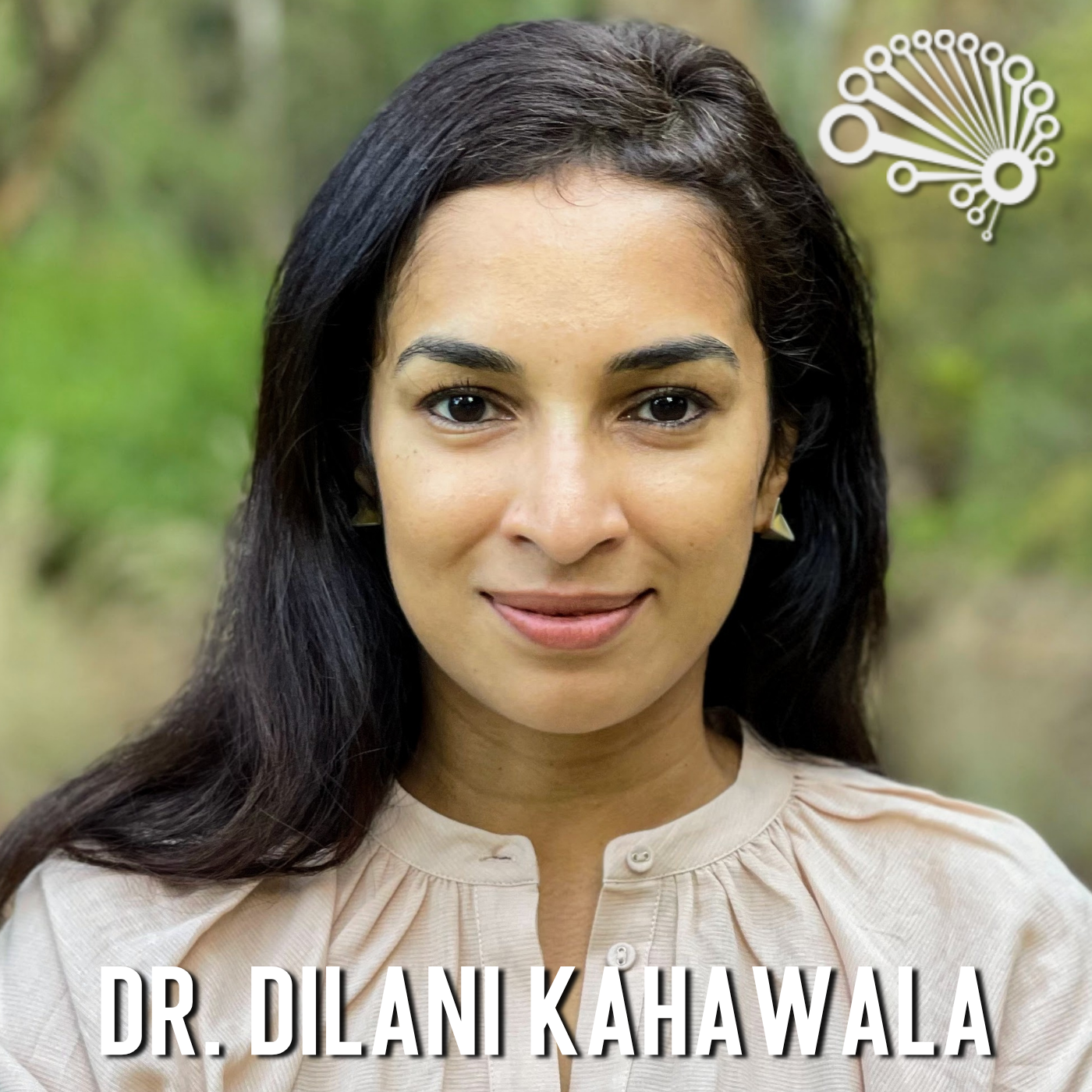
Jon Krohn: 00:00 What if you could hire a tireless personal assistant for your whole family for 20 bucks a month? My guest built one and parents are lining up to hand over their inboxes. Welcome to episode number 1027 of the Super Data Science Podcast. I’m your host, Jon Krohn. Today’s guest is Dr. Dilani Kahawala, co-founder and CEO of Anna, an always on AI assistant that handles the mental overhead of family life. The school emails, the calendar clashes, the soccer practice changes all over text, WhatsApp and voice, no app required. Delani’s background is remarkable. A Harvard PhD in physics followed by McKinsey, and then a decade of product leadership at Etsy, Meta and Atlassian, where she led a 150 person product organization before leaving to found her startup. In this episode, she reveals what it takes to build a long running consumer agent that works for you around the clock and can’t afford to get things wrong.
00:55 Enjoy. This episode of Super Data Science is made possible by Anthropic Grobi and the Open Data Science Conference. Delani, welcome from Down Under to the Super Data Science podcast. How’s it going today?
Dilani K.: 01:10 Great. Thank you for having me. I’m so excited to be here.
Jon Krohn: 01:13 I actually had you on my list. I didn’t tell you this, but I’ve had you on a list of people to invite to be a guest on the show for a couple months now. Ever since I became aware of Anna, your AI product.
Dilani K.: 01:23 I feel really privileged because you’ve had some pretty incredible people on here.
Jon Krohn: 01:28 Well, we’re going to help a lot with that today. Delani, tell us about Anna. What is Anna?
Dilani K.: 01:33 Well, Anna is a personal assistant for busy parents and we think of it as one of the most advanced AI assistants out there. And we’re pretty excited to be building pretty much on the edge of what’s possible with agentic tech. So you can basically talk to Anna like a human and we want that experience to pretty much be like you’ve hired a human on the other side and you text her or you talk to her while you drive on voice. And she proactively handles a lot of the mental overhead and the admin that kind of plagues families and takes up all the time in the world basically. And it’s the second job.
Jon Krohn: 02:18 It seems like an invaluable tool. I suspect pretty much every parent is like, “Wow, this is a lot.” I suspect there are a few out there that are like, “Everything’s under control.” So having tools that can help with that, there’s got to be a lot of demand for this. Is that what you’ve experienced?
Dilani K.: 02:35 Yeah. I mean, honestly, the story was kind of crazy because I have three kids and so we built this to initially to solve my problem and one other person on the team who has a family. And then we’re like, “Let’s figure out if anybody else wants this.” And it posted about it in a Facebook group and it kind of blew up. And so parents have been like, “Oh my God, please, please, please. I’ll give you all my personal information. You’re a tiny startup.” When we were building our beta and it’s been kind of overwhelming amount of like, “Hey, please solve my problem.” We’ve definitely had a few people who are like, “No, I have things under control. Don’t need you guys.” But most of the time people are like, “No, please
Jon Krohn: 03:26 Help.” Walk us through a typical user journey.What is a typical problem that a parent might encounter that Anna solves and how does Anna. Do you say how does she solve it or how does it solve it?
Dilani K.: 03:42 It doesn’t really matter. We say she, but I think people have not figured out how to refer to their AI assistants yet. So typical, I think we solve two big problems for parents. One is this information overload that you get when you’re a parent from all these sources, like your school app sends you it’s costume day tomorrow and need to come dressed up as a teddy bear or your favorite book character. And then your soccer match changes location and then your spouse doesn’t know that you already figured out how to drop off and who’s picking up the kid today. So there’s all this logistics. So you end up becoming a PA for your kids when you’re a parent. So the thing that Anna does really well is it pays attention to all the information that comes into your life, like Gmail, email, so calendars, school apps, WhatsApp, you’re getting bombarded with all of this and then it will proactively figure out what needs to go on your calendar, what changed, what needs to go on your task list and will serve that up to you at the right time as if a human was behind the scenes kind of paying attention to all of that.
05:02 So parents typically come in, they plug in their email and WhatsApp and school apps. And I think the magic moment is that the first time Anna’s like, “Oh, hey, I saw this match. So your soccer match changed time on Sunday. Do you want me to update your calendar?” And they’re like, “Oh my God, I would’ve missed that.” And that’s kind of the magic moment. But we have seen people use Anna for all sorts of incredible things, which has been part of the fun. They will use Anna to manage their email or unsubscribe from expensive subscriptions or plan their holidays, figure out what to eat during the week, track their kids’ growth, which I think is the amazing part of having, I think what AI enables. That wasn’t possible before, but it’s kind of blown our minds, honestly.
Jon Krohn: 06:05 And so what’s the interface like? So it sounds like if it’s connected to your messaging apps, it’s connected to the school systems, does it also. I’ve seen from, because you created a homemade ad, I guess, that I saw on social media. And so it looks like it works via your phone. Is there also a desktop version or is it primarily phone based at this time?
Dilani K.: 06:26 Yeah. I mean, a commission is for it to feel like you’re working with a human. And so if you hired an assistant today, the way you’d be working with that assistant is you’d be calling them or you’d be texting them or WhatsApping them. And so the primary way, when you onboard to Anna, you will spend a minute connecting your Gmail on the app or on the web. So you get set up. But then the primary way that most of our parents work with Anna is by texting her or WhatsApping her. And then also while they’re doing something, they’ll talk to her. There’s a button that puts you on voice mode and you’re literally just having a conversation with her. There’s an app, but that’s more for when you actually want to see what is my full task list? What are the things that Anna’s made for me?
07:19 What things Anna’s done for me? But we just wanted it to feel like Anna just is there, just like a friend, just like you message your other friends.
Jon Krohn: 07:29 It’s a person showing up in your WhatsApp chat or in your iMessage chat. Is that easy to do? You can just kind of create that and yes. How hard is that to build?
Dilani K.: 07:41 It’s quite hard from. The infrastructure is there and it’s possible and we basically. It’s not trivial, making sure that Anna can smoothly talk through WhatsApp or SMS or chat and have that all synced so your conversation wherever you go is continuous is one challenge. Then there is the other challenge of, well, every time we send you an SMS, it goes through the carriers in the US and we need to make sure that we abide by spam laws and all of that. So there’s an interesting challenge there. A lot of the time, like iMessage, for example, is very difficult for a third party to get into. It’s like Apple makes it quite difficult. They’re just beginning to open it up. But I would say the bigger challenge is actually the product management challenge of when you don’t have an app UI to rely on, how do you create this experience for a user that feels magical through a text-based system?
08:53 You’re managing your whole life through a text-based system or a voice-based system. That’s been, I think, the more interesting problem for us to crack.
Jon Krohn: 09:03 Yeah, it is an interesting problem to be able to tackle. And so with your extensive product management background, and so to go through this, after doing a Harvard PhD in physics, you then went to McKinsey as an associate, Etsy as a senior. Well, product manager, then senior product manager at Etsy, lead product manager at Facebook, and then group product manager, head of product, head of product management at Atlassian. So a decade of experience in senior product leadership positions, and now you’re full-time creating Anna. You’re the CEO of the business, but you’re surely also the head of product.
Dilani K.: 09:44 That’s kind of all we do. The funny thing is I’ve had to pretty much throw away a decade of how we think products should be built for people.
Jon Krohn: 09:59 Oh, really?
Dilani K.: 10:01 And that’s been really fascinating. So we’ve had to think very first principles from when you don’t have the crutch of a user interface, that’s one problem to solve. The other problem is the average person doesn’t really yet regularly interact with AI agents. So I’m on called code every day, all day, and my mode is I just ask and it will have an answer for everything, and the mode is you just ask and it gives. But I don’t think the average person is yet familiar with. There are deterministic set of options that you can tap and drop downs and things like that. You just asking an agent to do things for you is still a different mental model. And so the second challenge of how do you get someone to that operating model where you just ask? And then I think the third thing is when you work with cloud code, it’s not inaccurate, but you need to correct it.
11:18 It will give you an answer, but you’ll have to cross check it and be like, “What did you think about this? What did you think about that?” And these models are optimized for coding. They’re not trained on household data. So it doesn’t inherently know what to do with which calendar does this go in? It doesn’t have that understanding. But consumers don’t have that much patience for your assistant getting something wrong. It doesn’t constantly be correct. You don’t want to be constantly correcting it. So those are the three things that I think we’ve had to really think about how to. Reliability, the interface, and just teaching users how to work with an agent have been the three biggest challenges.
Jon Krohn: 12:13 I guess something that’s quite different about a agentic interface like Claude Code and what you’re building is that in Claudecode, it is still a turn-based conversation where yes, it goes off. It’s agentic because it figures out how to tackle a task, spins up sub-agents as it needs to, but ultimately when it’s done what it’s doing, it just stops. It gives you an output and then waits forever. And if you never come back to that chat, nothing ever happens again in that chat. It seems to me like with Anna, there will be times where Anna needs to reach out, where maybe Anna has sent the last message and needs to send another one before you’ve responded because something has changed with your kids’ football practice or an important email has come through or a reminder of an upcoming appointment or something like that. So it seems like it’s more discursive, more back and forth.
13:19 It’s not as linear or just turn-based back and forth conversation.
Dilani K.: 13:23 Yeah. And this is, I think, the biggest change. So I think when. Anna is a long running agent, meaning that it doesn’t kind of stop and wait. It is constantly working every second, every minute, working for you behind the scenes. So when the open calls of the world, the Herman’s agents, and now we see maybe Grockbot, all these agents are trying to tackle the same problem of how do you just continuously work with someone, but with not that much success because most people set up an open call and then they kind of give up on it after two weeks. Because what we have to have happening behind the scenes, Anna’s constantly working for you on a set of things, whether it’s checking your email or figuring out if a piece of information is noise or if I’ve handled this before, is it already on your calendar?
14:23 Have you already tackled this task? Which kid is this relevant for? This is constantly working in the background and you’re at the same time having conversation with it where Claude, we will have a team of domain specific experts, agents who are going and doing a bunch of things for you, but Anna will be like, “Oh, I picked up that your meeting changed and it’s going to clash with your school pickup. I need to interject and give you that message while you might be asking Anna to book a restaurant reservation.” So we’ve had to figure out how to handle that so I queue things up in the correct way. There’s a whole layer of ops that Claude doesn’t have to deal with yet.
Jon Krohn: 15:09 Yeah, that’s a really interesting use case there that I hadn’t even talked about in the way that I was like, “Oh, this must be more complex, not just having back and forth.” But it is also interesting that you could be having a conversation, you’re in your car talking to your car, your car phone, but your car phone is Anna on the other side, and you’re having a conversation about scheduling some upcoming event, and then it has to actually interject and say, “We’re going to have to take a pause in the conversation that we’re having because this important thing has come up.” That is a really interesting. And yeah, I have never experienced anything like that in any conversation with a non-human to date.
Dilani K.: 15:53 So this is actually really obvious in voice mode. So when you put voice mode on, you could be. If you ask Anna to do something complex, like go find me a dentist, she has to go do some research and she has to look up where you are and who’s best reviewed. That task takes sometimes a minute or two because that’s a complex task. In the meantime, you might, and voice goes pretty fast, you might have fired four or five things at her. And so we fanned out a bunch of agents who are doing multiple things for you, but it has to be then queued up in the way that the conversation piece of it is understanding, okay, you asked me this first, then you asked me this thing, this thing is finished. Okay, now I’m going to finish what I’m saying to you and then get back to you.
16:46 That was a fascinating challenge. I don’t think what’s interesting is when we started, and it was only a few months ago, the voice models then were not good enough to do that, to even handle that upfront conversation. And it’s only three months ago that Gemini Live changed substantially. It could handle the conversation piece while we have the agentic brain behind the scenes doing all the fanning out.
Jon Krohn: 17:14 So Gemini Live is a voice platform that you can develop on?
Dilani K.: 17:18 So actually there are many voice models, like 11 Labs is probably the most famous in that space. A lot of the voice models are speech to text and then text to speech.That’s how voice models evolve. Gemini Live is one of the first, I would say, voice to voice models. It understands your voice directly and responds without converting it into text in the middle. There are many voice models out there and we experiment with a lot. Right now, it’s our preferred one.
Jon Krohn: 17:56 Really cool. All right. So I think we now have a pretty good understanding of the Anna product, how it works, and some of the tricky nuances of building a product like Anna. It seems like, based on the conversation we’ve already had, I maybe have some understanding of how this came about. It sounds like you built a solution for yourself, for your family. You maybe didn’t at any point in the early days have any kind of commercial expectations or did you, given how commercially oriented you are as an individual, maybe it occurred to you right from the beginning as you were kind of playing around with this idea?
Dilani K.: 18:34 It’s funny because we were. It gets a little bit at the startup story, but we were in the middle of a pivot. We did not start out building Anna. We were in the middle of a pivot. We were pivoting actively, but we were pivoting, we were experimenting with all sorts of enterprise ideas because that’s kind of my background. But then our lead engineer, who’s incredible, built this thing on WhatsApp and he’s like, “Oh, this is my assistant that manages all my admin.” I’m like, “I need that. I need that in my life.” And so I got it and I was like, “Hmm, this is kind of interesting. This is a different way to work with an agent because it was literally on WhatsApp and it was vastly different from having an interface that I needed to have a conversation with.” I just posted about it in a Facebook, like a mom’s group and it kind of blew up.
19:33 And I think that’s the point where we’re like, of all the ideas we’ve been testing, this was a very clear spike in like, “Oh my God, I need this. This is a massive problem.” And you see all this latent demand, which is I’ve been trying to build this with Claudecode or I’ve been trying to build this with open code. I’ve been trying to hack this together. So you have all these parents who’ve been trying to hack this together and you’re like, “Okay, now there’s something there.”
Jon Krohn: 20:04 That’s quite a group that you’re hanging out with if they’re trying to get Hermes agents.
Dilani K.: 20:10 It’s a moms in tech group, so it is definitely self-selecting.
Jon Krohn: 20:13 I see. That makes sense.
Dilani K.: 20:16 And then we’re like, “Okay, let’s give this a month of our time. If we go really hard at this and we build out a prototype, is there something here?” And very clearly there was, and that’s when we’re like, “Okay, I think this is such an interesting space.” It’s a massive market. Obviously there are millions and millions of parents and a lot of them have this problem and it’s such an exciting space. And it’s also lovely to actually just wake up in the morning and the AI thing you’re building is giving people their life quality back. I think it fell into place pretty quickly for us.
Jon Krohn: 21:00 That is really cool. And it sounds like the way that you’re building it is with Claudecode. Is there a development team or is it mostly you developing this?
Dilani K.: 21:10 It’s a pretty small team and many more Claudecode accounts than team members. So we’re all building, but the development pace is incredible now, obviously. But you also have this new set of problems that you didn’t have when you were building five years ago that you’re constantly just trying to keep up with, and that’s been fascinating.
Jon Krohn: 21:39 It must be so much fun to be getting better and better tools to work with all the time. It is wild to me. I am always paying for Fable five for any development that I’m doing, any book rating that I’m doing, because it’s totally worth it to me. It’s not incremental. It’s a big performance improvement in terms of understanding the context of what I’m looking for and yeah, really fun time to be building the way that you’re building for sure. How do you evaluate what you’re doing? When you’re building something that parents are going to be working with, that’s going to be impacting kids, even if kids aren’t using it directly, though they are probably hearing their parents interacting with Anna, and so there must be a relatively high bar for evaluating what gets output, what kinds of actions get taken.
Dilani K.: 22:33 The eval, the measurement, and the improvement loop is kind of everything. Basically because when you’re a consumer, exactly what you said, you can’t afford to be wrong 20% of the time. That bar is. The way in a turn-based conversation with Claude Code, you might course correct it, that we don’t have that luxury. So for example, Anna needs to know pretty quickly with high accuracy, if a piece of information for your family that you’re getting from an email is noise or signal, which calendar does it go on? Have I already handled it? Is it for you or for your spouse? Is it something I need to inform you about now or later? And then there are hundreds of these things that you could let a model do on its own, but it will get wrong at 30% incorrect. So we have a really solid test suite, basically an eval suite that is constantly evaluating.
23:56 We come up with the answer for like, “Hey, this is an email that represents a school email. From this, you have to extract dates and times, for example. Did you do that correctly?” And then if it didn’t, we will then have an automated loop that kind of iterates on it until it does pass that test. And we have thousands of these tests.
24:26 Actually running our test suite is one of the most expensive things that we do because we just need to cover so much space because people do lots of different things with Anna that they wouldn’t do in a non-agentic product. And then I think the most important part that I think we’ve now figured out is when people get frustrated with using Anna, that means something that she did was not meeting their expectations. How do you figure that out and then add that to your eval suite in an automated way so that it’s constantly self-improving? And this is kind of really at the heart of what makes Anna good, and I think it’s the thing that sets us apart in many ways.
Jon Krohn: 25:23 Sure, sure. Yeah, it really sounds complicated. You’re talking about expensive there. I assume we’re talking about computationally expensive, which also literally does mean dollars. It does mean money being spent. You might not be comfortable answering this question, and so you don’t have to. This is potentially your secret sauce, but I’m curious how you choose what large language models you use in the backend and how you control token cost from being. I’m going to have to ask you about pricing model and how you’ll eventually make money, but earlier in the episode you talked about this being always on, you’re kind of always consuming tokens. And if I think about, I can spend tens of dollars seemingly in a few minutes with Fable five. And so if you make the wrong model choice for a task that sprawls into tons and tons of tokens, you could very quickly have these sprawling costs.
26:23 And yeah, I don’t know what your business model is, which I guess you might need to tell us about it now, but I am suspecting it’s something like a monthly subscription fee that’s kind of a fixed cost. And so it’s your responsibility as the designer of this solution to make sure that you’re not underwater providing the solution.
Dilani K.: 26:42 We did not expect this to be a problem so early on, right? Startups at our stage don’t really have to think about running costs so early. So our business model is a simple subscription. At this point, it’s like a two week trial and then it’s $20 a month and you get a discount if you do your subscription.
Jon Krohn: 27:04 It’s at hianna.com, right? Yes.
Dilani K.: 27:05 H-I-A-N-N-A.com. Ai.
Jon Krohn: 27:10 Ah. Ai. My bad.
Dilani K.: 27:12 And we kept it simple to begin with, just so that. And I’m sure we will experiment with it. We talk about how pricing is in the space. It’s like the wild west in a little bit, but we’re going after families. We wanted it to be recognizable as a subscription, like every other thing they subscribe to so they don’t have to be like, “What is token-based pricing?” That is not a thing that people yet have really understood. So we kept the subscription simple and it’s quite cheap, right? If you think about how much your claud max costs versus $20 a month, this is an always on Claude Max. So the price to cost is enormous. So you’re right that we are constantly, whether you message Anna frequently or not, we are constantly just spending tokens, figuring out what’s going on behind the scenes for you.
28:18 So the answer to which models we choose varies a lot. We started very simply, like everybody else, building with anthropic models because they were just so much better eight months ago, I would say. No one could get close. But over time that’s evolved and we use a host of different models for different reasons. So our voice model is different. We have fast models that very quickly classify things. We have fast models that respond to you and carry on a conversation, but then we have our strong models, like strong thinking models that are doing a lot of the figuring out, “Have I already handled this? Do I need to put it on your calendar, but is there a conflict or do I need to go do research to figure out which restaurants are nearby?” So we use a mix of models, and that eval suite is really critical because as new models come out and we want to switch, having that eval suite makes it really easy to be like, “Okay, did we do something bad or did our performance degrade by shifting to a different model?” But we do now actually, we have shifted towards using open source models just because it has become quite expensive to serve our current user base.
29:57 So we are trying to be smart about How we control the cost. Because for us, what we don’t want to do is cap your usage and be like, okay, well you’ve run out of usage of Anna. That’s a horrible experience. On cold code, you can turn on extra usage or whatever, but for a consumer, you don’t want to do that. So we want to give you the most premium experience of Anna possible for the $20 a month. And that means behind the scenes, we’re just trying to figure out how to get the most powerful models for you without basically burning through all of our runway.
Jon Krohn: 30:38 Sure. I was talking earlier in the episode about how exciting it is to be developing with frontier capabilities in a cloud code environment. But similarly, in recent weeks, a lot of my podcast episodes, so I do two episodes a week. So yours will be this long form interview on a Tuesday. On Fridays, sometimes I have interviews or we have an in case you missed an episode that recaps the best conversations from the past month. But also some of those Fridays are just a deep dive on a topic that I think is really important for us to get into. And I do research and write a script. And two of those episodes in the past month have been about open source models that are Quen and Kimmy models that are just so useful and so close to the frontier that the American labs are paving. Yeah.
Dilani K.: 31:27 Yeah. They’re not exactly as good, I would say yet, but they’re so close. And if you have a good eval suite, I think they’re just too good. And we’ve tried a whole host, like DeepSeq, MiniMax, Kimi. And every week something’s changing. So just keeping up and testing that has been actually our new challenge being like, “Oh, well should we try this model for this?” It’s changed dramatically in the last six weeks, I would say. And so it’s an interesting world to play in right now.
Jon Krohn: 32:08 For sure. How do you ensure that your whole system is scalable? I mean, maybe there’s a bit of a chicken and egg with you finding alpha users and then beta users and making sure at each of those stages that your infrastructure can support that growing user base.
Dilani K.: 32:27 I guess there’s two answers to it. One is managing that cost side that we talked about. As you grow, how do you make sure we can sustainably support people? And I think we’re beginning to figure that out quite well. The infrastructure side, I mean, there’s a standard sort of how do you make sure that you can have a chat service that can serve thousands of customers versus tens of customers? So that kind of thing I think is more like a standard software engineering problem that’s been solved before, but you know how to work through it. And then you have interesting info issues like there are rates of how many messages you can send by SMS through Twilio, for example. And so those are interesting problems that we like, okay, I guess we better figure that out. We have to get approval from T-Mobile.
33:28 But I think the biggest problem we’ve had to solve when we’re scaling is because you’re an agent and you can, in theory, do an infinite number of things compared to a to-do app, say five years ago where maybe you have 20 features, 25 features, you can ask Anna do anything. And Anna might get some of that wrong and the user might get frustrated. I think the biggest thing for scaling for us is how do you maintain that quality and accuracy bar as people push the boundaries, as hundreds and thousands of people push the boundaries of what Anna can do?
34:11 We have a way for you to log into pretty much any tool out there. And so at some point we were seeing people log into their Notion and they’re like, “What are you doing with Notion?” But we hadn’t necessarily optimized for that. So we’ve had to build this loop, which is constantly picking up people’s frustrations and then fixing those frustrations, which I think like a clawed code, for example, doesn’t necessarily have to do because we have a much higher bar for you can’t get it wrong. And I think that’s where we’ve spent all of our Claude code accounts trying to get under control this constant frustration fixing loop, which is very powerful, but also how do you scale that as your customer base scales? It’s been interesting.
Jon Krohn: 35:08 That sounds like a part of the IP moat that you were developing for sure.
Dilani K.: 35:13 I think so.
Jon Krohn: 35:14 Yeah. How do you think about adding in new features? I mean, you just said that Anna could kind of do whatever, but I mean not capability. Yeah, there’s a lot of capabilities obviously when you have an LLM in the backend kind of interpreting, assigning tasks, there’s infinite flexibility in what could happen. But when I say features, I mean being able to support iMessage or deciding some kind of new product decision. How do you decide where to go, what feature to prioritize next?
Dilani K.: 35:46 I think there’s two things. One is old school product management and the other is latent demand. So we try to make a bet on where do we think, what’s the vision, what’s the dream for this? And so we made an early bet that people were going to be talking to Anna and that’s quite a different. There were no products and people pretty uncomfortable actually talking to. WhisperFlow has kind of set the stage for this, but we made the bet that actually in the long term, we think people are going to be having a conversation live because that is so much more efficient. And so we figure out what our vision is and then we’re like, okay, this is the bet we’re making. So we’re going to make voice mode a priority even if in the early days we probably had a couple of people try it out.
36:41 So that’s one side of things. But I would say the primary way, once we’ve figured out what’s the vision here, which is Anna should feel like talking to a human and Anna should be proactive behind the scenes and you’re not having to have a turn based conversation for everything. The second thing I think, and one of the things I’ve kind of learned at Meta really is this idea of latent demand. We see what people are trying to do and when we see a lot of people trying to do that one thing, we’re like, okay, we need to go make that feature much better. So for example, people were asking to collaborate with their partners. And so we didn’t have that early on. And when enough people asked for that, we added that in. Or we see people trying to connect Outlook. They will ask Anna, I want to connect my Outlook.
37:41 And we were usually like, who’s this Outlook? But a lot of people do.
Jon Krohn: 37:45 Ew.
Dilani K.: 37:48 And then you’re like, oh, well, okay. Well, that flow for adding Outlook was not very smooth. Now we go and make that smoother. So I think we pay very close attention to where is there already demand for that? And we kind of go after that.
Jon Krohn: 38:08 Kind of zooming out further beyond, we were just speaking about individual features, let’s now talk about a product idea. So you alluded to earlier in the episode that the company that’s now building Anna was doing something else. And so yeah, I mean, maybe give us a bit more context on what was happening. How long were you and a team of people developing product ideas and how many kinds of pivots or what was the journey like to finally get to a point where you’re like, cool, now we’re confident we have something that works. It sounds like, I guess you told us a little bit of this story, the end of the story where it seemed like there was a lot of demand. You were like, okay, let’s invest a month in trying to build something relatively robust and see how that goes. But what was the journey up to that point?
Dilani K.: 39:01 When we started, we were called Braid and that’s still the parent company name. And we’re building project management agents for software teams. And that’s kind of what I was doing at Atlassian. We were doing a lot of project management with Jira. And when the AI wave came about, I was like, there is a very different way to do this than with a Kanban board. So we started out doing that like an enterprise software project management agent product. What happened was that when we talked to customers, they seemed like there was a lot of demand for it. And I think it’s an obvious problem, but it’s a combination of, I think the timing of when we brought this to market and where the technology was. We found out honestly that probably didn’t have the kind of product market fit that we were looking for. And so a few months in, after we had raised funding and we had hired a very small team, we decided it was a very difficult decision, but we were like, we’re going to be decisive and we’re going to pivot away rather than continue to kind of butt our head against this problem.
40:27 And we spent a good three months exploring this idea base of what is our next thing? And we were very deliberate about experimenting quickly and trying to see when there is a spark of demand. And we were on this journey with primarily enterprise ideas of we would see where there was a problem and we would try to build a prototype quickly. We would try to get to customers quickly and see how the response was. That’s when we came, we were doing that when we kind of stumbled on Anna basically.
Jon Krohn: 41:09 Yeah. Stumbled on a direct to consumer product instead. And you mentioned enterprise, of course, you had experience in that, but I also happen to know that building enterprise products, you can get bigger valuations, you have stickier contracts, typically big juicy ones with nice logos. There’s all kinds of reasons to be focused on enterprise, but there’s something really cool about when you go to the consumer route and something clicks and you can kind of, because then you’re in a cool situation socially, I feel as well. Not only does that work and you have network effects, like you were saying, how you can exploit the data that you’re collecting from your users. So that allows you to develop a moat relative to other people who could be like, “Oh yeah, I’m also going to create an AI for parenting.” Another cool thing about a direct to consumer product is in a social situation, the old cocktail party, it’s so easy to explain,
Dilani K.: 42:05 Which is
Jon Krohn: 42:05 Nice too.
Dilani K.: 42:06 It’s really fun. It’s extremely fun to work on a consumer product, especially because it’s incredibly satisfying to understand what that person is struggling with and help solve their problems. I think in an enterprise context can be quite hard because you’re sometimes quite removed from what these people are doing day to day. Consumer in AI has been very underserved, I think, because all of the effort and all the companies that you see are today, the big ones are really all enterprise or prosumer in some way. So it’s an exciting time to be building in consumer AI. It is challenging because I think we’re still trying to figure out 10 years ago when you’re building consumer, you just try to acquire, you have to grow quickly, try to acquire as many users as possible, but that’s quite costly to serve them in the AI world. So I think we’re still figuring out how does a startup scale in consumer space?
43:20 And so that’s the next challenge.
Jon Krohn: 43:22 Yeah. Scaling a SaaS business was way easier to have an extensive freemium tier, for example. Or like how Google, Facebook, these products that are still free today because it was so inexpensive for them to. Some of those users aren’t providing them any value. Someone comes in on an incognito window, it’s hard to serve ads to them that are well targeted, but it doesn’t really matter because it’s so cheap and there’s so many people out there that you are able to get hit with targeted ads or whatever. Yeah, it is a trickier thing that I think all AI businesses face today where it is so much more expensive to serve your customers than it is for a SaaS business.
Dilani K.: 44:05 I mean, it helps if you have a mega wallet behind you to back that, if you’re like Meta or Google and you can kind of do this. But especially as a startup, you really have to start thinking about your unit economics much earlier than I think previously. The funny thing is you always think, well, the token cost is going to come down, but you always want to be building in the frontier because you always want, you’re still just barely getting by with what is possible with the best models today. So you’re like, I always want the best model and the best model and the best model. So it’s going to be so interesting to see the open source models have helped. It’s going to be really interesting to see how these. Because I don’t think a big freemium tier can play out without at least some limits.
45:02 And so we’ve seen other similar companies have all sorts of interesting pricing models, but they might cap their free tier. Or there was one that you had to negotiate the price with the agent, which was fascinating, I think like poke. So no one has quite landed on this yet and I think we’re going to be doing a lot of experimentation.
Jon Krohn: 45:26 I love it. You have an exciting trajectory. Where do you hope to be with Anna in a few years time?
Dilani K.: 45:33 It’s moving so fast. My dream is that if you’re a family that in a year or two years, you actually just have a team of agents who are just handling your admin and you just have 10 more hours in your week that you’re not doing horrible admin work. That’s kind of the dream, you just have more free time. And I think under the hood, that means there’s a team of agents who are constantly just figuring out what needs to be done to make your household run, but potentially even talking to the agents that belong to other families and coordinating for you and figuring out, oh, who’s doing the soccer pickup this weekend and kind of figuring all that out. Agent to agent interaction in family to family is where I see this going and it’s all going to be voice and SMS or voice in WhatsApp and that kind of human interface rather than someone tapping buttons.
Jon Krohn: 46:41 I think so. Definitely. All right. I have alluded to the fact that you have a very interesting background and we’ve kind of done a cursory glance over it, but I’d like to double click on a few things from your past just to give people. I think we’ve covered Anna pretty comprehensively now, but it’d be interesting to learn a bit about you, Delani, and your journey to now being the CEO and co-founder of Anna. So you did a PhD at a little known university called Harvard in physics, and then you jumped to McKinsey. And I think that one I can understand because I also thought about Bain, BCG, McKinsey when I was getting near the end of my PhD because it gives you the opportunity to showcase to the world that you’ve now developed, not only do you have this great technical background, but you can be commercially savvy as well.
47:36 And you get amazing experience at one of those big consulting firms. So that one, I feel like I can understand that transition, but maybe you can add a bit of color or tell me what I got wrong.
Dilani K.: 47:46 I had always though I was going to be a physicist, like an academic, and I was doing very theoretical. I like particle physics. So really large headron collider, thinking about dark matter, bunch of that stuff. Very, very fun.
Jon Krohn: 48:04 I get thinking about dark matter all the time, some dark stuff.
Dilani K.: 48:09 Yeah. Especially with AI these days. I’m like, “Oh man.” But I was in Cambridge and you’re surrounded by MIT and Harvard and there’s this. It’s not quite Silicon Valley, but I got there and I was like, “There’s all these people trying to do startups. What are startups? What is this?” And I came from a show which at the time didn’t have a huge tech scene. And I was like, “Oh my God, this stuff moves so fast and people do really exciting things in a very short period of time, whereas it takes a year and a half to write a paper and get it published, best case.” And I, towards the end of my PhD, was like, “I think that’s what I want to do. It’s just so much more exciting.” You can see all these startup competitions and the crazy stuff that comes out. So I actually knew that I wanted to do tech and potentially even be a founder, but I couldn’t easily make that jump from a physics PhD.
49:14 My options at the time were be an academic or go join a quant hedge fund. Those were the two things that people kind of do. I was like, “Well, I want to be in a tech company and build.” I didn’t even know how to articulate that. And so I was like, “Hey, I think the way to do that is to get a little bit more commercially savvy,” like you said, which was a McKinsey jump. As I was doing that, I kind of figured out, okay, product management is this interesting space where you still get to work with technical people and you can leverage a little bit of your technical background, but you’re still thinking about the business. It was a very exciting world of time and not even very well defined. I happened to have. My manager at Etsy kind of took a chance on me, even though I had no product management experience.
50:06 And I was like, “Yeah, this is it.” Etsy’s the most fun company in the world. So it was in New York at the time, and that’s kind of how that transition happened.
Jon Krohn: 50:16 In Brooklyn?
Dilani K.: 50:17 Yes. It was the most fun I’ve ever had, honestly.
Jon Krohn: 50:21 Wow. That’s cool. I didn’t know it was that fun.
Dilani K.: 50:27 It was pre – IPO when I joined, and it’s such an interesting, unique work culture.
Jon Krohn: 50:34 And then Facebook, Atlassian, I mean, I think those are kind of understandable transitions. I don’t know if you have anything to add onto that, and you definitely can, but my question that I already kind of said I was going to ask is then what prompted you to go from being in this very senior role at Atlassian, head of product management for the shared experiences platform, leading a team, leading an organization of 150 people across North America and the Asia Pacific region? Sounds like an amazing opportunity, but you left almost two years ago now to co-found Anna. Well, I guess it was called Braid at the time.
Dilani K.: 51:13 Yeah. Like I said, when I left my PhD, I was like, “I want to found something.” And I had actually dabbled with a few things while I was doing my PhD, and there were a bunch of barriers. I was on an F1, like a student visa. I didn’t have any money to do this, so that was not the right time. And then when I joined the tech companies, things were growing quickly, so it was always hectic. But in the back of my head, I was like, “I always wanted to found something.” And then 2022, 2023 came around, and I could see pretty clearly that AI was going to change things. It was like GPT-3 at the time, and people were writing things with it, but you could see that this was going to be very different from every other tech revolution we’ve had. I was like, “Well, I think this is the time.
52:16 If you don’t do it now…” And I, at the time, had just had my third kid, so I was not sleeping very much and struggling to manage three kids and work and everything. But I was like, “This is the time if you don’t catch this way, this is the way we don’t want to miss.” And I think that’s what kind of prompted the, “Okay, it’s time to make the call and it’s too exciting.”
Jon Krohn: 52:48 Cool. Yeah, I agree. I say a lot when I do those Friday episodes where it’s me just deep diving into a topic, my final sentences in that episode will often be about this is an unprecedented time for you to be building things, whether it’s in an organization or as an entrepreneur, as a hobby. There’s never been a time like it, and I don’t know if there ever will be again, we’ll see. Hopefully it unleashes even more waves of creativity and possibility, but fantastic. Thank you so much for taking this time out of your schedule. I mean, I guess you’re lucky and has taken so much off your plate that now you could do a podcast episode with me. Exactly,
Dilani K.: 53:27 Exactly. It’s like I have so many hours of free time now that I don’t have to troll through my email.
Jon Krohn: 53:33 Yeah, exactly. I’m sure. So before I let you go, something that I was supposed to tell you before we started recording is that I ask all of my guests for a book recommendation. I don’t suppose you have one for us. It doesn’t need to be a technical book. It can be a favorite novel or whatever.
Dilani K.: 53:51 Sapiens by.
Jon Krohn: 53:52 Oh yeah, sure. Yuval No Herari. Yes.
Dilani K.: 53:55 Yeah.
Jon Krohn: 53:57 That’s one of my favorite books of all time, for sure.
Dilani K.: 53:59 I feel like it’s drawn so much controversy, but it was such a fascinating read. And I think about it because I actually recently saw a documentary about human evolution. It was like this BBC series, and then it took me back and this book was. I don’t read a lot of nonfiction, but this was one that stands out for me.
Jon Krohn: 54:21 It’s a pretty easy read for nonfiction. Yuval Noah Harari has a pretty unusual gift for making the narrative compelling, even though he gets it to some pretty thorny stuff.
Dilani K.: 54:36 It’s a page journal, right?
Jon Krohn: 54:38 Yeah, it’s a page journal. I didn’t know he was controversial even.
Dilani K.: 54:41 What I’ve heard is that it oversimplifies maybe evolution in some sense, but that’s kind of what I need because I’m not an expert. I need the story, the juicy story.
Jon Krohn: 54:52 For sure. I mean, that’s such an easy way to critique something. It’s like, oh, well, obviously if you make something that’s one of the most popular books in the world, it’s probably going to have to skim over some of the detail to make that work for everyone. It’s a funny trade off. Yeah. It gives lesser selling authors something to feel good about. Nice. And my final question that I always ask my guests is how we should follow you after the show or your business, whatever you want. You can tell our listeners how people should be following you for your brilliant thoughts or Anna, the business for its brilliant advances. Of course, we already know that we can go to hianna.ai to sign up for a free two week trial of Ana. So get to it, parents. Get way more podcast listening time in your life.
Dilani K.: 55:50 I’m always on LinkedIn and I post on X, and I post about both how the product is going, but also how we’re building. So that’s where you can find me. Or you can just shoot me an email, Delani@hianna.ai, anytime.
Jon Krohn: 56:07 Nice. Thank you so much, Delani, for taking the time to share your brilliance with the audience. And something else that is crazy, you might not even be aware how unusual this is. We did this episode without any breaks or retakes, and usually there’s at least a few. Sometimes there’s a lot. Really? Okay. This just one continuous flow of conversation, which our editors have got to love. That’s got to be the dream for a media editor.
Dilani K.: 56:36 It’s just like, that’s great. Well, there you go.
Jon Krohn: 56:42 Yeah. Really easy chatting with you. Maybe we can have you on again in a few years when Anna is a household name.
Dilani K.: 56:49 I’d love to. Thank you for having me. It’s been really interesting conversation.
Jon Krohn: 56:54 What a great episode. In it, Delani Kahawala detailed how Anna watches everything flowing into a parent’s life, emails, school apps, WhatsApp, calendars, and proactively services what matters. She described that the hardest three problems in building Anna are creating a magical experience with no app UI to lean on, teaching everyday consumers to just ask, to have this just ask mental model of working with an agent and hitting a reliability bar far above what coding agents get away with. She talked about how Anna differs from term-based tools like Claude Code by being a long running agent that works every minute behind the scenes, why the eval and improvement loop is the heart of her product, and the brutal economics of consumer AI, where a flat $20 a month subscription has to cover always on token spend, pushing the team toward a mix of fast models, strong thinking models, and increasingly open source models like DeepSeq, Kimmy, and MiniMax that have closed most of the gap with the frontier.
57:55 As always, you can get all the show notes, including the transcript for this episode, the video recording, any materials mentioned on the show, the URLs for Delani’s social media profiles, as well as my own social media profiles at superdatascience.com/1027 for, of course, episode number 1027. Thanks to everyone on the Super Data Science podcast team, our podcast manager, Sonja Brajovic, media editor, Mario Pombo, our partnerships team Natalie Ziajski, our researcher, Serg Masís and our founder Kirill Eremenko. Thanks to all of them for producing another super episode for us today. For enabling that super team to create this free podcast for you, we are deeply grateful to our sponsors. You can support the show by checking out our sponsors links, which are in the show notes. And if you’d ever like to sponsor an episode of yourself, you can find out how to do that by navigating to johncrohn.com/podcast.
58:50 Otherwise, please help us out by sharing this episode with other folks that are struggling with parenting or trying to build a AI product in this day and age. Review the show on your favorite podcasting app or on YouTube. If you write a review on Apple Podcasts about the show, I will read that on air in a future episode. Subscribe to the show if you’re not already a subscriber, but most importantly, just keep on tuning in. I’m so grateful to have you listening, and I hope I can continue to make episodes you love for years and years to come. Until next time, keep on rocking it out there, and I’m looking forward to enjoying another round of the Super Data Science Podcast with you very soon.