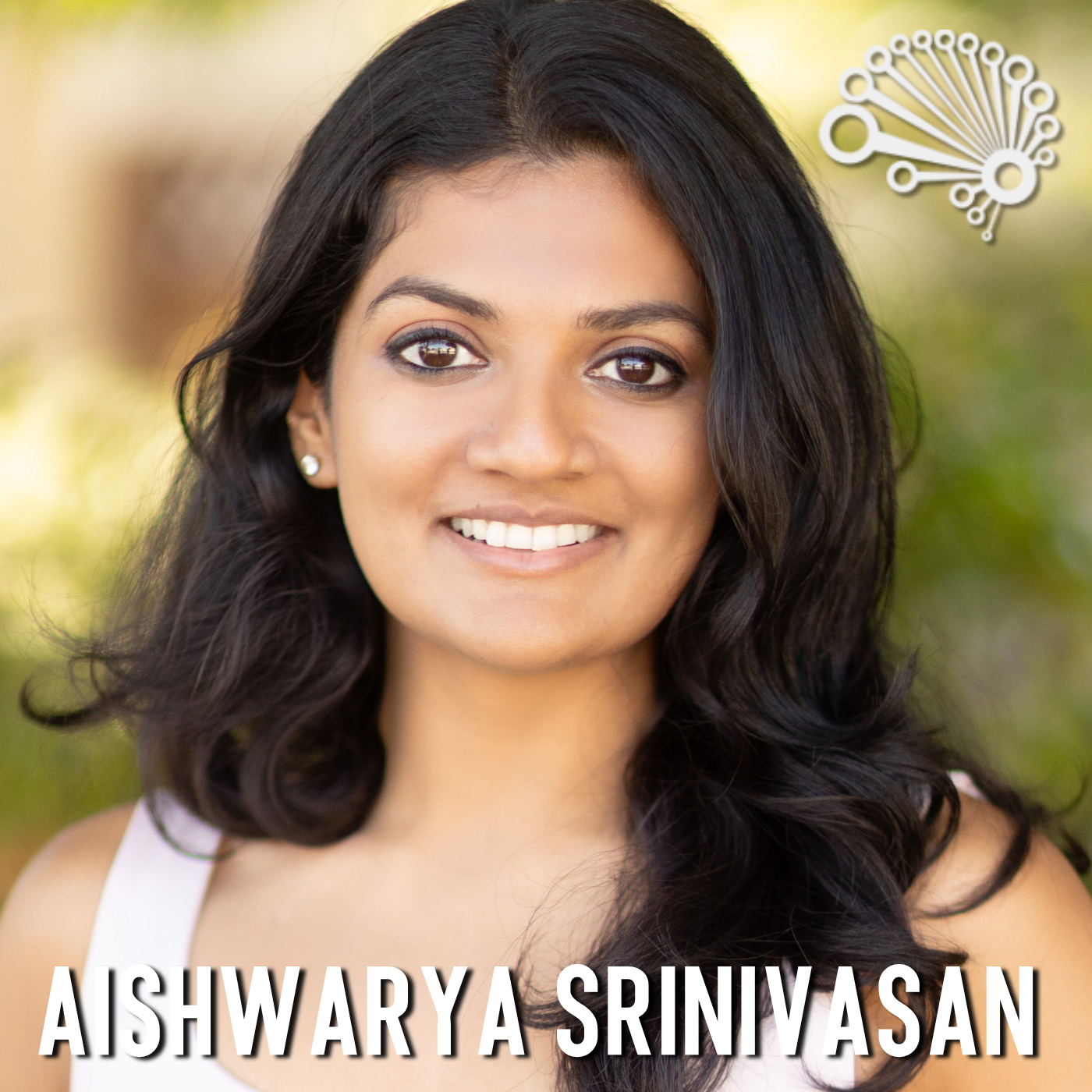
Jon Krohn: 00:00:00 My very well known guest today says nobody writes code manually anymore and whatever you can build in 10 minutes, somebody else can build in 10 minutes too. So where on earth does your competitive moat come from now? Welcome to episode number 1023 of the SuperDataScience Podcast. I’m your host, Jon Krohn. Today’s exceptional guest is Aishwarya Srinivasan, Ash to her friends, and after today to you too. Ash is co-founder of the Gen Academy where she trains senior engineers and leaders to ship agentic AI in production. Her resume spans Google, Microsoft, and IBM, and with over 1.2 million followers, she is one of the most followed people in AI. In this episode, Ash covers where defensibility comes from when code is nearly free, how to evaluate non-deterministic agent systems end to end, why reinforcement learning is having such a resurgence, and how to future-proof your career.
00:00:54 Enjoy. This episode of SuperDataScience is made possible by Anthropic Gurobi and the Open Data Science Conference. Aishwarya, welcome to the SuperDataScience Podcast. It’s such an honor to have you on the show. How are you doing today?
Aishwarya S.: 00:01:10 Thank you so much, Jon. I absolutely love the name of your podcast because data science is something which has just been such a big part of my life. So when you call your podcast SuperDataScience Podcast, it ought to be really amazing.
Jon Krohn: 00:01:23 Well, I am sure our listeners are delighted to hear that. We’re super lucky to have the world’s most listened to data science podcast, and it’s an honor to have you one of the biggest creators in the AI data science space. You can go so technical, but you can also bring things to an enterprise level or to any kind of audience. You’re one of the most flexible and talented people in the space. So amazing to have you on the show. So you’ve spent years widening access to AI through things like Illuminate AI, which you’ve been doing for years. You can tell us about that, but also developer advocacy for huge businesses like Google and Microsoft, IBM, mentorship you do tons of. And now you’re creating and teaching with something called the Gen Academy. Do you want to tell us about these initiatives that you’re using to educate so many people?
Aishwarya S.: 00:02:15 Yeah. I would say Illuminate AI has sort of branched into becoming Gen Academy. But the reason I started with Illuminate AI, this was back in 2020, is this pandemic. And I used to speak with a lot of people who were my juniors or from the university or people who were working in the same company and just wanted to get started in a certain specialization. And I just love teaching. I just feel like that could have totally been my alternate career and probably what led me to build Gen Academy as well. I loved teaching people. I loved talking to people about what they need help with. And I have been a very strong believer of education being very democratized. I come from a place where it wasn’t easy for me to get access to the sort of education or just get access to right kind of people and information.
00:03:08 And I feel I was extremely blessed to get the mentors that I had along the way, whether it was through my undergrad, whether it was through my grad school at Columbia, whether it was through my work at IBM or even as an intern at IBM. All of that really compounded to help me grow in my career. And I just wanted to give it back to the community and people that I’ve been connected with. So it started off as just me mentoring people on LinkedIn and to a point where I was like, I can’t keep up with the messages anymore. So I started Illuminate AI, which was a mentorship community. And I opened up a mentorship form, which was like, “Hey, if you want to be a mentor or you want to be a mentee, just apply and then we’ll do some sort of a mentor mentee matching.” And I was obviously expecting that the first time we roll it out, we’ll have several hundred people applying to be a mentee, which is obvious, right?
00:04:03 Everybody wants help. But in the very first cohort of Illuminate AI, we had 600 applications for mentors, which is absolutely wild. And obviously I had to start building up a team around it because we wanted to make that experience way more disciplined. It’s not just about just connecting to people, but we wanted to give more substance to them, more structure to them so they feel that it’s something that they can continue to do over a long period of time. And yeah, I kept doing that for quite some time. And then ended up focusing more on online mentorship, which is through my community and platform started doing ask me anything sessions. So it’s just easy for me to scale it out. And most recently, about a couple of months ago is when I quit my full-time job and I was like, “I’m going to go all in building Gen Academy.” So I’ve co-founded it with my other founder who is Arvind.
00:05:02 And both of us share deep love to teach. And both of us are AI practitioners. We have been in the industry for over 10 years. He was also a data scientist for the longest time. Also went to CMU to do his master’s in machine learning. So both of us come from the field and wanted to just teach the next generation on how to be more efficient builders and what are the right kind of engineering principles that you need to know if you’re deploying AI agents in production.
Jon Krohn: 00:05:32 Yeah. And it seems like this Gen Academy, from what I’ve heard from you, you’re not necessarily targeting beginners in Agentic AI. You’re targeting people who are already established professionals.
Aishwarya S.: 00:05:43 Yes, definitely. So what we are actually doing as part of the Gen Academy, there’s multiple different courses and there’s multiple different resources that we have been providing to folks. We have our YouTube channel, which is where we share a lot of beginner friendly content, a lot of entry level stuff, which gets people excited, which gets people from like zero to one. And the same thing we do with a lot of our lightning lessons, which is live lectures. We are doing one very soon on loop and harness engineering. And this sort of helps us build some level of momentum. So we are educating the community on the level 100, level 200 kind of information. And they’re AI literate to some extent, right? AI engineer literate, not AI literate, like AI engineer literate. And the flagship program that we have, which is the six week mastering agent to KI Bootcamp, is what is catering to more senior level professionals or folks who are like principal staff engineers and people who are in the leadership position, but do want to get their hands dirty and roll up their sleeves and actually get in the builder mode.
00:06:49 So that’s how we have tiered it into some extent that we still want to keep a lot of the knowledge that we share, not gatekeeped. We’re not behind the paywall. So all of that is free resources that people can access.
Jon Krohn: 00:07:03 That’s been something really important to me for a long time. It’s about a decade that I’ve been creating content and I try to make everything free. YouTube or really, really inexpensive Udemy courses, like $12. And even actually the stuff that I put on Udemy, I hope nobody who’s listening feels offended by this, but actually all my Udemy courses, all of that content is on YouTube for free.
Aishwarya S.: 00:07:28 Wow. Okay.
Jon Krohn: 00:07:29 It’s just that in Udemy, you get a certificate and you get the
Aishwarya S.: 00:07:34 Nice
Jon Krohn: 00:07:34 Platform. So I think that can be worth $12
Aishwarya S.: 00:07:39 Or
Jon Krohn: 00:07:39 Whatever.
Aishwarya S.: 00:07:40 Totally. It gives you a structure.
Jon Krohn: 00:07:42 But yeah, I think it’s great to be doing that, to be providing so many resources. And so for people who might visit your LinkedIn profile, and I suspect a lot of people do do that because you have 650,000 followers on LinkedIn alone at the time of recording. You have over 1.2 million across other platforms when you add in YouTube and that kind of thing. You must have lots of visitors when they visit your profile. They’d probably be very interested to see at the top how in addition to being a co-founder of the Gen Academy, you’re also the co-founder of a stealth AI startup. But I suppose you can’t tell us too much about that on air, can you?
Aishwarya S.: 00:08:20 Yeah. I would probably say that stay tuned till end of the year or early next year is when we’re going to be launching our product. So it’s going to be pretty symmetrical to what we are doing at Gen Academy. It’s going to be sort of bottom of the funnel for us. I’m very excited. We’ve been building it for a little bit and we have had this idea for quite some time. So it took a little bit of time for us to go through ideation and narrowing it down to the actual users and the right kind of time and energy that we want to invest in different parts of the product. So yeah, we are in the build mode right now, pretty heads down on that. End of the year or early next year is when we’ll be launching the product.
Jon Krohn: 00:09:02 Exciting. How amazing to be you or be partnered with you on a product launch where you have such a vast following who are so interested in what you’re doing. It’s going to be a great success. Whatever it is, whatever that stealth product is, I know it’s going to be a huge success. That’s so nice.
Aishwarya S.: 00:09:19 You’re okay, Jon.
Jon Krohn: 00:09:23 So let’s get into the nitty gritty of some of the stuff that you teach on agentic AI at the Gen Academy. I think that that’s probably one of the most useful ways for our audience to spend their time learning about the most cutting edge things. So you argue that AI shifts the bottleneck from execution to judgment. So if the first generation of AI education taught people how to make models execute, agentic AI may require teaching them how to judge when systems are not working. So what does a curriculum centered on failure literacy look like? And which kinds of failures should our listeners be most looking out for? Should they maybe even encounter deliberately before they’re trusted to deploy an agent?
Aishwarya S.: 00:10:10 Very much. And this is something that I’ve also shared in the past in one of my previous sessions at open source conference. And I was talking about this, that the cost of building code has become so cheap. And that is one of the reasons people misinterpret the fact that software engineering is going to become obsolete or people are not going to need software engineers anymore. I think the entire role is shifting. The amount of time that you used to spend on writing import statements for your code or fixing the intendation of your code is not the same. So the time that you invest in doing different parts of your job for a software engineer is not going to look the same. It’s obvious. It’s dead obvious that nobody’s writing code by hand anymore. Everybody is doing AKA white coding. I don’t know how I feel about that terminology.
00:11:04 It’s good and bad at the same time because I feel it’s great because it lowers down the floor of what you can do and going from like an ideation to building something. But at the same time, I feel if it’s not interpreted correctly, it gives away a feeling that building code and running code in production is as easy as thinking about an application, which it’s not. So I feel having an understanding of where you cannot let go of not just engineering fundamentals, but also knowing what exactly are you even trying to build. The optimization part of it, the architecture part of it, the decision making part of it. If you don’t know what an IM is, you’ll not know what an IM is. So that’s why having that literacy of that software engineering fundamentals is very crucial if you really call yourself an AI builder.
00:12:04 If you want to really not be using Codex to build these cute little applications with run within your Codex browser. And then as soon as you deploy it on Vercel app and you give it out to the first thousand customers, it’s going to start breaking. So I think that is a huge difference. So as it reduces the floor, as it reduces the barrier to entry, for more people to produce code, it reduces the barrier to entry for the cost of producing code, people are also generating spaghetti code. It is a shit ton of spaghetti going all the way. And that’s the AI slop even for code that’s happening everywhere. And people don’t know how to really make use of it. So what used to take you a few weeks to build something which was more mindful is now taking you 10 minutes to build, but is mindless.
00:12:58 So it’s only accurate to say that while the execution has become so much cheaper, if you’re not intentful about what you want to build, then you definitely don’t have a mood. Because what you can build in 10 minutes, somebody else can build in 10 minutes too. So if you’re not intentful about what you’re building, why you’re building, who’s it for? How is it going to be used? How is it going to improve over time? How is it going to compete in the market? That’s still classic business, that’s still classic product, that’s still classic engineering. So that’s something which definitely hasn’t changed. Yeah.
Jon Krohn: 00:13:35 And I think anyone who’s interested in getting involved in a business or in a product, they’re going to want to know that somebody has been mindful, that a lot of thought has gone into this, that there’s a mode, that it’s going to be secure, that it’s going to be compliant, that it’s going to scale. Like you said, if you just all of a sudden have a thousand users and the system’s not set up for that, then you’re going to run into a lot of trouble. And yeah, I think it is so easy today to create not just software, but just about anything. I think I actually are recently told this story online recently, but I think it aligns with what you say. A friend of mine sent a pitch deck for a new business that he’s creating. And it was obvious that the whole deck was AI generated.
00:14:14 And I didn’t want to read it. I wrote back, I was like, “I feel like I’m wasting my time
Aishwarya S.: 00:14:22 When
Jon Krohn: 00:14:22 I’m sent a document where I don’t know if you spent more than two minutes on this. So I would prefer to have a terrible looking Google slide that’s just like 10 slides with a white background,
Aishwarya S.: 00:14:35 But
Jon Krohn: 00:14:35 Some diagram, like a few diagrams and a few bullets that explain what your business idea is. And I know that you though through it. That would be better to me than this 20 page, amazing formatted, all this detail.” I don’t know. I
Aishwarya S.: 00:14:49 Mean, it’s a trend. I feel the unfiltered, raw things are more authentic now and authenticity is being credited for. And authenticity is what people are resonating with because they’ve had enough of the slope. There are enough beautiful looking presentations, which is meaningless in text. So I think people are recognizing that.
Jon Krohn: 00:15:11 Yeah. Yeah. Anyway, you gave a great answer, but there was to the question that I asked you now a few minutes ago. But there was one part of it that I’m not sure if we got to. So I asked a very long question, but the end of it was which failures should people encounter deliberately before they’re trusted to deploy an agent specifically? So not just general apps, but when you’re thinking about training people up to create and deploy agents, what are the kinds of experiences that they need to have that they need to see go wrong in order to be trusted in real production?
Aishwarya S.: 00:15:50 So I would say that’s one of the areas where AI evaluations are such an important topic. And that’s also a huge, huge area. Because of the non-determinism nature of the models that compounds with the tool use that you give it access to, that compounds with more loops that you’re creating with it, more drafts that you’re creating with it, the agent harness that you’re creating along with it. That has a huge compounding effect of uncertainty in that entire system. That’s the reason understanding how these models work in different scenarios is what is AI evaluations, which is you’re not just evaluating the model’s output. It’s not that you’re giving a model input through a LLM API and you get a response and you’re seeing how the text response looks like. You’re actually deploying and evaluating it end to end, which is right from when a user puts in an input all the way to all the tools being called, all the failure modes being addressed.
00:16:49 If there is an API fail, if there is a tool login issue, all of that being considered till the end of it, when you’re actually getting the final response, all of those breaking points need to be evaluated. And that is a crucial aspect. And it is not something which is one size fits all. And that’s what’s very important for people to understand that a lot of times people are looking for prescriptive approaches. While these prescriptive approaches or the frameworks can help you give a certain direction, which is just a generic direction, or even these metrics can give you a general sense of how your agent is performing.
00:17:29 Every single attachment that you do to your model, every single of those joints can introduce incredible amounts of challenges, incredible amounts of failure boards. And that is only something that you will be able to assess if you are mindful of making those joints and making those connections, knowing how many tool access does it need to have access to? How are you going to manage the role-based access to different users? What kind of database does it need access to? When should it be able to go right back into a database or not? So having a deep understanding on what are you really giving the control for a specific agent is very important. And that’s like one part of AI evaluations. Surrounding that is the traditional software engineering thing that I’m coming back to, which is not something which is just new to AI agents. It is something that has existed even with traditional softwares.
00:18:22 At the end of the day, if you have evaluated your AI agents inside that box where you have all possible different combinations of things that can go wrong, at the end of the day, that becomes a software. That is the new software. Any of the new softwares which are being built in 2026 are not non-AI powered. Everything has that non-determinism introduced to it. Now that’s the new software. That’s the definition of a software now. So when you think about that as a software and you’re deploying it, you come up with the traditional AI engineering constraints of what happens when you have a DDoS attack? What happens if an unauthorized user is trying to log in? What happens during a prompt injection? What happens if a certain user who’s unauthorized is able to get access to a database? And so on and so forth. So that comes back to traditional security and safety, which is not entirely new to AI agents, but knowing that is also equally important as much as knowing AI or agent AI stuff.
Jon Krohn: 00:19:24 Yeah. It seems like this ties into something that we’ve also pulled up in our research that you talk about a fair bit, which is this idea of a whole system eval.
Aishwarya S.: 00:19:32 Yeah.
Jon Krohn: 00:19:33 Right, right, right. Exactly. And I guess that’s increasingly important as you have more and more agents in the system. Like you’re describing, you need to be evaluating the whole software system.
Aishwarya S.: 00:19:44 Yeah, absolutely. It’s not obviously not as deterministic as a traditional software where you have a defined path. In a traditional software, if you call like a traditional customer chatbot, it’s like, “Hey, if you want this, press one. If you want that, press two. If you want that, press three.” So there’s literally only three or four paths that it can take depending on how you’ve defined each and every node and each and every path. But as soon as you introduce that complexity of an LLM making decisions at each and every point, where it’s deciding what the user intent is, where it’s deciding what tools to go and call, whether it’s deciding what parameters to pass for that particular tool and what sort of reader right operation to be doing in a database, all of that creates infinite pathways. And that is something which is harder, obviously harder to do compared to a traditional software.
00:20:40 Maybe in a traditional software, which is more deterministic. I can say that, okay, the QA testing has been done and we are probably as safe as we can get or even close to 100% safe. That’s not going to be the same thing with an agent AI system because the smarter you get with protecting your system, the smarter the infiltrator also gets in trying to break into your system. For
Jon Krohn: 00:21:02 Sure. As we have seen recently at the time of recording with an OpenAI unreleased model breaking out of its sandbox and attacking hugging face servers just to get some test scores or some test results. Yeah,
Aishwarya S.: 00:21:16 Exactly.
Jon Krohn: 00:21:17 So you had a great recent TED Talk, which I’ll link to in the show notes. It’s called Reinventing Our Life in the Age of Intelligent Companions. And in that, you caution against using AI as a crutch and instead promote using AI as a catalyst. However, as an educator yourself and knowing how easy it is to outsource judgment with AI, how do you design your coursework so that it builds quietly? So not just having the AI make judgment for the students every step of the way. I
Aishwarya S.: 00:21:50 Actually give you a little context of why I decided to do that Ted Talk. I feel a lot of the times where I’m addressing my audience, whether it’s for conferences or whether I’m doing similar podcasts, I tend to get into more technical stuff because that’s just how my brain cells work by default. And both my mom and my in-laws, they enjoy watching my YouTube videos. So sometimes you just giggle about it that we have no idea what you’re talking about, but we just enjoy watching because you’re just on screen. And I just realized that there is a huge gap of AI literacy that people want to sort of like maneuver over. But it’s sometimes very hard to really know what’s true, what’s not. And most of the time as somebody who’s like an ardent consumer of social media content on whether it’s like X or LinkedIn, I see it’s two ends of the poll.
00:22:48 There’s either people who are like, okay, the news articles which come out as, “Oh, this is going to change the world. This is going to blow up everything.” It’s extremely exaggerated good parts about the AI tools. Or it is people who are on the other extreme of the spectrum who are like, “Okay, this is going to create a doomsday situation. People are going to get dumber. Nobody’s going to be using their brain cells anymore.” Oftentimes I’m seeing either or the end of the spectrum. I would very comfortably put myself in the bank middle where I’m like, “Hey, I have been building these systems. I’ve been using these systems. And not just as a builder, but I use this as a consumer as well. I am hooked onto using Codex pretty much every single day, all day. I have my phone always with me, whether I’m having my laptop around or not.
00:23:35 And I’m constantly dispatching tasks on my phone. I’m a user as well. So when I know the pros and cons of it, I feel it is very important for us to educate people on the exact same thing. It’s not a black and white thing that we’re looking at. It is a gray area. And the only way that you can make it more white than more black is by educating yourself. Where you are talking about what are the possible challenges? What could be the privacy issues? What should my mom know about using ChatGPT? That could be a problem for her. And that’s another thing that was the reason for me to put together this TEDx talk, which is a very different topic that the typical speeches that I do on stage, which was actually catering to the general masses and for people who are not AI experts, who are not engineers, who are not working in tech.
00:24:33 And this was to help them understand on how to navigate this future. Because let’s be real, it’s not going to stop. It’s not going to stop. I really don’t think the solution to making people less dumb because AI has a threat to do that is by stopping the innovation. I really don’t think that’s the right way to go. It is rather to educate people on it and to teach them how to mindfully use it and to teach them what could go wrong if they don’t. And that’s one of the things I spoke about in this particular TEDx talk, which was talking about when it could become a crutch. When you stop yourself at that floor, AI at any given space and field, whether it’s education, whether it’s science, whether it’s mathematics, whether it’s coding, whatever field you’re looking at, whether it’s marketing or not, it gives you a very, very easy entry point.
00:25:27 It becomes a crutch if you just stop right there. Not only does it give you an easy entry point, but it has pretty much made the ceiling of it infinite. There is absolutely no end to what you can achieve beyond what you’re seeing next to you. And it can become a catalyst when you’re actually able to see that opportunity and you’re able to run towards it. And that is one part of this mind framework that I’d shared as part of my TED Talk, which is how do you mindfully understand and incorporate using these AI tools in your day-to-day life? Instead of being opposed to it, instead of being that, “Hey, I’m going to be an AI pessimist and never going to be using these tools. I’m going to snatch away the phones from my kids. I’m never going to let them go talk to ChatGPT.” Rather, help them use that to do something which they were anyways going to be doing and do it better.
00:26:23 If you know that they are interested in a specific field, if you know that they’re interested in sports, can you think about creative ways of using these tools to help them be better at what they want to do? Whether it’s learning, whether it’s art, whether it’s sports. That’s the ideology that I was trying to share as part of this TED Talk.
Jon Krohn: 00:26:41 Yeah. The framework that you described there, is it mint or mind? It’s mind.
Aishwarya S.: 00:26:47 So mind is the framework that I shared.
Jon Krohn: 00:26:50 Because my very next question was going to be about something called your mint framework. And I was like, maybe I misheard her. So yeah, so the mind framework is about. Yeah, recap the mind framework for us quickly.
Aishwarya S.: 00:27:01 So mind framework is just the way of living with AI tools in the future and how to use them as your catalyst. So that is mind framework. Mint framework is called minimal intelligence with necessary tools. That’s my way of thinking about designing agentic systems. So that’s more of like an engineering framework. I know I got to do better with my acronyms. How
Jon Krohn: 00:27:27 Many other frameworks do you have that start with min?
Aishwarya S.: 00:27:31 No, I don’t think there’s any other one that starts with min, but these are the two which is like mind framework, which is what I put together. It’s just easy for people to connect when you have a acronym, which just sounds like a word.
Jon Krohn: 00:27:45 Sure. Yeah. You’re going to have to keep going. So we’ve got mind, mint.
Aishwarya S.: 00:27:48 We
Jon Krohn: 00:27:48 Could have mine, minmax.
Aishwarya S.: 00:27:50 Mine.
Jon Krohn: 00:27:53 I don’t know. I’m running out of words. We could easily brainstorm with an LLM, but we’re not going to do that on air. Let’s go back to your TED Talk. In it, you mentioned a cognitive divide between folks that are AI literate and those that aren’t. How do you think we strike the right balance? By the way, I agree with everything that you said earlier about how I don’t think things are going to be really, really, really crazy good or things are going to be really, really bad. I think it’s going to be somewhere in the middle. There’s still going to be some problems decades to the future. Even with abundant intelligence, there are still going to be some problems in the world and there’s still going to be lots of opportunity for people to be making businesses and solving problems for people. So yeah, so I agree with all of that.
00:28:38 But one of the things that’s kind of tricky that comes out of our conversation so far, and it’s something that you tackle in the TED Talk, is how do we create an on ramp into using AI where people feel comfortable and they feel like they belong there? And maybe they also feel like it’s easy, but that they don’t act recklessly with it.
00:29:06 It can be tricky because you can, like the example you gave earlier where somebody can create a website and it works there perfectly within the codex browser, whatever, but that’s not really production infrastructure. So
Aishwarya S.: 00:29:16 As part of my TED Talk, I shared this mind framework, which is also interestingly something that I’ve seen come into play with how my mom has started using AI tools. And it’s very fascinating. I feel like a lot of use cases that she’s trying out is something that I would have not. And I’m like, I’m learning certain things from her, the features that I wouldn’t have tried otherwise. So the mind framework that I had basically put together is trying to use AI tools in a more meaningful manner in your life and not treating it like a black and white thing. It’s neither going to magically change your life, nor is it going to be detrimental to your life. At the end of the day, it’s a tool. It really depends on how you use it and what What you do with it. So this mind framework, what it does is it talks about mindful use.
00:30:05 How do you really use any particular tool in your life? And that’s the floor and ceiling that I was talking about. While these AI tools can give you an easy entry point to anything, while it lowers the floor, it does increase the ceiling incrementally. So it all depends on what do you really use it for and how do you creatively think about what it can do to you, which improves your quality of life every single day? And I just use the term quality of life because it spans over everything which has to do with your daily life productivity, work productivity, mental health, your physical health, help you with your diet plans, help you with your workout. And it’s just like an entire span of things that you could think about. Second thing that I think about is integration. A lot of the times I feel it is a lot of things to do with AI is more of an intimidation gap rather than a skill gap or like, hey, is it going to take me so much time to really get started?
00:31:03 And that’s literally what happened even with my mom. A few years ago, she was here actually a couple years ago, 2024, she was here and I was teaching her everything to do with ChatGPT. And she had only been using the text version with ChatGPT. She would only ask questions which is bare minimum scratching the surface. And I actually taught her how to turn on her camera on ChatGPT, how to share her screen if she needs any step-by-step guidance on something she’s not able to figure out on an app or even go to her nearest park and she’s like, “What fruit is this? Or what tree is this?” So sitting down with her probably like 20 minutes, that’s all I spent with her. And that sort of helped her go through her fear of, “Oh, is this going to be hard? Or is this going to be too much for me to learn?” And now she’s super comfortable with using these AI tools.
00:31:57 And the number of support cases that used to come to me don’t come to me anymore. All those support questions go to ChatGPT. The next part in the mind framework is navigating change. So how do you really think about making those decisions more mindfully and thinking about how are you going to incorporate that as part of your life rather than just resisting the change? How are you going to think about it becoming like a compass that helps you go in a certain direction? So use it to help you plan your goals. Use it to help you with execution of your particular goals. Use it and explore it to figure out what are the different capabilities that it even serves you. And this is something I’m telling you, even with my mom. She started creating these really cute infographics of recipes, which is just hilarious. So every time she has a recipe that she wants to send to her friend, she doesn’t just type out the entire recipe.
00:32:57 She blabbers it out to ChatGPT and creates a beautiful infographic which has a picture of what that dish would look like and then sends that to her. I feel it’s so cool and such a little collectible. So I feel like thinking about it in that way, on redirecting your needs to something that you can use AI tools to help you get there.
Jon Krohn: 00:33:18 What are some of your favorite dishes that your mom makes?
Aishwarya S.: 00:33:22 Some of my favorite dishes that my mom makes. She’s actually pretty versatile in cooking all kinds of dishes right from South Indian food to North Indian food. We are South Indians. I grew up in North India, so she’s pretty versatile in doing all of that. But recently, something that I also love and she has learned to do a lot more is air fryer recipes. It’s really high protein air fryer recipes is what she’s into. And that’s become her. She’s become a champ in doing that. So yeah. And I mean, that sort of gets back to my final stage of the mind framework. Having a daily familiarity. And the more she uses it, the more she’s able to discover new things. And I’d also shared this on my story on Instagram. Recently she was participating in this mandala drawing competition. She’s retired and she has all the time in the world to explore all of her interests.
00:34:16 So she participated in this mandala drawing competition and she had a image in her mind on what she wants to draw, but she wanted to just get it physically out there and see how it’s going to look like. So she basically explained that diagram using the images 2.0 model and it built it out. And it was beautiful. It was beautiful. There were certain parts in it which was in our regional language, which is pretty cool to see that an image generation model could get that right. So at the end of the day, that sort of summarizes my mind framework, which is being very mindful about the usage of it, making sure that you’re integrating it into your life rather than exiting from your life’s path, figuring out a unique way to use it, but integrating it at bias part of your life, navigating the changes that you want to make in your life using these tools and just having daily familiarity with these tools.
Jon Krohn: 00:35:09 Excellent. Be mindful, integrate it, navigate changes, daily familiarity, mind. Is there somewhere, I guess if people Google your name and mind, they’ll probably find it pretty easily.
Aishwarya S.: 00:35:22 It’s there on my YouTube video as well. I think on the TED YouTube channel, there is a YouTube video which has all of it.
Jon Krohn: 00:35:29 Great. We’ve now talked a fair bit. I said I was going to talk about agentic AI and engineering, but I kind of ended up down this TED Talk path and we’ve been getting into figuring out how to get our parents better at AI and hopefully get my dad off my back about his IT support tickets that he submits to me. I’m working on it. We’re getting closer. And so yeah, so let’s get back to some more technical stuff now. You actually patented work
Aishwarya S.: 00:35:56 Years
Jon Krohn: 00:35:57 Ago in reinforcement learning. It predates today’s excitement about AI agents. What lessons from reinforcement learning, like rewards, feedback loops, unintended behavior are still a big part of agentic AI today?
Aishwarya S.: 00:36:11 Very much. And RL was something that I’d been researching since I was in my grad school. So this was 2017, 2018. And I am so excited that it’s come back and it’s such a huge blast and people are recognizing the capability of it. Back when I patented it, it was more for a financial use case, which I was working on at my days at IBM. And it actually ended up being a product. So IBM Watson has that as a product, the algorithm which I had patented. And the reason it got such a big, what do you call it, resurgence in the agentic AI space is primarily the non-determinalism nature. When you’re looking at. And the biggest place where RL is becoming more and more focused on is fine tuning, right? Whether it’s using reinforcement learning with verifiable rewards or with human feedback. Because we understand that when you’re fine tuning any particular model, whether it is to make sure it is responding in a certain format, whether it is responding aligned to specific agenda or ideology that you want your agent to be behaving in, all of that has infinite, vast space of possible combinations.
00:37:31 And in traditional machine learning, in traditional fine tuning, you’re typically stuck to supervised fine tuning because you’re like, “Hey, this is going to be my exhaustive data set or as much as I can get as much diverse data set I can get for the input and output combination. And then let’s just go fine tune a particular model.” That’s harder to do with agentic applications because of that infinite space that you can really go and explore. And instead of having a human sit and curate these data sets, you let your agent run in a certain environment, go have it, explore different combinations, have it explore different kinds of user input combinations and the pathways that it can take. And based on that, rework its alignment. And that’s the biggest reason why ARL had such a big resurgence with Agentic AI because it enables you to work in a very unconventional environment and where it’s self-learning and self-improving loops that you’re able to build using reinforcement learning.
Jon Krohn: 00:38:32 Nice. Yeah, exactly. Tying the post-training directly into that agent’s behavior. Exactly. Speaking of loops and agents, throughout this year in 2026, there’s been a shift from a focus on prompt engineering to loop engineering, which suggests that this valuable skill is becoming less about crafting individual instructions and more about defining goals, success conditions, feedback systems. Do you agree with that?
Aishwarya S.: 00:39:04 I definitely do agree with it. I wouldn’t so over-index on the terminologies because at the end of the day, these terminologies are not one exact structure. They are trying to share an ideology. They’re trying to share best practices which needs to be customized to your use cases, which needs to be customized to what you’re trying to really build. But yeah, the philosophy of loop engineering is that instead of me going and telling a particular model to do X, Y, Z changes, and then it comes back with those changes. And then I review it and say that, “Hey, this is not aligned. I want it to be in this particular format or in this particular shape or more summarized or more detailed.” And then it keeps going and every single time I have to be the human in the loop giving it feedback. Could I actually define it as a goal where I let the model pursue that goal where it’s not expecting me to come in every single point of the way, but rather it generates an output.
00:40:11 It reviews it by itself. It figures out where it could patch and then goes and patches it and then comes back and compares it with the goal that I’ve provided it. That’s pretty much the ideology. Now use it in different use cases the way you want it. And the science here is how do you really define that goal? Which is as qualitative as possible, which helps your model to actually go and say that it has met it
Jon Krohn: 00:40:35 Or not. Nice. Yeah. That is a crystal clear definition and guidance. Zooming out a little bit from specific things like loop engineering and how maybe we shouldn’t get so caught up in those specific terms. With the Gen Academy, you are in a front row seat. I mean, a front row teaching seat, not even front row in the classroom. You’re in front of the front row creating content and making sure that people are getting the most important information that they need to be building effective agentic AI applications. What do you think are the kinds of skills that my listeners most need to focus on today to be setting themselves up for a great career in the years to come?
Aishwarya S.: 00:41:23 If I’m being very honest, I don’t think it’s a hard skill that you need to focus on. If there is one skill that you need to really hone on is being open to experimentation is taking out time to learn because things are moving really, really fast. And the most important skill for you is to keep updating your hard skills. Things change, models change, frameworks change. And neither should you be in a place where you’re agnostic and you’re like, “I’m not going to care about anything that comes up because there are a lot of models that keep launching every single week.” Nor should you be like, “Okay, I’m going to spend the next three hours reading about this one particular model.” Try things quickly. Have your own set of use cases that you’re testing out with these models. I typically don’t care as much about the benchmarks.
00:42:11 Sure, benchmarks give you a general sense of how the models have improved, but I have my own way of why evaling it. So I have to go test it out, go use it for certain use cases, see how it maps to my style of working and the use cases that I care about the most. The models which suit your use cases may not be the same that suits my use case. And that’s the exact reason why we have a catalog of these models. Some of which is open source, some of it’s closed source. And the skill here is to be able to fail fast, to separate the noise from what’s important to you. And what’s important to you cannot be spoonfed to you by anybody else. It is only going to come to you if you are hands-on and working and figuring out things for yourself.
00:42:59 And I unapologetically say the same thing for somebody who is an IC versus somebody who’s a leader. If you think you’re a leader and you’re like, “I’m going to get a free pass by not coding,” you’re going to be a horrible leader from a few years from now. It’s the same thing. A few decades ago, I would say that when I was a kid, I used to spend a lot of time in my mom’s office. And I would see that there were certain professors or folks who were much senior in the leadership who wouldn’t even know how to connect a laptop with a projector. So that level of differentiation and skills does not exist now. You cannot be a leader who’s not technical. Sure, you’re not going to be accounted for, for committing certain number of codes every month, but you have to be hands-on.
00:43:47 You need to know to differentiate on what’s feasible, what’s not. How hard are certain tasks to do? Only then would you be able to direct your team in the right direction and say that, “Hey, this is a feasible product that we can build in the next three quarters.”
Jon Krohn: 00:44:00 I was 15 years ago now working as the interim head of trading for a hedge fund in Singapore. And this guy came over from New York. He was like this big shot trader from the company. He came over for a few weeks. So we ordered him computer equipment and stuff and he couldn’t plug a monitor into a computer, into a
Aishwarya S.: 00:44:25 Desktop
Jon Krohn: 00:44:26 Computer.
Aishwarya S.: 00:44:27 Yeah. And that has been the case. We have seen this technology democratize. I feel as a tech person, as much as a kid, I used to not like history. As a tech person, I have started loving history because it really teaches us how things are going to change. Yes, they’re going to be nuanced differences, but we have seen this. We have seen this several times over and over again with any particular technology coming up. There is resistance and there is going to be a mass democratization. That’s what happened with laptops and computers. That’s what happened with smartphones. That’s what happens is happening with tablets. Kids who are two years of age are using tablets. And back in the days when tablets were being launched, there was like a crash course for people to learn how to use tablets. Now nobody’s teaching a two year old to use a tablet.
00:45:14 So that’s just going to be the same trend which will continue even with AI tools. Whether you like it or not, it is going to become part of all of our lives, whether it’s transparently called out as AI, marked as labeled as AI, or whether it’s just going to be underlying technology in anything that we’re using.
Jon Krohn: 00:45:32 Agreed. As usual with everything you’re saying, Ash, we are aligned. Let’s zoom out even a little bit more to an even bigger picture around this amazing content creation machine that you have. So you’ve built an unusually large public platform. As we talked about at the beginning of the episode, over 1.2 million followers across platforms. And you’ve done that alongside a deeply technical career growing from an open source contributor on the SciKidLearn package and practitioner to a LinkedIn top voice, global keynote speaker. And yeah, I mean, I got this from your own LinkedIn profile, but I can’t disagree that you’re the most followed Indian woman in AI. So yeah, congrats on doing all this. And so do you have guidance for my listeners? Do you have guidance for me on what people can be doing if it’s their goal to be growing a large audience? I mean, does that matter at all?
00:46:31 Should people care about that? And if they should, what kinds of tips and tricks do you have?
Aishwarya S.: 00:46:38 Yeah. It’s a great question. I would say part of the answer is going to be a yes and a no. Yes, having a followership, having an audience is important. I wouldn’t hyperindex on the numbers, but having a community, having a decent sized community is definitely helpful. And I constantly work with a lot of startup founders because they are incredibly talented. They’re incredibly technical and they’re building a product which is very, very good. But what they struggle with is getting in front of the right kind of developer community, getting in front of their ICPs. And it is only then that they think about, oh, maybe if I had like 10,000 LinkedIn following, people would start taking me seriously. Or maybe I would get more speaking opportunities where I can go and talk about my product. So that part, yes, it is important to have a personal brand, even as a leader at any company, because people trust people.
00:47:41 More than brands, people trust people. So if I know somebody is highly credible in a particular niche, I would take that person’s word rather than a faceless advertisement which is stuck in San Francisco banner. So that’s, I think, the importance of having a community and a community that trusts you deeply. And that’s why yes, having a public facing page, whether it’s preferred of your choice, whether it’s LinkedIn, whether it’s X, whether it’s YouTube, whatever you feel is the right way to reach to your ICP is important. The part of which I’m like, okay, maybe it’s not important for everyone is apart from what I’m doing at Gen Academy, apart from what I was doing as part of my full-time job, I run of influencer business. And that is a completely separate profession. So unless you care about being an influencer and want to become and run an influencer business, I wouldn’t say you have to over-index on how many following do you have?
00:48:45 Or even the point to a point where you’re like, I have to post every single day. I have to keep creating content and I have to have a content strategy and I have to have a content wheel. None of that is important if you don’t care about being an influencer or running an influencer business. If your goal is to have a strong personal brand, which helps you get through other opportunities, that’s good enough.
Jon Krohn: 00:49:09 And I think it helps you understand things as well. Even if nobody reads it, if you publish a blog, it forces you to understand a concept well enough to type it up and make a diagram and get it out there.
Aishwarya S.: 00:49:21 Absolutely. And I would say one of the analogies that I can give you based on what I’m doing when I’m doing content creation, right? I have different buckets of content. Not every bucket of content is for everyone. There’s buckets of content which is for entry level people who are students, who are enthusiasts, who are just getting into the space and want to learn about new cool stuff. And there is content which touches upon really deeply technical stuff, which is like Arlbia that we were speaking about. And obviously I understand the engagement and the audience retention for each of these buckets of content is going to be different. But my focus is not for my RLVR blog to become a viral hit, but it is to rather get it in front of the right kind of people that I care about the most. And that could be just 30 people in the world.
00:50:09 That’s good enough. So it really depends on how you craft your knowledge and how you craft your opinions in a way that resonates with the right kind of people that you want to get it in front
Jon Krohn: 00:50:21 Of. That makes a lot of sense. And I probably don’t even need to bring up again how I think both you and I agree that there’s probably some ways that you can be using AI to help you with maybe brainstorming ideas. But I think people really value authenticity. And so you probably want to minimize how fully automated you make your content creation with AI.
Aishwarya S.: 00:50:45 So one of the things I feel in terms of automation, things that really help me is keeping a track of all my workflows, keeping a track of my to-dos, doing things which does not really need my time and attention. So any of the operational stuff, I do automate it. But what really differentiates you as a creator or a thought leader, if you’re trying to build a community on social media? There are enough voices who are talking about the same thing in the same regulgated manner. If you really want to stand out, have your opinions. Your opinions cannot be generated because your opinions has not seen the face of the internet. It’s in your head. So anything that ChatGPT or Claude is generating is stuff which already sits on the internet and it’s somebody else’s opinion and it’s just regulgated in a certain format. So your opinions are going to not be sitting on the internet unless you post it.
00:51:44 So that’s the only way that you can differentiate yourself.
Jon Krohn: 00:51:48 Speaking of posts that were not done with AI, a week before recording this, I hand typed character by character, a post announcing that you were going to be on the show. And I do that from time to time when I have big name guests like you coming on the show. And the reaction was insane. So I ask people, so people who follow me on LinkedIn, when big name guests like Ash are coming on, I’ll say, “Ash is coming on next week. Do you have any questions for her?” And it got, I’m pretty sure, the biggest response I’ve ever had. It has over a hundred thousand impressions, over 300 reactions, dozens of comments. And so we do actually have some audience questions for you today if you’re ready for that, Ash.
Aishwarya S.: 00:52:36 Yes, let’s do it.
Jon Krohn: 00:52:37 Nice. So the first one here is from Gabe Rabicki who works for Design Conveyor Systems in Tennessee. And so he is the senior director of their project management office. And I reckon he gets deep in the weeds on some technical thorny questions. And he says, “Looking forward to this conversation. Ash, you work closely with startups, but large enterprises operate under different governance, security and legacy system constraints,” which I’m sure you’re familiar with as well, of course. But his question is, “What’s one thing that startups consistently get right about AI adoption that enterprises consistently get wrong?”
Aishwarya S.: 00:53:18 I feel the speed of execution. That’s pretty much what it is. We have seen startups going really, really bullish on launching their products and being open about it. They’re not trying to say that, “Hey, this is going to be the most safe, best product, best version of the product out there.” But they’re like, “We built something. Can you go test it out and tell us where it breaks?” I think having that openness and having that messy nature of building is what gives them the execution advantage and at the speed at which they’re able to execute it. The issue that comes up with large techs or big tech companies is because of their size and how gigantic they are with the levels of hierarchy and red tapes and everything. Every single smallest change requires at least three weeks of lead time to go through multiple layers before it comes out.
00:54:14 And by the time it’s not like good enough for people. It’s not something that people are really seeing as cutting edge. They’re still having a huge lag behind what startups have done. So while that might be a slightly polished version of what startups were able to do, but just the momentum and the speed at which they’re running is not something that big techs are able to do. And to be frank, a lot of the big techs are changing that mindset. They are going back to not having that layers of hierarchy and being like, everybody on this team is a member of technical staff. And then we just operate it at the speed at which startups do. And that is really becoming a differentiator for big techs who are able to operate in that manner.
Jon Krohn: 00:55:03 Great answer. And I agree with it as usual.
Aishwarya S.: 00:55:08 You’re very agreeable today.
Jon Krohn: 00:55:12 I don’t know if I always am, but yeah, I think you’re spot on with all of your assessments. Well, so here’s another question. This is from Sadna Singh, who is in Delhi, India, Delhi, India. And she is a senior principal consultant specializing in AI solutions. It sounds like agentic AI, generative AI stuff. And she says, “I’d like to ask Ash this. Ash, you’re everywhere. Social media, keynotes, AI leadership, mentoring, content creation, community building. First of all, you’re an inspiration to so many of us. How do you fit all of that into the same 24 hours the rest of us have? Is there a productivity framework or mindset you follow? Or have you quietly built an army of AI agents doing the heavy lifting?
Aishwarya S.: 00:56:00 Oh, she’s very kind. I wish I could feel that about myself because I look up to so many leaders out there and so many accomplished entrepreneurs. And I’m like, man, how do they do it all? How are they so productive? I feel I’m just trying my best to do what I can. What I would say is since the last decade, things which have changed for me is I’ve started saying no to a lot more things than I used to. And I’m not saying that I should have been this way for all this while because I feel early in my career saying yes to more things really give me that breadth. And that breadth helped me figure out what is the depth that I want to create and how do I want to navigate my career? But now that I have limited time, I feel like having very laser focused intention about what do I want to do and saying just no to more things has helped me.
00:56:56 And I would say I very, very often once I go back to my whiteboard, it’s very easy to get busy being busy, which is also something that I’ve seen myself doing. A lot of the teams that I’ve worked with, people just tend to get busy. And that’s just busy being busy. You’re just running around like headless chickens and not figuring out what really does this lead to. So I have made it a practice that I keep going back to my whiteboard and I’m like, let me stop doing everything that I’m doing and see why do I want to be doing these 10 things that I’m doing? Can I chop off something which is not as important? Can I add new things which is going to amplify the things that I’m already working on? And having that activity and zooming out once in a while really helps you to take a good picture of like all the things that you’re working on and see how does it translate to your bigger goal.
00:57:55 And maybe the other thing is just being like pain resilient. It is painful, but you just start falling in love with the pain and it just gives you a different kind of energy. So I can’t really like explain that in a more comprehensive manner, but it just gives you a lot more energy knowing that you’re working towards a purpose that you deeply care about. And you’re on the driver’s seat. You’re not like riding somebody else’s wagon. You’re like on the driver’s seat giving a direction to your own life and your own career. So I think that also makes it easier of a process to just be consistent. At the end of the day, it all comes down to what helps you be consistent. And this is something that just helps me be consistent.
Jon Krohn: 00:58:42 Maybe you can tie the guidance that you gave there into a pain framework.
Aishwarya S.: 00:58:47 I could. Maybe we should call it a pain framework.
Jon Krohn: 00:58:50 Exactly. Figure it out. We can just throw the transcript from your answer into an LLM and ask it to come up with a P, an A, an I, and an M.
Aishwarya S.: 00:59:00 Totally. We should do that.
Jon Krohn: 00:59:03 Oh, the AI could be AI.
Aishwarya S.: 00:59:06 Yeah. AI could be AI.
Jon Krohn: 00:59:08 All right. Next one here is from Vishnavi Patil, she works for Baltimore Gas and Electric. She’s a data analyst specialized in BI, business intelligence at Baltimore Gas and Electric. And she would love to know from you about how someone who is not from a software engineering background, how they can grow beyond just understanding how AI systems work. And actually she wants to be. Her question goes on for a while actually, but she says, this ties in nicely to some of the stuff that we were talking about earlier in the episode, but she says it’s super easy to build anything today, but hard to understand what’s actually inside. So what guidance, what resources do you have for her? Maybe it’s even some of your own content.
Aishwarya S.: 00:59:57 In a world where you can build a ton of things I think asking yourself why do you want to build something is important. And that is one of the reasons or one of the things that I was hinting to earlier is there are a ton of blogs, there are a ton of videos out there. And my goal is not to read them all. My goal is not to watch them all. It is to figure out for yourself what are the things that you care about the most. And that should direct your judgment on what do you want to build? Because build part has just become easier. So why do you want to build something? And what do you want to build is what’s the bigger question? And if a question is around this, how do you understand the bigger picture? It is to always tie it down to who are you building this for?
01:00:47 What is the problem that it is trying to solve? At the end of the day, there are. I’m just going to give you this example because it’s one of my favorite tools, not sponsored. WhisperFlow. It solves a very simple problem. The problem is super simple that they’re trying to solve, which is people type slower than they speak. And the ideas flow in a more natural way when they speak than they type. So let’s just build a product which just translates everything that people are speaking into very high quality transcriptions. That’s a very simple problem statement. But sure, it’s a super complex engineering pipeline to build. But that’s a very good example to think about tying things back to solving problems for real people. There are a lot of the things, and I keep telling this to people, there are a lot of the foundational model companies out there or a lot of the companies who are working on the cutting edge.
01:01:47 And there are a lot of demos that they share. There are a lot of tutorials that they share, which is really cool to watch. There is a difference between something which is cool to watch and something that truly shows you state of the art versus something that actually has a business value or has a real world value to it. So while you watch what’s the cool and state of the art, what you should be spending more time on is applying that to your life, applying that to your use cases or people around you, and things that might solve that one tiny problem that people have, but that problem is something that millions of people are facing.
Jon Krohn: 01:02:27 I love Whisper Flow. I’ve been using it for about a month and I am blown away at how good it is. There is clever engineering in there for sure to make it so effective. I’m stunned frequently at how good of a job it does transcribing my voice. And it’s changed how I work, much maybe to the annoyance of when I’m in the office, people around me just mumbling to myself at my desk. Okay. One last question for you from the audience here. This is from Babu, who is in India in the Pune district. You can tell me.
Aishwarya S.: 01:03:06 Pune.
Jon Krohn: 01:03:07 Pune.
Aishwarya S.: 01:03:07 Pune. I think you mean Pune. Okay.
Jon Krohn: 01:03:09 Yeah. I wasn’t option A or B.
Aishwarya S.: 01:03:11 English is a funny language. The way you write is not the way you speak it.
Jon Krohn: 01:03:16 I know. English doesn’t make any sense. I basically took that word P-U-N-E and made it sound like tune, like a musical tune. I don’t know. Yeah. Pune. So Babu is head of marketing for something called Sorgen Group. And so he leads technology and go-to-market strategy there. He’s actually, he wants to tap into something that I didn’t even bring up in the episode, which is your experience as an early stage investor in businesses, which is something that you also do. And he says also with your impressive resume, spanning Google, Microsoft, Goldman Sachs, and of course we have the stealth AI startup that you’re founding yourself. He’d love to hear your thoughts on what differentiates an AI startup in today’s hyper competitive AI startup marketplace. What allows a company to be successful as opposed to just being one of the other also rans in the space?
Aishwarya S.: 01:04:14 So I would like to answer it in two parts. One is on the technology side and one is on the founder mindset, because when I’m investing in a company, I look at both, not just like what they’re sharing with me on a pitch deck, because pitch decks can be generated using AI. I would say having a deep understanding on what the product that they’re trying to build and if or whether they have done good research on the user base that they are trying to cater it to. I really like the founders who have a very forward-looking vision, but also have a very sharp eye on the rear view mirror because it is important for you to see who else is building similar products around you. If people are building similar products around you, it’s actually good to have competition because at least you know that there is a demand for that particular kind of a product.
01:05:01 If you’re building a product which is entirely in isolation, maybe think about it. Is it the right kind of product? Is it the right time to launch this product? So having some amount of competition is healthy because it shows that there is a true market for that. And from a technology perspective, I would say it is very important for people to not build around rappers. And I would have not said the same thing maybe five years ago, because that was still early for companies like Perplexity. They were really called upon saying that, “Hey, you’re just building rappers.” Sure, they were building rappers at that point in time, but they were very early in doing that. So their execution speed was phenomenal. Second, the thing that they did really, really smart is because of that speed of execution. They were able to get so many users on their platform that that data became their mood.
01:05:59 And that is something which is very hard to replicate. Today, building the next perplexity is going to be way harder than what it was like five years ago. So I would say if you’re thinking about building your own AI startup, think about what would be your true mood, what would make you defensible? And is there even a possibility for one of the model companies out there to replicate the exact product that you’re building? So that’s something that I would see from a technical standpoint or a product standpoint. From a founder mindset, I truly respect people who have the ability to be very flexible. I try to caution founders who are too mattered to their idea. It is good to be passionate about something, but it is also important that you. There’s this terminology, strong opinions held loosely. It’s a good thing to have that mindset for founders because you should have strong ideologies, you should have strong mindset, you should have super passionate goals.
01:07:05 But knowing when to fail, knowing when to pivot, knowing when to take a different direction, knowing when to add or remove things from your product roadmap is equally important. A lot of the times I’ve seen very intelligent, very accomplished founders who are too invested in an idea which is set for a failure, but because they have that ego that comes in their way, which says that, “Oh look, no, I thought this is going to be successful. So we’re going to keep pursuing this to a road that has no end to it,” is something which is not good. So I would say having a really deep technical understanding of the space that you’re building and having a very deep product market fit is important. And having a mindset where you’re very flexible and especially in early stage, being very flexible and changing directions and pivoting and running fast at the same time is very important.
Jon Krohn: 01:07:57 Strong opinions held loosely is the quote from that that I love the most. I feel like I’ve heard that somewhere before, but it really resonated with me as you said it. Yeah. It’s a great mindset to have. And I’m thinking of making that my consulting business’s slogan for internally.
Aishwarya S.: 01:08:15 I love that. I love that. I don’t know who’s the original creator of that slogan. I should probably go look it up.
Jon Krohn: 01:08:20 I’ll try to look it up while you’re giving your next answer, which is actually one that I didn’t prepare for. So I ask all of my guests the same final two questions. One of them is for a book recommendation, and sometimes people like to have some time to think about. So I was supposed to warn you, but I didn’t.
Aishwarya S.: 01:08:35 Okay. One of the book recommendations, I would probably say one of the books that has really resonated with me is this book called Secret, which is about manifestation. And it’s not something that I’ve read now. I have read this back in 2010. It’s been a long time. And that really changed my mindset. It’s not a technical book that I’m recommending, but if you have not read The Secret, I would highly recommend you read it. It really talks about how to get manifestation to reality. And it’s not one of those. I’m not talking about just sitting down and imagining something that you would want to do, but how do you become what you want to be? And that’s something which really changed the way I though about my life.
Jon Krohn: 01:09:26 It’s a great recommendation. And yeah, it certainly doesn’t need to be a technical book. In fact, I’d say most people don’t give us technical books on this show despite being on technical podcast. Thank you for that. The secret, definitely I’ll have that in the show notes for our listeners. And then the final question is how should people be following you? Where are the myriad places online that people should click that subscribe button?
Aishwarya S.: 01:09:48 I create different kinds of content across my platform. So LinkedIn is more of the professional kind of stuff that I share. Substack is all my long form stuff. Instagram is where things are very unfiltered compared to what I can post on LinkedIn. And YouTube is long form stuff. So I would say if you follow me on LinkedIn, you’ll get an update on things I’m doing across the platforms.
Jon Krohn: 01:10:11 Fantastic. Thank you, Ash. And I can answer your question because according to a Google search, the phrase strong opinions loosely held is a mental model coined by forecasting expert Paul Safo.
Aishwarya S.: 01:10:24 Oh, wow. Okay. I learned something new. There
Jon Krohn: 01:10:26 You go. Exactly. All right, Ash, seriously, I can’t believe you came on the show and graced us with your presence. You had so many brilliant insights for us. You took so much time out of your day. Yeah, I’m so thankful. I’m sure our audiences as well. Best of luck with the Stealth Startup launch. We’ll all be watching and we’ll be checking out the Gen Academy and your other resources in the meantime. And yeah, maybe in a few years we can check in and see how your journey’s coming along.
Aishwarya S.: 01:10:55 Thank you. Thank you so much for having me, Jon. And thank you so much for very insightful questions. I think it took me a few seconds to even process what you’re asking, so it’s a good thing.
Jon Krohn: 01:11:05 Yeah. Sometimes I think they’re a little bit too long, which could be part of why they’re hard to answer. But I appreciate the generous reasoning behind that there. Yeah. Thanks so much, Ash. Catch you again.
Aishwarya S.: 01:11:16 Thank you. Have a good one.
Jon Krohn: 01:11:18 Wonderful episode with Ash Srinivasan today in it. She detailed how vibe coding lowers the floor to building demo software, but production is another matter entirely. How agentic systems demand whole system evals, why reinforcement learning is roaring back for agentic AI rather than curating an exhaustive supervised data set. You let an agent explore an environment and improve itself against verifiable rewards. She provided her mind framework for living with AI. That’s M, mindful use, I integration, and navigating change, and D, daily familiarity. And she talked about why the essential career skill now is experimentation, trying models against your own use cases, vibe evaluating instead of leaning on benchmarks and falling fast, failing fast. As always, you can get all the show notes, including the transcript for this episode, the video recording, any materials mentioned on the show, the URLs for Ash’s social media profiles, as well as my own at superdatascience.com/1023.
01:12:21 Yep. Episode number 1023 and a pretty fun number to read out. Thanks to everyone on the Superdata Science podcast team, our podcast manager, Sonja Brajovic, media editor, Mario Pombo, our partnerships team Natalie Ziajski, our researcher, Serg Masís and our founder Kirill Eremenko. Thanks to all of them for producing such a wonderful episode for us today with such an amazing guest. For enabling that super team to create this free podcast for you, we are deeply grateful to our sponsors. You can support this show by checking out our sponsor’s links, which are in the show notes. And if you’d ever like to sponsor an episode yourself, you can find out how at Jonkrohn.com/podcast. Otherwise, please do help us out by sharing an episode, sharing this episode even, with someone who would love to enjoy some of Ash’s wisdom. Review this podcast on your favorite podcasting platform or on YouTube.
01:13:17 You can actually write an Apple Podcast review, and that is super helpful for us to get the word out about the show. Greatly appreciate if you can do that. Subscribe, obviously, if you’re not a subscriber, but most importantly, I hope you’ll just keep on tuning in. I’m so grateful to have you listening, and I hope I can continue to make episodes you love for years and years to come till next time. Keep on rocking it out there, and I’m looking forward to enjoying another round of the SuperDataScience podcast with you very soon.