

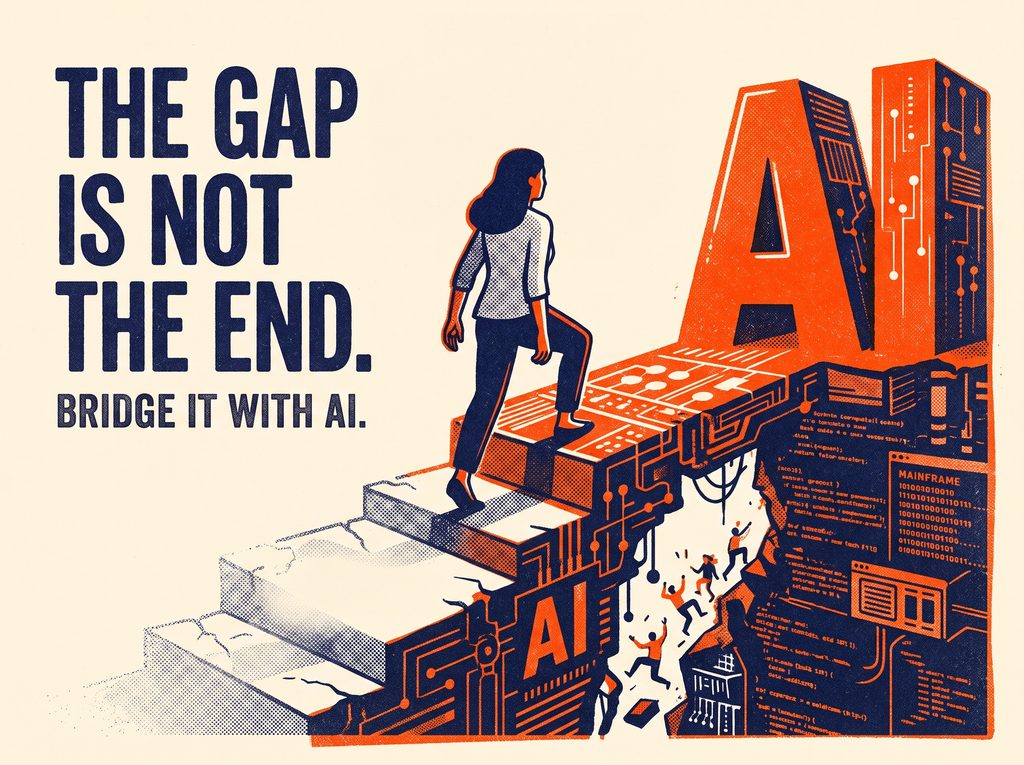
Back from a career break, and tech looks nothing like you left it?
Here’s how one developer turned that gap into an AI engineering plan.
I spoke with a developer this week — 15+ years across back-end and data engineering. I’ll call her Priya.
She was laid off last year. Instead of rushing straight back into applications, she made a deliberate choice: her teenager needed her, so she took the year for her family.
When she looked up again, the industry had moved.
Her words: “The change is so rapid. It’s totally a different ballgame.”
And she named the fear underneath it better than I could: “If I don’t learn AI, I’ll be like somebody 25 years back who knows mainframes and doesn’t know Java.”
Most people in her seat would flood the market with yesterday’s resume and hope.
She built a different plan for her re-entry:
1. Learn AI engineering properly first.
Three months. Real projects — API calls, RAG, agents, deployment — because interviewers don’t ask what RAG is. They ask what broke when you set it up.
2. Rebuild the resume fresh.
Fifteen years of back-end and data engineering, with the AI layer on top. A different profile from the one that got laid off.
3. Then apply.
For AI engineering roles, with deployed projects to show for it.
Her logic, in her words: “Even if I lose one job now, maybe I will have three opportunities after three months.”
Here’s what I told her.
Back-end plus data engineering is the best possible launchpad for AI engineering.
It combines the two halves the job runs on: production and data.
Even vector databases — the part that scares people — are a quick mental shift when you’ve spent 15 years thinking in data structures.
The gap on her resume will matter far less than what she walks back in with.
Kirill
P.S. Re-entering tech after a break is exactly the kind of transition we map in the AI Engineering Program — projects first, applications second. Book a call and we’ll map yours.