

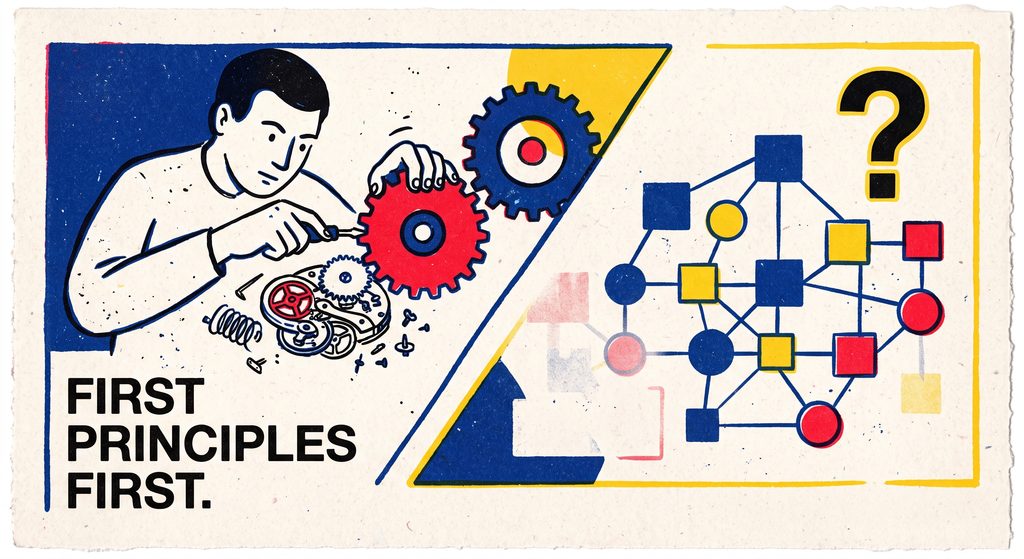
Are you learning AI engineering by starting with a framework?
Here’s the advice I gave a data engineer this week. It probably applies to you too.
I’ll call him Sameer. 3+ years of building data pipelines at a large insurance company, now moving into AI engineering.
He asked me a simple question: what should my plan of action be?
So I mapped out the path I’d follow in his shoes.
The first month surprised him.
No LangChain. No CrewAI. No drag-and-drop agent builders.
Just LLM API calls and tool calling, in raw Python.
Here’s why.
Frameworks automate the hard parts for you. That’s exactly what makes them useful on the job — and exactly what makes them a bad place to start.
Start with a framework, and you never see how things work under the hood.
One small example: parallel versus consecutive tool calling. Does your agent call three tools at once, or one after another, feeding each result into the next?
Most people building agents today can’t answer that. A framework has always decided it for them.
Interviewers ask questions exactly like that one. It’s how they separate the engineers who understand the machine from the people who assembled it from parts.
And here’s the good news: the raw Python stage is short.
A few weeks of building at that level, and everything a framework does suddenly makes sense. Then you pick one up and connect three agents in a week — knowing exactly what every piece is doing.
The order is the whole secret. Raw Python first. Frameworks second.
Sameer had already used agentic tools at work. He’d never once seen what they were doing underneath. That gap is the difference between using AI and AI engineering.
Kirill
P.S. First principles is exactly how we teach. Apply for the AI Engineering Program.