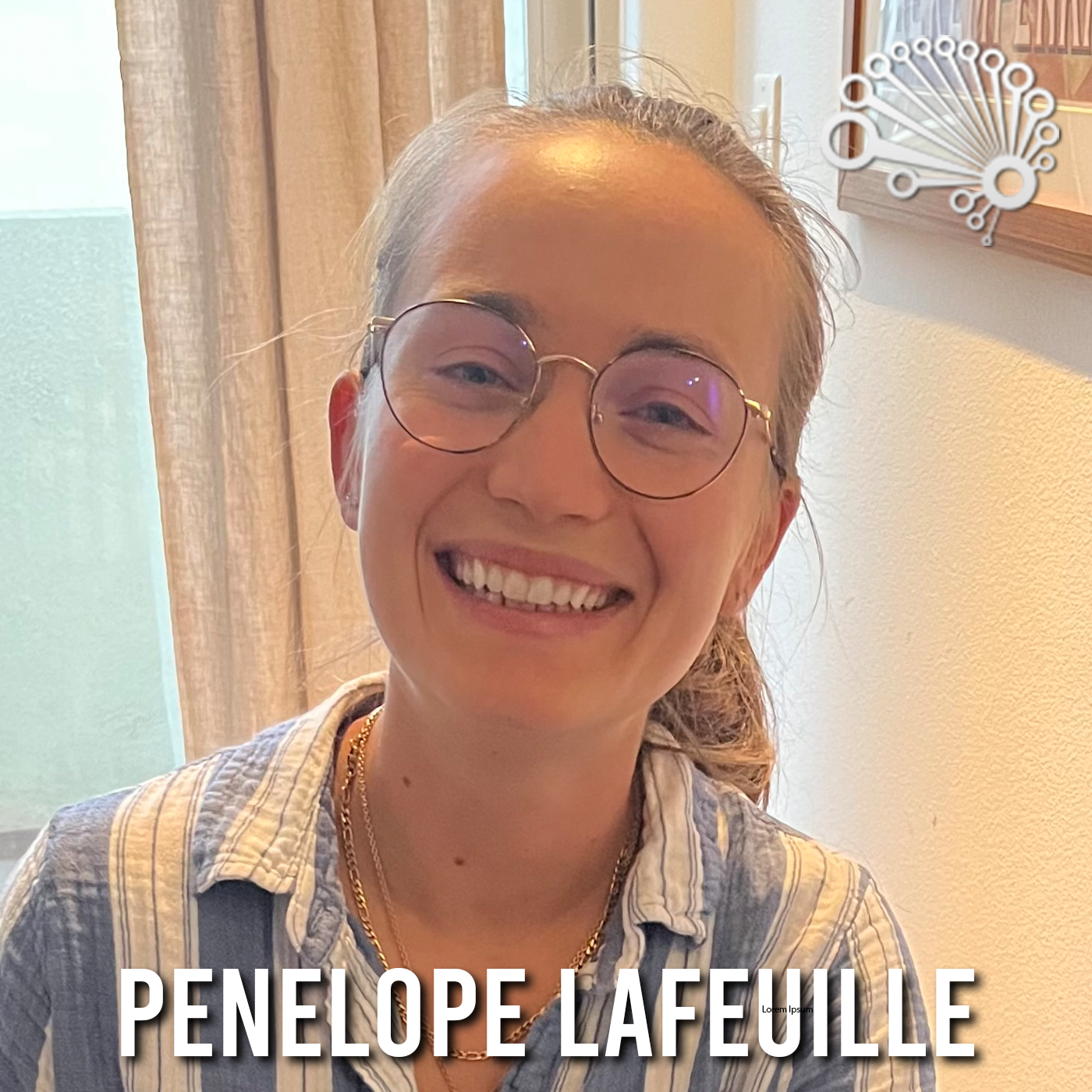
Jon Krohn: 00:00 Feeling burnt out or looking to get promoted, today’s episode is packed with tips on how to thrive at work. Welcome to the SuperDataScience Podcast. I’m your host, Jon Krohn. Today’s guest is Penelope LaFeuille, a senior data scientist at Metadata Solutions, who’s also known as the fit data scientist for her practical content on how to balance fitness, nutrition, and rest with work and play to make you maximally productive without burnout and to help you land that promotion. This episode features all her best tips. Enjoy. Penelope, welcome to the SuperDataScience Podcast. It is a treat to have you on the show. Where are you calling in from?
Penelope L.: 00:40 I’m in Sunny San Diego. It’s currently not any cloud outside, and I’m wearing a T-shirt.
Jon Krohn: 00:47 Very, very nice. I have had guests from San Diego on the show before, and my understanding from them is that it is the best climate in the United States all year round. So I’m jealous that you live there and especially this week, because at the time of recording, it is Nurps in San Diego. I should be there. I should be enjoying the warm sunshine, but I’m freezing my butt off in New York. Okay. So Penelope, the reason why you’re on the show is because you wrote a LinkedIn post about the show. And so first of all, for any listeners out there wondering how to get on the podcast, I mean, so we get hundreds of requests for people to be on the show every month, but every once in a while, somebody makes an original post that really catches my eye and I think, “Hey, we’ve got to get this person on the show.” And Penelope did that.
01:44 So I’m going to include this post in the show notes so people can check it out. But basically you wrote, “I listened to 20 plus … I’ve listened to 20 plus data science podcasts over the past five years. These are the three that I keep coming back to. ” And the first one, and I’m going to assume not accidentally the first one, is the Super Data Science Podcast. And yeah, you say that it makes machine learning ideas feel simple. Every episode feels like a mini masterclass, top researchers and practitioners. And then I should also mention the other podcast that you brought up, which were also great. So Data Framed by DataCamp was your second one. And then Gradient Dissent by Weights and Biases was your third. And Gradient Dissent, I realize I’m talking way too much, but Gradient Dissent has such a great name. There are so many machine learning podcasts out there with brilliant names.
02:36 Gradient Dissent is one of the best, and I wish that we had a funny podcast name, but anyway, we’ve got a bombastic one. Yeah. So Penelope, I don’t know, what compelled you to write this particular post? You do create a fair bit of content on LinkedIn and more recently Instagram. Yeah. So how do you decide what you’re going to create and post?
Penelope L.: 02:59 So for this specific post, it was because I feel that LinkedIn lately has been a lot around sharing cheat sheets and list of books. And we are not really sure that people are actually using those cheat sheets and reading those books. And so I wanted to create a post that was a little bit of, I’m a bit fed up of all those things that people are posting without actually listening and taking action. So I wanted to be a little bit more personal saying those are the three podcasts that I actually listen to. And the reason why I mentioned your podcast is that I love that it blends both the technical aspect of data science, of being a data scientist, as well as more an applicable aspect and a product oriented and user oriented aspect that I really love because being a data scientist is not only about quoting, but it’s also about coding in order to solve a particular problem for a specific person.
Jon Krohn: 04:01 Yeah. Cool. That is what I try to do is to try to make things applied to have you thinking even in the Friday, the short Friday episodes that I do on my own. I try to have kind of like a takeaway of like, even if this is a different industry, what could you be doing in yours? What lessons can you take from what we’ve learned in this episode? So that’s cool. I’m glad to hear that that’s working out. And we were actually speaking of applicability and kind of product mindset. Before we started recording, you and I were talking about a particular episode of the show that you liked that recently came out as episode number 937 with Mark Dupuis, who is a co-founder of a company called Fabi.ai. And Fabi stands for Fast Business Intelligence. So it’s a platform that makes getting business insights easy for coders and non-coders alike.
04:50 And yeah, you mentioned that you particularly liked that one. What did you like about it?
Penelope L.: 04:54 So for this one, it’s because I’m on the quoting side of things, but I want to learn more about the business side of things to know what … I mean, I’m quoting, but what is my quote even used for? And so having companies like that who just build something that bridges the gap between people who are technical, but don’t really know a lot about the business side and people who are more on the business side, but don’t know a lot about the technical side is actually amazing. And to give a very concrete example, I recently started writing online, I would say like one or two years ago, and it would not have been possible if I did not have tools such as ChatGPT and Cloud now. Just because I’m French, I’m writing in English, I know what I want to write about, but having those tools that kind of helped me a little bit to move across the pressure that I had about being perfect, knowing that I need to have everything writing down on my own, having those tools is really useful.
05:59 And I’m not writing all my posts with ChatGPT. I’m editing them quite a bit, but it just gives me the nudge to actually jump beyond the, I’m scared of doing it.
Jon Krohn: 06:09 That’s the way to go. I mean, your English is perfect as far as I can tell, but I could see how it makes it easier. It makes it easy to feel confident that you’re writing posts that are grammatically perfect if you have these LLMs as a tool to support you. And yeah, so speaking of which it was specifically, so it wasn’t just that you wrote a post about the podcast. I wish I had enough guest slots that I could just, anytime somebody wrote about the show, I could be like, “Do you want to come on? ” But the thing that caught my eyes, so then I went to your profile and your headline on LinkedIn says, “From burnt out data scientist to $180,000 plus and promoted while building a strong body and mind.” And actually it continues to go on. It’s a really long LinkedIn headline, but it goes on to say, “Data science and analytics, science-backed productivity.” And I really like all of those ideas.
07:09 It seems like it’s allowed you to grow a following pretty quickly. You’ve got a newsletter that we’ll have a link to on Substack that you provide a link to prominently at the top of your profile. And you also seem to be doing stuff on Instagram, maybe targeting a slightly … I don’t know how you’re kind of targeting differently, but yeah, maybe tell us about the beginning of this. Tell us about how you were a burnt out scientist and how you turned things around.
Penelope L.: 07:40 Yes. I was working in finance in New York right after my master’s degree, and even if I was good at what I was doing, I think that the fact that I was burnt out came from two different aspects. The first one, I was working too much. And the second one, what I was doing was not really aligned with the direction I wanted my career to grow. And so when I was waking up every morning thinking about how do I see myself in five years, there was a huge disconnect between what I was doing and what I wanted to be doing in five years. And that’s when I decided to change careers and to switch from finance. I was still doing data science for finance, but doing data science more in the life science industry because this is the industry I’m genuinely passionate about, just like studying the human body and using this technical knowledge in order to create new drugs, develop clinical trials and so on.
08:41 So that was the first point. And then the second point was about, I’m not going to be successful at being a data scientist working in the life science industry if I am not taking care of my body myself. So that’s when I hired a lifestyle and fitness coach. And when I started working out pretty regularly taking care of my nutrition as well as my recovery with like sleeping, recovery practices and so on. And that’s how I was able to very clearly do a 180 in both my career and my personal life at the same time.
Jon Krohn: 09:17 Fantastic. Were you into fitness before getting this fitness and lifestyle coach or was that something new?
Penelope L.: 09:24 So I was, but I was not doing the right things, meaning that I was also burnt out in my fitness because outside of my job, I wanted to have something that I was looking forward to. So I was working out nearly every single day and I was very clearly overtrained. I was not fueling my body properly. So everything was completely out of work, to be honest.
Jon Krohn: 09:49 Yeah. This probably happens to a lot of the kinds of people that listen to this podcast who are not only pursuing a career in data science or AI in some way, you’re also listening to a podcast about it in your free time probably. And so you’re probably the kind of person that is trying to maximize everything all the time. And so I certainly, with my workouts, I very, very often tend to overdo it, training too many days in the week, too hard on a given day, not taking enough rest days and just kind of having the level of intensity too high on a regular basis. And so kind of instead of fitness being something that rejuvenates me, it is often something that just wears me out even more. And then I’m kind of like, on the worst days, it’s like I keep feeling like I just need to nap.
10:42 And it’s like just sitting at my desk feels like it’s too hard. Yeah. So how do you strike that balance? How do you design a program that is going to make you feel rejuvenated? How do you structure that?
Penelope L.: 10:58 So working with my coach, we’re looking at what’s my work schedule and also what are the activities that I’m doing outside of the gym that also give me energy and that I don’t want to sacrifice. So for me, for instance, I play a lot of pickleballs, of pickleball going to play in tournaments and so on. So I still want to have this background.
Jon Krohn: 11:24 What is that game called in French?
Penelope L.: 11:26 We don’t have it.
Jon Krohn: 11:30 It’s too low brow, too American. No pickle.
Penelope L.: 11:35 Yeah, that would be weird in French.
Jon Krohn: 11:37 I don’t know. I actually, I recently saw … I’ve lately I’ve been working out at this lifetime gym in central Manhattan called, it’s a Penn Station location and they have tons of pickleball courts. And in fact, it’s impossible you can’t … Pickleball is so popular and there’s so few nice places that you can do it in Manhattan that there’s a waiting list. I’m already a member and I pay a crazy membership fee already, but I can’t access the pickleball courts if I want to access them. I do want to access them. So I’m on a waiting list to hopefully someday get an invitation and then if I get that, I have to pay a fee, a huge fee, hundreds of dollars, plus my membership goes even higher just to have access to these pickleball courts. But the whole reason why I’m saying this is that the other day I saw a woman in there who was wearing a t-shirt.
12:28 She was playing pickleball and it said the pickle. So I don’t know. Maybe that’s what French people say. But yeah, so anyway, so pickleball, you do a lot of pickleball. That’s nice. It is pretty rejuvenating.
Penelope L.: 12:41 Yeah, absolutely. And it’s also a great way to meet people, which is another point about rest and recovery, which is that it’s also a lot about the people that you’re surrounding yourself with because hanging out with people who want to go out every night or every weekend, spoiler alert, there is a very high likelihood that you’re not going to be able to recover and to sleep well. By all means, I do go out and I do drink, but it’s all about striking that balance and surrounding yourself with people and activities that you enjoy doing together beyond just going to the bar or going to the restaurant, even if we are doing it afterwards, after playing pickleball.
Jon Krohn: 13:22 Nice. Yeah. And you’re French, so you must smoke regularly, right?
Penelope L.: 13:25 No, I don’t.
Jon Krohn: 13:28 A bit of a stereotype. And something that’s like, I don’t know if this is true, but apparently up until like the 1980s, the men’s national football team, the soccer team would smoke at like halftime.
Penelope L.: 13:42 I would not be surprised.
Jon Krohn: 13:44 So that’s helpful to help us understand. So you basically, you set up a schedule, a fitness schedule that’s based on work, that’s based on your social schedule. It kind of sounds like that means that … Does that mean that you need to be in a really rigid routine or is there some flexibility as well?
Penelope L.: 14:00 Both actually, meaning that I still want to be able to go to the gym four times a week, just because I know that it’s good not only for my physical health if I want to build or even to just maintain the muscle that I have, but also for my mental health. I typically go right after work. I work New York Time and I’m on the West Coast, so it’s typically in the middle of the afternoon, which is good because there are not that many people at the gym. And so it’s a good break between my professional life and my personal life because then when I go out of the gym, my friends are also out of work and so I can go hang out with them or even go play pickleball. So I know that I’m going to be working out four times per week, usually Monday, Tuesday, Thursday, Friday, but it’s not super rigid.
14:55 I just want to get those four times per week in.
Jon Krohn: 14:57 Excellent. And so how does nutrition fit into this? Because you mentioned that that’s part of the change that you made as well. So in addition to kind of having this balanced fitness structure, what are your key tips for refueling for your job?
Penelope L.: 15:14 Yeah. So I would say the main two tips are around eating enough protein. So I try to have one gram of protein per pound of body weight just because as I’m working out, I want my muscle to have the right amount of protein in order to be able to grow or just like maintain them and also for recovery. And the second one is about timing my carbs the right way, meaning that I don’t want to have a huge glucose spike when I’m in the middle of my work session and then I just want to go nap. So what I do is like usually I have most of my calves in the forms of either like rice, potatoes, fruits, sometimes ice cream, mostly around my workouts before, during and after, because it’s the prime time for your body to absorb those carbs the right way without feeling sluggish afterwards.
Jon Krohn: 16:10 Got it. So ice cream before, during, and after working out is the key to being a successful data scientist. I love that. And you also, you mentioned to me when I asked you before we started recording about kind of your top tips related to avoiding burnout as a data scientist, you said that rest is the most important thing. Is there anything you want to dive into on that?
Penelope L.: 16:33 Absolutely. I would say more specifically around sleep. I try to have at least eight hours of sleep, which means actually more than eight hours in bed. It’s more or less, I would say 8:30, 9:00 just because I love reading before bed to downregulate a little bit because if you’re swiping or on your computer, there is no way you’re going to be able to fall asleep. And it’s also about the quality of the sleep that you have. It’s not only about eight hours, but eight hours of quality sleep with deep sleep, REM sleep for your brain. And the best way to have it is also to be able to downregulate and not be stressed during the day. And for me, it comes in the forms of just going on walks outside, even just a five minute walk in between meetings to kind of shift my brain a little bit instead of being always in the go, go, go mode.
17:31 And instead of swiping on Instagram, I just go on walks without my phone. Sometimes I forget my keys and I’m locked outside. And so just going on walks outside and helping me not only focus for my meetings afterwards on my work session, but also telling my body that you can downregulate in five minutes, which then is a good way to fall asleep faster and to avoid waking up in the middle of the night if you’re too stressed during the day.
Jon Krohn: 18:04 All that makes perfect sense to me, such sensible advice and hopefully a lot of our listeners are doing it or can do it. Being in bed for longer than eight hours, like that like eight and a half, nine hours so that you can hopefully get actually seven and a half, eight hours of sleep because there is always a wake time whether you remember it or not, but if you wear like a whoop or an Apple watch or whatever, Fitbit to bed, you’ll see that there’s chunks of time that you were awake, even if you don’t remember it. So that is really important. And yeah, things like reading before bed, definitely getting away from your phone, getting away from screens. I’m not as good at it as I should be, but I definitely get the message and hopefully someday I’ll be really good at avoiding. I do, I turn off my phone before I go to bed and yeah, the nights that I have enough energy, I read in bed as well.
18:58 Those are definitely my best night’s sleeps. And yeah, of course, if you have stress during the day, that for me, it’ll kind of run through my mind as I’m trying to fall asleep at the end of the day or wake me up in the middle of the night and I can’t fall back asleep. And it’s interesting how in the middle of the night, those stressful things that might in waking life actually seem not that bad and surmountable. Somehow when I’m laying there in bed, they turn into like these big crises.
Penelope L.: 19:25 Absolutely. And I’m the exact same way. And that’s why also right before bed, I just have a five minutes routine when I take my notebook and a pen and I just write down everything that I have in my mind. It’s kind of my way of telling my brain, “Okay, just forget this for the next nine hours and we can get to that tomorrow morning because it’s written down.” You don’t have to think about it. And it’s actually a pretty useful tip, I think, because also the next morning, you know which tasks you need to tackle because you’ve already written them on a piece of paper.
Jon Krohn: 20:05 Great idea. I love that. I should do that. All right. So we’ve now talked about kind of the content that you write about, how you got from being a burntout data scientist to now having a strong body in mind and flourishing as a professional data scientist specifically. Let’s talk a bit about the data science that you do. So you’re a senior data scientist at a company called Medidata Solutions, not metadata, but like medical data, Medidata. So yeah, tell us about what Medidata does and what you do as a senior data scientist there.
Penelope L.: 20:41 So I’ve been working at Medidata for four years now. And what this company does is that it creates a software that pharmaceutical companies can use in order to run their clinical trials and to analyze the data from their clinical trials. When I started working there, I was focused more specifically on immuno-oncology treatment, meaning using your immune cells in order to direct them towards the cancer cells and hopefully be cured of cancer. And so what I’m currently working on is designing more like the backend data science of those softwares that pharmaceutical companies can use versus what I started working on when I just joined was more the afterwards, meaning like the analytical side of things. Once we have the data, how can we analyze them in order to have better insights for future clinical trials? So it’s kind of an input output kind of situation where I’m more focused on the input now and the software that is used in order to acquire the input versus at the beginning working more on the output.
Jon Krohn: 21:55 Fantastic. Is there anything that you can go into a little bit of detail on like technically? I totally understand if you can’t, but what maybe programming languages you use or what kinds of techniques you use regularly?
Penelope L.: 22:06 Absolutely. So I’m currently working on a team that uses both R and Python, which is interesting because I do have more like a statistical/math background. So I actually love using R. I know that it’s not a very popular tool to use among data scientists. You
Jon Krohn: 22:27 Can say it. I was doing R for a decade before I got into Python, so I totally understand. It does feel, especially like, and I’m similarly, everything that I see in the world professionally, personally, is kind of from a statistics mindset and the way that R is set up, I realize that Python people will say things like, it’s not even a real programming language, but for doing statistics, for working with data, for doing plots even still today relative to Python, there’s all kinds of things that you can do well in ours. So you don’t have to be shy about your enthusiasm for R.
Penelope L.: 23:06 Yeah. And I feel that it’s specifically relevant working in the life science industry, which is a lot of like biostatistics and so on. And like biostatistician are using R more than Python. But I also do love Python just because then you can actually like build more like a product around Python when R is more around the math and the statistics that you can have behind it.
Jon Krohn: 23:34 For sure. All right. And then kind of my last technical question for you here or a question about your career. So you grew up in France, as people can probably tell by your accent, and it’s kind of crazy for me to see that you … It’s interesting how I just have such a poor sense of, as we’ve been talking here this whole time, I kind of have this sense that like you’re my peer and we’re probably about the same age, but according to your LinkedIn profile, you started elelementary school while I was already in university. So there is a bit of an age difference here. But yes, you did a high school and your first degrees in France, including a diploma in engineering, a master of science in engineering at Centra Superlech with a 4.0 GPA. Congratulations. And as you said, lots of mathematics courses, statistics, programming, optimization, economics, and then that led you, it seems directly into a master’s at Columbia University in New York and that degree, that master’s is in something that I’m pretty sure nobody on the show has ever had this particular master’s before.
24:54 It’s management science and engineering, management science and engineering, MSNE. Tell us about that particular program.
Penelope L.: 25:02 Yes. So I absolutely loved this master’s degree because it was blending both the technical aspects, meaning I followed a bunch of courses around programming, machine learning, deep learning, but it was also a combined program with the business school, meaning that we had specific courses where we would use this technical knowledge and work with companies in order to solve some problems that they had. Meaning like technically I was an employee at this company for like the three months that this project was going on, which is actually an amazing way to start building your portfolio. Because when I talk to people who reach out to me on LinkedIn, the first question is always, how do I build a strong portfolio? Well, the truth is that I already had one when I was doing my master’s degree because it was in the curriculum. And so that’s why it was so good because then I was networking with people who were already working in the industry, building my portfolio and applying the technical skills that I was learning within the course on very specific topics that I knew people were actually working on in real life.
Jon Krohn: 26:16 I like that a lot. That program sounds amazing and it looks like some of the consulting projects you did were at really well-known brands like Louis Vuitton. So that’s great for your portfolio. And I’m guessing that there’s kind of some flexibility in what courses you take, but you took fantastic courses for a career in data science, business analytics, machine learning, optimization, stats and simulation, stochastic modeling, and then some applied things. I’m guessing this is kind of more from the business school, like financial engineering and global capital markets, really cool balanced degree. I can’t believe that you did all of that stuff in a year.
Penelope L.: 26:50 Yeah. It was actually pretty intense, but it was in the middle of COVID as well. So there were not that many opportunities to actually go out and do things. So I would not say that my lifestyle was very balanced at the time. And that was also part of the reason why I ended up being a burnt out data scientist.
Jon Krohn: 27:10 Well, fantastic. Thank you for this tour of your career. And hopefully there were lots of interesting tidbits for listeners on how they can avoid burnout and feel like they’re flourishing more in their career, get promotions, earn more money, accomplish more, and probably just be happier the whole time. So thank you for all of these tips across fitness, nutrition, rest, and data science careers themselves. Before I let you go, Penelope, do you have a book recommendation for us?
Penelope L.: 27:41 Yes. It’s my favorite book this year. It’s called The Five Types of Wealth by Sar Hillbloom, and it essentially explained that it’s not only about being wealthy in your bank account, but it’s also about having money in the bank, quote unquote, on other areas of your life, your health, your mental bandwidth, your time, and the people that you’re hanging out with, meaning your social wealth. I highly recommend reading it. It’s super actionable. There are super nice diagrams on it, so I absolutely love it.
Jon Krohn: 28:14 Nice. That is a great recommendation. I hope to have time to check that out. And yeah, so for people who want more advice from Penelope LaFeuille on everything that we talked about in today’s episode, going from being burnt out to promoted, having a really high paying career in data science or related fields, probably a lot of your advice is useful for people in any field, but it’s nice to have on a data science podcast like this, somebody who specializes in being a fit data scientist specifically. So Penelope, after this episode, where are the main places that people should be following you?
Penelope L.: 28:52 So for more data science carrier advice, I would say it’s going to be LinkedIn and for more, I would say holistic lifestyle, it’s going to be Substack, the fit data scientist. And on LinkedIn it’s just my name, Penelope LaFeuille.
Jon Krohn: 29:09 Fantastic. Thank you, Penelope, for writing that LinkedIn post about the show, and thank you for coming on the show and providing all this knowledge to our listeners. Hopefully we can check in with you again sometime soon.
Penelope L.: 29:22 Yeah, I would love to. Thank you so much for having me.
Jon Krohn: 29:24 What a practical episode with Penelope LaFeuille. She covered how working out every day without proper recovery is overtraining, not stress relief, how eating one gram of protein per pound of body weight supports muscle recovery and concentrating carbs around your workout prevents energy crashes during work hours. She talked about how quality sleep requires more than eight hours in bed, reading instead of scrolling before sleep and brief walks throughout the day to help your nervous system down regulate. And she talked about how writing down everything on your mind before bed tells your brain it can let go until morning and gives you a ready-made task list when you wake up You also heard a bit about her work at Metadata Solutions and info on the cool masters in management science and engineering she carried out at Columbia. I hope you enjoyed the conversation to be sure not to miss any of our exciting upcoming episodes.
30:14 Subscribe to this podcast if you haven’t already, but most importantly, I hope you’ll just keep on listening. Until next time, keep on rocking it out there and I’m looking forward to enjoying another round of the SuperDataScience Podcast with you very soon.