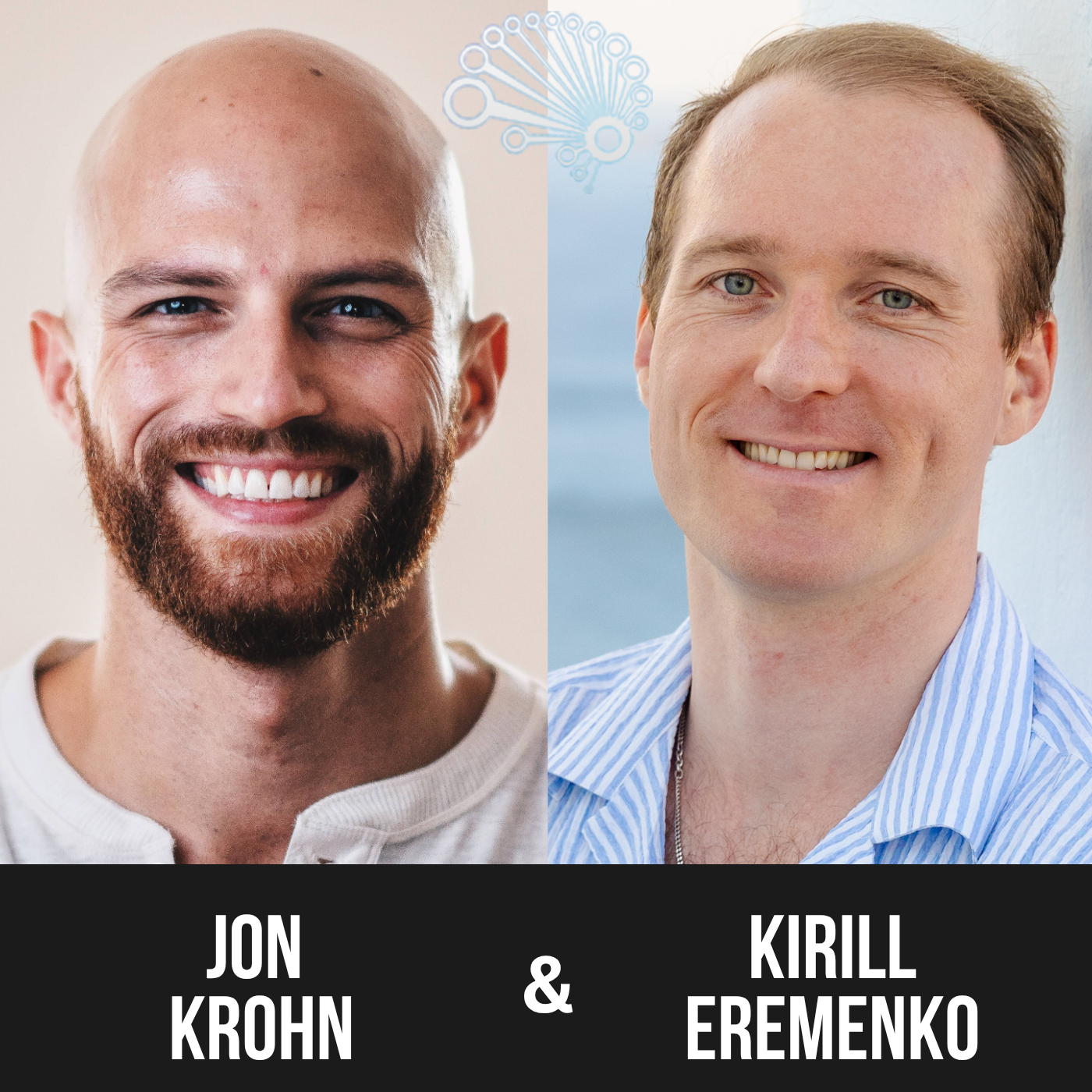
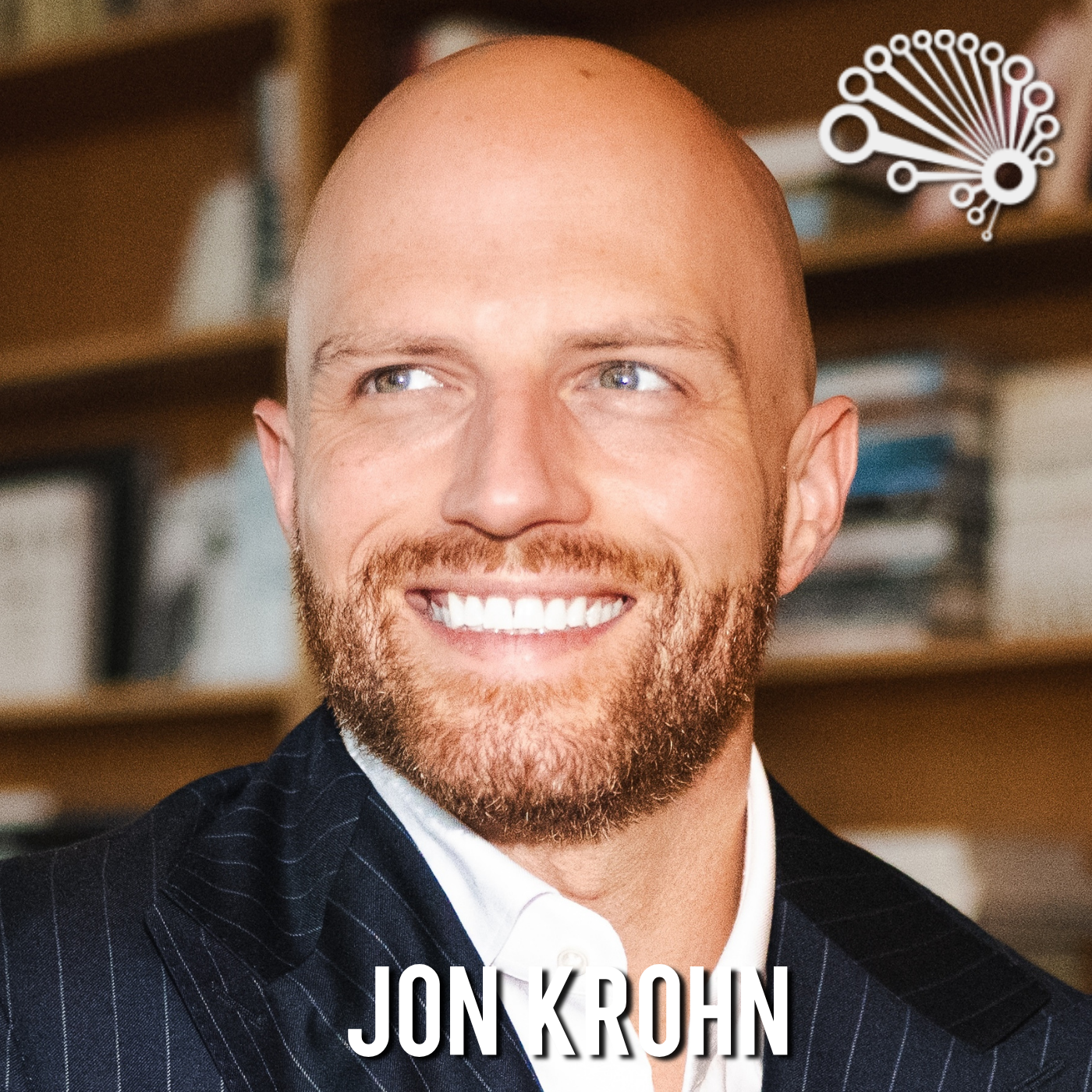
Jon Krohn: 00:00 Welcome to episode number 1000 of the Super Data Science Podcast. I’m your host, Jon Krohn, to mark hitting this landmark of quadrupled digits as well as 10 years of the podcast. I’m joined today by Kirill Eremenko who founded the podcast and hosted it for over 400 episodes before passing over the reins to me. But that’s not all. For the first time ever, any listener was able to join us as we recorded to ask us questions and we had a few surprise guests join us on air. This is certainly something different for episode number 1000. We hope you enjoy it. Kirill Eremenko, welcome to episode number 1000 of the SuperDataScience Podcast. It’s great to have you here as well as over 40 listeners. Right now we just hit the record button and we’ve got 40 people live watching. Some of them will join later on in the show.
00:56 What do you think about this format, Kirill? Do you think we should be having live episodes like this more often?
Kirill E.: 01:01 I love it. I love how we’ve started. We’ll see how we go, but super excited to be here on episode 1000. Can’t believe it’s been 10 years of the show. How crazy is that? Yeah, that doesn’t add up in my mind.
Jon Krohn: 01:15 It’s wild. So the very first episode of the show, episode one, aired in September 2016, Kirill. When you founded the show back then, did you imagine that it would still be going a thousand episodes and 10 years later?
Kirill E.: 01:28 Yeah, of course. That was the plan. But
Jon Krohn: 01:31 Looking back- Oh really? Okay.
Kirill E.: 01:32 All right. Yeah, it feels unbelievable. Yeah, it’s crazy. It’s crazy how things work out and I’m really glad you came around. Yo came along and now you’re hosting. I don’t think I would’ve been able to do it for 10 years just on my own. So thanks to you, this show is still alive.
Jon Krohn: 01:53 Yeah. And I certainly wouldn’t be able to be hosting every week if I didn’t have you and the rest of the team to support me. So yeah, I’ve been hosting since episode 432, which aired on January 1st, 2021. And Kirill’s still been a guest on many episodes since then, but we actually, just the other day, we recorded episode 1001, which is Kirill interviewing me. So we’ve got a full, it’s like an hour and a half long episode of Kirill interviewing me. So that’s kind of a special thing that we’re doing, kind of a role reversal for that special episode. Kiril, when you founded this show, why did you do it initially? What drove you to found the Super Data Science podcast back in 2016?
Kirill E.: 02:35 It was pretty straightforward. I saw some podcasts. It was early on in the podcast world. It was like 2016 and I saw the Tim Ferris show. I didn’t even know about the Joe Rogan experience back then that it was a big show. I saw Tim Ferris Show. I think I saw Louis How’s School of Greatness. I saw a few influencer shows around where they were interviewing guests about how to be successful in life, how to be efficient, productive, the best version of yourself. And I realized there’s a gap in that space in our field, in data science, later machine learning, now it’s AI. I’ve realized there’s a gap and I was curious, how do people become successful in this field and what is success and what are the tools that they … Tim Ferris has a book, Tools of Titans, which is built from his podcast interviews or Tribe of Mentors.
03:30 That’s also a flaw on effect from his podcast interview. So I thought people in our industry, I’m curious and I think other people might be curious. It’d be really cool to have something like that. So like, “Oh, it doesn’t exist.” They did some searching. I was like, “How come this doesn’t exist?” So I thought, okay, well, just do it. Just ask people questions.
Jon Krohn: 03:51 There certainly are a lot of data science and AI shows now. There must be hundreds. It’s crazy. So congrats on being ahead of the curve there. And yeah, thank you so much for welcoming me on to host for the past few years. What are the worst parts of me hosting the show now?
Kirill E.: 04:09 There are now no worst parts. Yeah, no, for everyone listening, Jon’s like a machine. Jon’s just like two episodes a week, no matter where he is traveling in Canada, in US, in Australia, wherever, like clockwork, it’s fantastic. I think we all appreciate Jon’s input and great background as well with your neuroscience PhD and also the work that you’ve done in the startups and the financial sector, I think you bring a lot to the table. So I don’t want to drag out this part where we’re kind of patting each other on the back.
Jon Krohn: 04:47 You had the opportunity to be honest there and you just, whatever. It’s all lies that Kirill feeds to you guys the whole time. The whole time he was hosting. That’s why you needed me on to come tell you the truth. Yeah. So other than Curol, lots of amazing guests have been on the show over the years. Big names like Andrew Ng, Ethan Mollick and Chipou Yen. It’s been amazing. But now today for the first time ever, you are on the podcast listeners. You have the opportunity. Hopefully we’ll do this again for folks who are now listening to this in the future and aren’t here live with us. But I sign off every show or almost every show by listening to the Super Data Science podcast with you. And so now it’s finally true. So let’s start inviting people in. The first people that I would love to have come on the show.
05:36 Wait,
Kirill E.: 05:37 Jon. Sorry to interrupt. Let’s get like people saying, where are you from? Just type in the chat. I want to se all the countries that we have right now, countries or states. Just type in the chat. Where are you calling in from so we can read it out? So people who can’t see the
Jon Krohn: 05:53 Chat
Kirill E.: 05:54 In the recording, they’ll know. Thank you. There we
Jon Krohn: 05:56 Go. There
Kirill E.: 05:57 We go. Okay. Here we go. We’ve got Pakistan, Indianapolis, India, Eduardo from Mexico, Chicago, New York City, UK, Utah, Memphis, Netherlands, Stratford, Ontario, Canada, Gold Coast, Australia. Oh, Paolo, you’re next to me. Wow, that’s so cool. India, Bucharest Indianapolis, Geelong, Point Richmond. Oh my gosh, Chicago. The chat is flowing so fast. I can’t keep up.
Jon Krohn: 06:25 I know. I can’t believe you read them at all.
Kirill E.: 06:28 Rally,
Jon Krohn: 06:28 North Carolina. San Francisco. Yeah.
Kirill E.: 06:30 Auckland. Wow. Antarctica. No, Shrey. I don’t believe that.
Jon Krohn: 06:36 I think Shreya earlier in the chat admitted that they’re from India. So Mario and Natalie, if you’d like to come on the show, I think they’re the only people who work on the show that are here watching.
Natalie: 06:46 Hey, guys.
Kirill E.: 06:47 Hey, Natalie.
Natalie: 06:49 How’s it going? Happy
Jon Krohn: 06:52 1000. Nice. Yeah. So for people who aren’t aware, so Natalie, let’s go through the questions that we ask for everyone who pops on. So name obviously is Natalie. Where are you calling from?
Natalie: 07:03 Calling in from New York City. I am the partnerships manager for the show. It’s great to be here. My first episode appearance, episode 1000.
Jon Krohn: 07:14 Yeah. And so Natalie literally keeps the lights on. So sponsor messages are thanks to Natalie. And if we didn’t have those, if we didn’t have the sponsors, we literally couldn’t have this show in the same way that we could have audience members. So Natalie is fielding all the questions. Natalie, do you have a question of your own for us?
Natalie: 07:29 Oh man. That’s a really good one. I feel like I should have become a little bit more prepared.
Kirill E.: 07:37 Oh, it’s proof that this is all not scripted. This is proof.
Jon Krohn: 07:42 Yeah, exactly. All right. Well, it’s been great having you on the show.
Kirill E.: 07:48 Thanks, Natalie.
Jon Krohn: 07:49 All right. All right. Mario, I think you’re the only other person in the chat who works on the show. Welcome. Where are you calling in from?
Mario: 07:55 I’m calling from Kylie, Colombia.
Jon Krohn: 07:56 Colombia. Very nice. And actually I’ve never met Mario in person, which is crazy. Curol, have you ever met Mario in person?
Kirill E.: 08:04 Nope. Nope. Been working
Jon Krohn: 08:06 With
Kirill E.: 08:06 Him for six years. Never met.
Jon Krohn: 08:11 And we have someone in the chat, Sheila, commenting that Collie is apparently the capital of the salsa. Is that true, Mario?
Mario: 08:17 Yes.
Jon Krohn: 08:17 Are we talking about the dance or the nacho dip?
Mario: 08:20 We’re talking about the music.
Jon Krohn: 08:22 Oh, good thing we disambiguated.
Mario: 08:25 Yeah. Yeah. It’s the music.
Jon Krohn: 08:28 Nice. Well, Natalie didn’t have any questions or comments for us. Mario, do you have anything that you want to be sharing
Mario: 08:32 Come prepared, but maybe what are your favorite episodes? What’s the best
Jon Krohn: 08:37 Episode? Oh, what are our favorite episodes? I actually, that’s such a tough thing to do because obviously there are lots of amazing episodes and I think there ends up being a lot of a recency bias that we have in our memory that leads us to think recent episodes are great ones, but two that pop into my mind right away, our episode 975 with Zack Kass that came out in March of this year. That episode with Zack Kass, it was really inspiring for me, really optimistic and lots of confirmation bias for me and my view of how AI is going to change the world for the best. So that was really cool. And then I would also say one of my favorite people that I’ve ever had on the show is Natalie Monbiot. So we actually did two episodes with her back to back. The most recent one was 873 in March of last year.
09:24 And then we did one with her just a few months before that 823. And we almost never have guests on twice. Jepson Taylor being a big exception and Jepson get ready to join in next after Mario. But we usually don’t have guests on more than once. But Natalie, when I had that first episode with her in October, we just … I don’t know. I found speaking to her so enthralling that I had to have her back on right away. So those are my two episodes or my two guests, three episodes. Kirill, how about you?
Kirill E.: 09:59 So I don’t have the problem of recency bias because I haven’t hosted the podcast for five years. And I don’t have the problem of being careful of who are my favorites because I’m not the host anymore. I can say whatever I like. Basically, my favorite guest would be Sam Hinton, who’s a friend of mine from … He lives here in Brisbane, but just his episodes are so funny. I hosted, I think, one or two with him. I think it was two. And then I think Jon, you did one as well. His episode is just so funny. His humor, I love it in the sense. Just look up Sam Hinton. He was on Australian Survivor. Everybody on Twitter was just following his jokes. He’s a pastor physicist. Such a funny guy. And whenever he does teaching, he teaches at universities and also online. Just hilarious. I love that.
10:55 I love a fun episode.
Jon Krohn: 10:56 Nice. Yeah, great tips. Sam was one of the first guests that I had on. When Curol handed the reins to me five years ago, he gave me about 10 guests that he was like, “These are some of my favorite guests.” I guess I could spill the beans and tell who those people are. But listeners can pretty much tell by going to the first episodes that I was hosting. So 432 Onwards and seeing who were the first guests. There’s a good chance that those are some of Kirill’s favorites. And Sam Hinton was one of them. Yeah, really great episode. All right. Anything else or are we ready to-
Mario: 11:25 Congrats. Congrats on that thousand
Jon Krohn: 11:27 Episodes. Thanks. We couldn’t do it without you. Seriously, man, you’re a machine. You’re so amazing at this.
Mario: 11:32 Thank you. Thank you. I think I’ve thrown over 800 maybe or 700.
Jon Krohn: 11:38 Wow. That’s wild. We couldn’t do it without you. As we’ve shown with the history of this show, you can change the host, but there’s some editing
Mario: 11:49 Quality. But still, you guys are great. It wouldn’t be possible without you, for sure.
Kirill E.: 11:53 Thanks. Thanks, Mario.
Jon Krohn: 11:54 Thanks, Mario. Hopefully see you in person soon.
Mario: 11:58 Yeah, hopefully. Both.
Jon Krohn: 12:00 Nice. Thanks for joining us. All right, Jepsen Taylor. Let’s get you up here.
Kirill E.: 12:05 He’s got a tough question. Maybe don’t bring him up. I just read it in this channel. Oh
Jon Krohn: 12:16 Yeah, that is a tough question. There we go. He’s here.
Jepson T.: 12:20 Hey. So I’ve got a new question. Oh, good. So we all love AI. We use it all the time, but there’s a lot of problems with it. And so if you each had $10 billion in two months, what would you fix that would fix that would help the most amount of people? So I’m thinking about the bottom 90%. Well,
Jon Krohn: 12:42 This is going to be obviously digging into some core IP that I developed, but hopefully no one’s listening.This is just a private conversation between the three of us. I might as well tell you. So actually we talked about this when Kirill and I filmed episode 1001, which will air a few days after episode 1000. In that, I hadn’t thought about this before, but Kirill with his great questions led me to this place where we got talking about some of the problems that digitization has caused people feeling overwhelmed and anxious by constant social media feeds and apps that are designed to keep them hooked. And so I think a lot of people, there’s been this big trend on social media in 2026 of being like, “Wasn’t it better in 2016 or something like that? ” And people, there’s been this recent thing about like, “Oh, the world’s gone so bad and we’d like to be able to rewind.” And I think a big part of that is the information that people are getting fed.
13:41 You’re getting through social media feeds, through the news, it’s kind of this relentless onslaught of this blend of your friends doing amazing things all over the world that makes you feel like you’re not doing anything or not accomplishing anything while also seeing cities on fire in different parts of the world and refugee crises and all these bad things. And so yeah, I think it’s easy to feel very overwhelmed. I think that AI right now, gen AI and agentic AI probably just makes that problem worse. It allows people both like really malicious actors like criminals as well as slightly less malicious, but just people that are trying to manipulate your attention to buy products and that kind of thing. I hope we have a sponsor message coming up right now in the podcast. But there’s some amount of these kinds of influences that are causing us to feel really negative, even though by a lot of metrics, the world has never been better.
14:47 And so I guess the thing that I would love to be able to do with AI, and I think today an individual, like someone like you, Jepsen, has probably already figured this out. You should just show us to the open source repo that you’ve already created that does this because I think what a lot of us need and what especially the people that are most easily taken advantage of by AI and by digital systems would benefit the most from some kind of agent that acts as a buffer between them and all of the information that they consume, the actions that they take, that’s technologically possible today and to basically allow somebody to wake up in the morning and instead of going to their Instagram feed or their LinkedIn feed or watching the news, it would be like, what would you figuring out together what would make you happiest today?
15:34 Maybe it would be handwriting a letter to a relative or to an old friend and helping you do that and send it off or going for a walk in the woods without your phone, like these kinds of activities that it’s hard to do, help us prioritize and actually live a life that makes us feel happy as opposed to just kind of getting sucked into a digital stream. Anyway, super long answer. What do you think about that Jepsen or Kirill?
Jepson T.: 15:58 Well, I was going to say on Jon’s comment, there’s a funny blackmir thread to pull on because if AI can set the perfect day, it can actually tell me everything to say to my wife and it can buy all of her presence on time. And so there’s a balance there. But no, I agree generally with that. I’d love to hear Kirill, I’d love to hear your perspective on what would you fix?
Kirill E.: 16:23 Well, thanks for a question. It’s good while I was thinking while Jones was speaking. I think there’s a lot of really good causes out there in the world that help feed people, help with homelessness, help with education, like charities, basically charitable causes, non-for-profits that are operating all around the world. And I’ve noticed that the smaller ones where there’s like one or two or three people that are passionately traveling and actually doing this work on the ground, they seem to me trustworthy and I see their updates, I see what they’re doing and it feels like the money that you give to them, it’s being put into the right things. But the bigger ones like, I don’t know, maybe from UNESCO or from somewhere else, there’s a lot of administration fees. So I’m always hesitant to donate money to a large organization because I don’t know what percentage of that money is actually going to go towards all the bureaucracy and all the admin in there.
17:21 So I think what would be really cool is if we could use AI to build not- for-profits or build charitable organizations that are scalable but also with minimal overhead so that the money that goes into them actually goes to the purpose that it’s supposed to go to. It’s like at least maybe not 40% or like right now I think it’s like 40% goes to admin fees. Maybe we can cut down the admin fees down to like 5% because we have this AI just operating the whole thing. So I think that we already have money funneling into these causes, but a lot of it gets wasted along the way. So if we can increase efficiency of that, I think that would be like a problem that can be sold with two, I don’t know, two months, maybe a bit longer, but with $10 billion I think or a billion dollars, I think that would be enough.
Jepson T.: 18:09 I like that. And I guess both of your answers speak to efficiency, Jon talking about efficiency of time and attention and Kirill talking about efficiency of value to society.
Jon Krohn: 18:20 So Jepsen, you just came on and asked that question, which is great, but you actually, you broke the rules by doing that because you were supposed to tell us who you are. So I can do a litle bit of an intro. So Jepsen Taylor is the, I’m almost 100% sure he’s been on the show more than anyone else. For people who are confused, because when you search super data science, Jeffson Taylor, you don’t find enough episodes. Also look for super data science Ben Taylor. So this is some of the older ones, especially when Kirill was hosting and Jepsen is one of the most extraordinary people. We love having him on the show. He always brings great perspectives and actually on that note, I actually, I think I know where you’re calling in from, presumably Utah, Lehigh. So Mike in the chat asks this question, which I’m now showing up in the stream.
19:12 He’s curious to hear your answer to the question that you asked as well.
Jepson T.: 19:15 Oh, okay. I’ll give a quick answer. A month ago, an engineer that I look up to, he said that the bottom 90% of AI developers will not be competitive with the top 10%. And I had never heard that before, but I agreed with him. And so what I would like to see is I would like that to not be true. If you are someone diving into these AI tools, you should be just as productive and be able to build just as amazing stuff as someone who says they’re in the top 10% or the top 5% because there’s a long chasm between having Codex or Claude do something interesting and actually having it do something of real value. So that’s what I get excited by is how do you bring the full power and capability down to everyone? Because I love the idea of miracles being built on a weekend by anyone regardless of their background That’s exciting for me.
Jon Krohn: 20:17 I love that. Yeah. Yeah. And it helps us understand your question better as well because when you said the bottom 90%, I didn’t know what you meant bottom of what, but yeah, you kind of meant bottom of developers, AI engineers, that kind of thing. I was answering it kind of in a more general. I don’t know what I was answering in terms of who’s the top 10% overall and the bottom 90%. I don’t know exactly, but I just mean there’s probably like some … Yeah, anyway.
Jepson T.: 20:41 Well, I like both of your answers and it’s great to see you guys. I don’t want to monopolize the time, but appreciate the show. And Jon is one of the best hosts out in the industry. He is incredible. Yeah, he is the best. I always like cheating and trying to have him come to my NYU course because he does such a great job moderating. So I’ll let you guys jump back into the feed
Kirill E.: 21:07 And- Thanks, Jebson. Great seeing you again. Thanks, man.
Jon Krohn: 21:10 Catch you in a bit. Yep. All right. So thanks everyone for making great use of the emoji in all the people watching, you’re making great use of the emoji. I love that. I hope that somehow that shows up in the final recording as opposed to just here in the live stream. Guess we’ll find out. It’s our first time doing it. Kirill, how do you feel about me inviting on? I’ve got my 96 year old grandmother. She’s here in the chat. Sure.
Kirill E.: 21:35 Yeah. Amazing.
Jon Krohn: 21:36 That’s so
Kirill E.: 21:37 Cool. Yeah.
Jon Krohn: 21:37 So for listeners who don’t already know her, she has been in episode 900, episode 800, several others. I can’t remember if they’re so nicely on the hundreds, but it’s great that she’s also able to join us for 1000 here quickly. Let’s
Kirill E.: 21:51 Do it.
Jon Krohn: 21:53 So yeah, I think my sister Stevie is with her.
Kirill E.: 21:58 Let’s answer a non-video question while your grandma joins. How about that, Jon?
Jon Krohn: 22:02 Perfect. Sounds great.
Kirill E.: 22:03 Okay. We got a question from Sema. What is the most surprising thing you learned while doing guest conversations? I’m going to adjust that question and I’m going to say, what is the most surprising thing because it’s quite broad. What is the most surprising thing you learn about yourself while doing the guest conversations? Jon, question for you.
Jon Krohn: 22:20 Do you have something? Do you know, Kirill? About
Kirill E.: 22:22 Myself?
Jon Krohn: 22:23 Something you might advise? Yeah.
Kirill E.: 22:25 Oh, it’s been a while since I’ve hosted the shows. I guess that I was very shy at the start and then it just kind of like that there’s a TED talk about this. I forgot. It’s not Brene Brown, it’s someone else, but it’s like fake it till you make it. It’s kind of like if you are feeling imposter syndrome about something or for myself, just the best way to deal with it is just like do your best and keep doing it until you yourself believe that you can do it and then it’ll just come together. So I think that’s one thing I’ve learned about myself that I keep using in life still to this day. You’ll never be ready enough. I will never be ready enough to do the next thing that I’ve planned to do and I can spend months and years preparing for it or I can just start doing it and do my best and not be afraid to fall face down into the mud and get up and do it again.
23:25 That’s just the fastest way to get in the result that I’m after. Well,
Jon Krohn: 23:30 And you do an amazing job of it. Kiril has so many, in addition to this podcast now going on 10 years, Kiril has lots of other ventures, probably lots of people have experienced the millions. He sold millions of copies of his courses in Udemy, the bestselling Udemy data science instructor of all time. So it’s certainly working for you, Kirill. All right. So we figured it out here. My grandmother is joining the call. Here we go.
Kirill E.: 23:56 Hello.
Jon Krohn: 23:58 Hi there. How’s it going? Yeah. So we’ve got my sister Stevie, who’s actually never been on the show. She probably should have been. She’s done lots of amazing things in her life and my 96 year old grandmother who’s episode 800, 900 and some others. And one of the most beloved guests, actually, I ran into someone in San Francisco recently who said that the only episodes that they listen to over and over again are the episodes with my grandmother. So yeah, you guys had a question for us, right? You said-
Stevie: 24:24 We did. And also we want to tell you where we’re calling in from. We’re calling in from about 10 feet above where Jon is right now.
Mario: 24:36 I love that.
Stevie: 24:38 We went with the natural background.
Jon Krohn: 24:41 Yeah, exactly. There could be a beautiful wooded area behind me, but instead I went with a green screen. It’s true.
Stevie: 24:48 So our question is with the benefit of a thousand episodes collectively under your belt, what piece of advice or insight do you wish you had Kirill before you launched and Jon before you took over as host?
Kirill E.: 25:02 That’s a great question. Piece of advice we had before launching the podcast. I think, okay, I have one. I have one. I think the advice would be start a YouTube channel in parallel to just audio recordings of the podcast because the first, I think 500 episodes only had audio and then it was Jon’s idea after a year hosting or so to add video to the podcast and now the YouTube channel is growing really big. And if somebody had told me at the start, put in a little bit of extra effort, put the videos on YouTube as well, I think that’d been great. I don’t regret anything about it, but I think that would be useful advice. Thank you for the question.
Jon Krohn: 25:46 It’s so crazy how we kind of learn these things slowly and they seem so easy in retrospect. I think that happens with a lot of decisions, but even though we started doing video around the time that I started hosting five years ago, we didn’t focus on video production to any extent until less than a year ago. It’s only been 10 months since we started thinking about video production first. So up until 10 months ago, this pod, everything that we did about the show, the intro, every aspect of production and operations was geared to the audio only listener’s experience and video was kind of an afterthought. But 10 months ago after lots of study, we switched to being video podcast first. We still made sure that any decisions we made translated nicely to audio only. And so if you go to Spotify, if you go to Apple Podcasts or wherever you listen to audio only podcasts today, you’ll hear exactly the same thing as you see in the video episode.
26:45 But now when you watch it on YouTube, there’s visual things that show up on the screen that are nice and we’re planning on adding more and more of those. I know Mario who was here earlier, a video editor is excited about that and YouTube is huge. I don’t know if regular listeners know this, but YouTube is the world’s biggest podcasting platform.
Kirill E.: 27:04 Didn’t know.
Jon Krohn: 27:06 And it’s been huge for us. So since doing those changes 10 months ago, we went from 20,000 followers or subscribers on YouTube to now over 250,000. And so yeah, it’s pretty interesting to think that if we’d done that not 10 months ago, but 10 years ago where the show would be in terms of subscribers. So yeah, really cool thing. I don’t know if I have a great answer to that question. Kirill, it seems like you kind of inhaled to say something else.
Kirill E.: 27:30 No, no, that was all my answer. I do want to ask your grandmother a question. Oh,
Jon Krohn: 27:37 Wow.
Kirill E.: 27:38 Yes. I would love to know. Thank you for coming on the show and thank you for coming on the show many times. I would love to know how has Jon changed since he started hosting the podcast five years ago?
Baba: 27:52 He loves me more. He Really Cares more.
Kirill E.: 28:00 I love it. I love
Jon Krohn: 28:02 It. I was always mean to her before I started hosting the show. I would always say to her, “I deserve a podcast. Why does nobody just hand me a popular podcast?” And I was always angry. So now I’m nicer to people. I love everyone more.
Kirill E.: 28:17 No, you’re nice because you know you have to keep your grandmother coming on every year and she has to be nice to you on those episodes. Thank you. That was a lovely answer. Thank you.
Stevie: 28:26 That was going to be Baba’s question. When are you going back?
Baba: 28:33 When I’m going back on the show.
Stevie: 28:35 Oh,
Jon Krohn: 28:35 When you’re going to be back on the show?
Baba: 28:37 As soon as Jonathan needs me.
Jon Krohn: 28:42 Nice.
Kirill E.: 28:44 Soon. Hopefully soon.
Jon Krohn: 28:45 I’ll just really quickly answer the same question that you asked is that one piece of advice that I wish I had and that’s actually, it’s advice I got from Cural maybe six months or a year into hosting was I was pretty rigid about following like the questions that I had prepared and the podcast wasn’t very conversational. And I think now many years later, I’m still trying to get better all the time and listeners definitely provide me with tips on ways that I could be making the show even better. But I think focusing on making things conversational has hopefully made a big positive difference to everyone on the show. It certainly makes the experience more enjoyable for me and not taking notes up until very recently. I was always taking detailed notes of everything everyone was saying and Kirill Riley was like, “It looks like you’re distracted.
29:30 It looks like you’re not paying attention.” And so now I just rely on AI tools to do the transcript and take the notes, which works really well.
Kirill E.: 29:39 Yeah. Fantastic. Yeah.
Stevie: 29:40 Well, congratulations guys and just some information from upstairs. It smells like we have a pretty good dinner waiting for us.
Kirill E.: 29:49 I love it. Thank you very much. Thank you. Bye. Thank you. Bye-bye. Oh, that was awesome. Okay.
Jon Krohn: 29:57 All right. Nice. Do you want to pick the next gesture Kirill, I don’t know if there’s maybe some questions that you saw that you’d like.
Kirill E.: 30:03 I’d love Josh Jansen to come onto the video. He’s one of our instructors and one of our bootcamp alumni. He was actually doing a workshop yesterday on, what is it called? Spec driven development. Josh, jump on. Josh is one of your big fans also. He’s been listening to every episode of the podcast for the past two and a half years. Yeah. Josh, if you’re there, jump on and give us your question.
Jon Krohn: 30:30 Josh, what’s going on? Good to meet you. I guess Kira already knows you well.
Josh: 30:34 Yeah. It’s been awesome for my career to been listening now for two and a half years. It’s really helped me in my career, helped me dig in. The bootcamp was awesome last year as well. The question I have for both Jon and Kirill, you hear the term SaaS apocalypse. I work in corporate America and we have the ability to make really good internally generative AI applications.
31:06 At the same time, we have vendors that our company has been working with for years, if not longer. And of course, every one of these companies has a gentic tool of some sort that they’re trying to bolt on. And it’s a constant challenge internally to talk about what makes sense for us to buy and add on or what makes sense for us to build now that we have the ability to deploy, use agents and really move fast and nimble. So is there a framework that you would recommend that we explore that could help evaluate these different opportunities as we’re looking at whether to buy versus build?
Jon Krohn: 31:48 Yeah. So there was a guest on the show last autumn or late summer. Her name is Larissa Schneider and he episode number, let me look that up for you quickly. So Larissa Schneider was on episode 932 in October of last year. Larissa Schneider is the co-founder and COO of a San Francisco based firm called Unframe that raised 50 million. They announced her raise of $50 million just a couple weeks before she came on the show. And what their business does is they have kind of off the shelf software solutions that all require some kind of customization within the enterprise in order to be successful.
32:39 So they have tons of experience with dozens, if not hundreds of enterprise deployments. And from across those, Larissa, if you ever get a chance to see her speak, maybe like people should follow her on LinkedIn or whatever to get a sense of the great insights that she has on how to have successful deployments and how to decide on when to buy versus build. But essentially, this is kind of a bit of a difficult thing to describe when it needs to be audio only, but it’s very easy to see visually if only I could do that. It’s this two by two matrix where along the bottom of the matrix it’s like, how much does this product differentiate your business? And then the vertical axis is how much does this new feature or product, how much time or cost complexity is there in creating it? And so something that is both that doesn’t differentiate you and that also is high cost, you should just avoid those projects entirely.
33:41 Projects that differentiate you a lot but are slow to build, those are some things that you should build. Those are things that you should do internally. So your employees, your AI engineers, your software developers, data scientists should work on those kinds of projects. You should buy when it’s the diagonally opposite quadrant, which is something that is fast to build but not very differentiating. And then something that it could be both fast to build and highly differentiating, that’s where you should partner with a firm like her company on frame, or dare I say like my own consulting firm, why Carat, where you can quickly get this differentiable capability by partnering with a consultant or something like that.
Baba: 34:30 That’s interesting because if you think about at corporate America, they like quick wins, right? Something that can be turned around in weeks versus years or months. And both of the instances you mentioned there with quick wins was actually partnering with an outside company to get it done. Is that correct? Based on the quadrant plot, I probably should have wrote down the quadrant plot, but speed is actually for both of those instances would be partnering with a third party or a consultant to get it done. Is that right?
Jon Krohn: 35:03 Yeah. If it doesn’t differentiate you and it can be done quickly, you might as well just buy that. It’s something that capability is going to be table stakes for everyone in your industry in no time anyway. So why spend time on it? But if there’s something like, if you think about the biggest tech companies in the world, your Nvidia, Google, Meta, they made bets on particular kinds of functionality where it would take a long time or would cost a lot of money to build up that data set or build up that moat, create some kind of network effect and it’s paid off.
Josh: 35:44 Well, that makes sense. It makes sense. So appreciate that.
Jon Krohn: 35:48 Nice.
Kirill E.: 35:49 Thanks, Josh.
Jon Krohn: 35:49 Josh.
Josh: 35:50 Thank you.
Jon Krohn: 35:51 All right. Let’s see. Are there any questions that you saw Kirill that you were looking to have answered?
Kirill E.: 35:57 Yeah, I like these two questions that are linked. We’ve got a question from VPIN.
Jon Krohn: 36:03 Oh wait, sorry. Geared is here. So put a pin in that. Sorry. Here we go, Geart.
Geert: 36:07 Hey.
Jon Krohn: 36:08 Geared, what’s up? Hi,
Geert: 36:09 How are you doing?
Jon Krohn: 36:10 Or it’s probably more about, is it like a ha sound? Hirt?
Geert: 36:12 Yeah. It’s one of those sounds that’s very difficult to pronounce anywhere other than the Netherlands.
Jon Krohn: 36:17 Exactly. I always say when we have Dutch guests on, they are the hardest names to say, for sure.
Geert: 36:22 Yeah. I have three of those sounds in my name.
Jon Krohn: 36:27 Nice. So hear it from the Netherlands, what’s your question for us?
Geert: 36:30 Yeah. I was a professor of human AI collaboration at technical university and one of the big questions that I’ve always had was how can we use the educational systems to teach students of all ages in a safe way to learn how to use AI rather than having them use it and then not being able to figure out when it’s appropriate or when it’s hallucinating. What can we do?
Jon Krohn: 37:02 Yeah. So in terms of younger … So I realize you’re kind of asking for people of all ages, but a really interesting episode that we had recently was episode 983 with Tracy Walker Griffith, who is the principal of a school in Boston. You’re nodding your head here, so it sounds like you might have listened to that one. Yeah. So she has great tips for … There’s specific things that they’ve learned. I can’t remember this cutoff exactly, but it was something like kids under the age of 10, they shouldn’t be using AI tools directly because they can’t grasp that this isn’t like a conscious being that’s speaking to them, but for kids that young, AI tools can still be really helpful for their teachers to be developing curricula and I
Geert: 37:45 Really love that episode, but it was all for like the juniors. It’s a really big decrease in the amount of positions for engineers or data science scientists and the universities and the high schools are not keeping up with teaching those experts actually to be the experts in a new age.
Jon Krohn: 38:13 For sure. Yeah, it’s definitely … I think a lot of programs out there aren’t going to be helpful. So I think it’s kind of if you’re looking at university programs or some kind of paid program for data science or AI engineering or software development, you’ve got to be really careful to make sure you’re picking one that is actually helping you succeed. And so for example, we had Kyung Yang Cho on this podcast recently in … That was episode, it was a recent one, 977. Kyong Cho was on the show. He’s one of the most prolific AI researchers in the world right now in terms of number of citations and he teaches at New York University, NYU and he did a first year course or sorry, not a first year course. I think it was a second year course for computer science students on machine learning.
39:06 And the previous time that he taught that course several years ago, you learned from kind of out of a textbook and in a traditional way of learning. But now he has the kids do everything with GenAI. Like you have to use … I think NYU has like Gemini subscriptions for everyone or something like that. So everyone had to be using Gemini to be automatically creating solutions. And so I think that’s the kind of skill that we need in workplaces. And also you’re saying, it was interesting that you said though that it’s difficult for engineers and data scientists to get jobs. It seems like we did an episode on this very recently, episode 994. It’s an episode on is AI putting new grads out of work and it seems like part there’s like a number of factors, but AI might not be the cause of less hiring.
40:00 It can be that it was like a golden ticket for a long time. If you got a programming degree, it was very great, good job security, very high salary for a long time and now that kind of that big benefit has kind of come down and computer science degrees are now more in line with other careers in terms of their employment levels. And part of that is also probably not just because of AI, but because of overhiring in the post pandemic boom that tech companies did. So there was like this overhiring that happened and now they’re kind of right sizing. So I think that there’s still a really bright future for people who are doing technical things, but you need to be learning the modern skills, you need to be using GenAI, platforms like Udemy, courses like CURELS, courses like Ed Donners, the superdatascience.com platform itself.
40:48 These are great ways for people to be learning the modern skills that actually matter. And if you master those skills, you have the ability to have a bigger impact than ever before and so your great value for a company to hire you because you can use these tools effectively and do so much more, have so much more impact than ever before. Really long answer. Kirill, I don’t know if you have any thoughts.
Kirill E.: 41:16 Off the top of the head of my head, the answer would be just time. Give it a few more years and the models will be good enough that like already like what compared to two years ago, the Hall Senations are down like tenfold probably. So I wouldn’t stress about it. By the time if I was like an entrepreneur looking at this problem, I wouldn’t do this problem because by the time I come up with a solution, the AI models would be so good that it’s not a problem anymore. It’s kind of like, remember at the start when AI came out and people at universities were using it to write essays and everybody was like, “Oh, that’s not fair and blah, blah, blah.” It’s not ethical. And then there was, I clearly remember there was a startup which said like, “We’re building a tool to recognize when text was AI written versus when it’s human written.
42:05 We know how to do that. Good luck with that. I would love to know where that startup is now.” It’s just like you’re fighting your solution or your intention of startup is fighting against the tide. You never want to build solutions that are fighting against the tide of time and of technological evolution. And this is one of those that I’m seeing it’s in that direction. You want to be like a rising tide floats old boats. You want to find things that your solution will become more valuable with time rather than less valuable. It’s like a short window of time where a solution like that will be needed before hallucinations are negligible.
Geert: 42:49 Yeah. So what we saw in the university was when that first boom happened that regulations were saying ban everything and they’re still recovering from actually the first ban was done within weeks and now trying to gradually adopt it. It’s taking so long, especially also because the people that make the regulations have no idea what AI can actually do.
Kirill E.: 43:13 It’s sad. It’s sad, but it’s normal. I talk about two speeds of AI. One speed of AI is the research speed and that’s the speed we hear about and the speed that is the basis for fear mongering. “Oh, Claude can do this or a mythos came out or codex can do this and blah, blah, blah. “Every week something new and you get really anxious and lost in why do I even need these skills? What can I do? Where’s my future going so on? So that’s the speed of research, but then there’s a speed of adoption. The speed of adoption is like speed of research is like the bullet train flying through the countryside, whereas speed of adoption is like a traffic jam on the highway. It’s not going as fast, whether it’s universities or enterprises or government, I don’t think that AI adoption is going to just magically happen very quickly.
44:11 There’s legacy systems, there’s employee change management, resistance, pushback. As you said, people don’t even know what AI can do. There’s so many roadblocks to adoption that whenever people tell me that, ” Hey, I’m worried about AI, I’m stressed, I’m lost and fearful, “I just tell them,” Don’t worry, just look at the speed of adoption. As long as you have to beat the speed of adoption, not the speed of research. Don’t try to keep up with the speed of research. Just be faster than the speed of adoption. “And it’s as simple as it has always been, whether it’s machine learning five years ago, data science 10 years ago, it’s not as hard to be ahead of speed of adoption. That’s all you have to do.
Geert: 44:59 Thanks so much for the
Kirill E.: 45:00 Answers. Thanks, Hired. Thank you very much.
Jon Krohn: 45:03 Nice. All right. I think we should probably maybe just have one or two more. I don’t know how you’re feeling, Kirill. Sounds
Kirill E.: 45:12 Good.
Jon Krohn: 45:12 Unfortunately, there’s lots of great questions and lots of people, but we just can’t have the episode go on forever. I guess the shows will have to do this again, but so Adrian asked episode 2000, what do you think the data ML, AI landscape will look like by then? And that’s like, I don’t know. I
Kirill E.: 45:32 Think R will have a comeback.
Jon Krohn: 45:35 Yeah, exactly. Oh yeah. Things are moving so fast. I mean, there’s the Meter, ETR, check out their charts on how quickly AI capabilities are progressing and it’s pretty mind blowing. The task length that it would take a human to do is doubling kind of every few months now. So if it’s a task that took humans eight hours a couple months ago already the cutting edge systems could handle it and now it’s handling 16 hour tasks. It’s really crazy.
Kirill E.: 46:17 But at the same time, it’s like something that, hey Adrian, hey. Can you hear me? Oh, Adrian is from Romania from Booker S. I know that.
Jon Krohn: 46:27 Yeah. Welcome. You’ve asked a lot of questions in the chat actually. I was thinking that one that might be a good one to answer is your one on if you had to recommend just one thing to someone trying to break into the field today, what would it be? And I guess you mean kind of the data science field?
Geert: 46:44 Well,
Jon Krohn: 46:45 Data science, AI,
Geert: 46:47 Machine learning.
Jon Krohn: 46:49 There was someone recently on the show where they kind of had five key steps for getting hired. Oh wait, no, actually that was a five minute Friday that I did.
Kirill E.: 47:00 That was me.
Jon Krohn: 47:01 That was me, Jon Krohn. That was
Kirill E.: 47:02 Me.
Jon Krohn: 47:05 That was in the same episode we were talking about it not long ago, episode 994, how is AI putting new grads out of work? And I think we were just talking about that with Here a few minutes ago, that same episode. At the end of that episode, I had five tips for what people could be doing, but there’s basically like off the top of my head, it was things like making sure you have a great GitHub repo with projects that you’ve actually done yourself. That’s a critical thing. And then another critical thing is leveraging your network. It’s so much more valuable. So going to in- person meetups, career events, meeting people in person is so much more valuable than clicking that LinkedIn apply button one more time. I think the vast majority of the time that just goes into like a filter and increasingly companies … My previous startup where I was co-founder was called Nebula and we were making tools that made it easier for hiring firms to be able to sort through lots of applications.
48:03 And the reason why they’re doing that is because I mean, it’s helpful anyway, but it’s become even more and more and more important because now there are so many tools that allow you to create cover letters and resumes that are specific to a specific job and so people can be sending out thousands of applications a day. There’s just so much noise in the traditional application process. So if you want to break into the field today, I think it’s in person.
Jepson T.: 48:29 Okay.
Kirill E.: 48:29 Thank you very much. Cool.
Jon Krohn: 48:30 Yeah. Thanks Adrian. Really appreciate it.
Kirill E.: 48:32 Thanks Adrian.
Jon Krohn: 48:33 I’ve got a really quick question here I can answer. So Mohammed asked, Jon, do you have any plans to release a revised edition of your book with simpler, more reader friendly language? I think the book is deep learning illustrated. I have no plans to do that, Mohammed, but the good news is you can now do that with LLMs. You can just take whatever any part of that book from the very beginning, you could just get an electronic version of the book and then throw it into LLMs and say, starting with page one, make this into simpler language, LLMs could do that amazingly and it could even factor in your particular background, Mohammed, whatever education background you have, whatever work you’ve done in the past, you could let the LLM know about that and you can get more reader friendly language bespoke exactly for you and even better, you could have it in the style of Snoop Dogg wrapping it.
Kirill E.: 49:30 And I recommend Notebook LM for that. You can turn the book into a podcast even using something like Notebook LM.
Jon Krohn: 49:39 She asked me what inspired me to found Why Carrot? Why the name? And then Kirill, she has a question for you, which you can kind of get prepared for there. So why Carat is my AI software consulting firm and there’s a huge amount of demand, Sheila and listeners for people who can go quickly from concept to working AI product. And so that is what we do at Y Carrot. It has not been hard to get traction. I’m sure having this podcast doesn’t hurt and when we mention it from time to time. Yeah. And then you asked about the name and the Y carrot comes from why hat. So every machine learning model, statistical model, when it makes a prediction, the symbol that we use, the mathematical symbol is Y with this little hat on top and that little hat in computer science is called a carrot.
50:36 Somebody named Adam mentioned that in the chat and that carrot, it’s on a US English keyboard, it’s above the six. They spell it C-A-R-E-T, but that’s not very fun. So we call the company Y carrot like the vegetable and that allows us to use the carrot emoji liberally on social media and even in emails.
50:59 And then, yeah, so there’s a bit of maybe Cural, it’s a good time to explain to Sheila. So she says, “Why did you join the Super Data Science site?” So maybe you could tell us a litle bit about the history of superdatascience.com and how it relates to the podcast.
Kirill E.: 51:12 Not much to tell really. I was teaching data science courses on Udemy and then I thought back in 2015 and I thought, oh, it would be really cool to have a brand for this site and this URL was available and I took it. That’s it. End of story.
Jon Krohn: 51:29 All right. Well, Kirill, if you don’t mind, my dad is actually just knocked on the door to come in here. Maybe we can give us a final … He’s interested to know how we met and so we could fill listeners in on that.
Kirill E.: 51:44 Oh, hello.
Jon Krohn: 51:44 Here’s my dad. Hello,
Kirill E.: 51:45 Sarah.
Jon Krohn: 51:45 Hey, dad. Where are you calling in from, dad?
William: 51:48 Can you hear me?
Jon Krohn: 51:50 Yes. We can loud and clear.
William: 51:51 Yeah. I’m calling from Canada from Stratford, Ontario. And obviously I’m biased when it comes to cheerleading and I feel a great pride that compelled me to sort of insert myself here. I only periodically look in given my background. Things tend to sort of go over my head. I mean, it’s not my expertise, but The Thousandths Show stemming from your incredible inceptional work, Kirill, and Jon sort of following in your footsteps immaculately just leads me to wish you guys the most heartfelt congratulations to you, Jon, of course, and Kirill. Very nice to see you here. And of course, to all involved, Natalie Mario and many others that make this such an informative and successful podcast. I mean, episode 1000, wow, Bravo gentlemen and team. And yeah, so my hat was-
Jon Krohn: 53:12 Super data science podcast ad.
William: 53:16 And I wish you ongoing success. I know you’ll have it. And yeah, I was just curious because I didn’t know how you met. And so that’s maybe a social, it’s not a technical question, but that was my curious moment.
Jon Krohn: 53:36 Nice. Kirill, do you want to do this or do you want me to do it? Sure.
Kirill E.: 53:38 Sounds good. I’m happy to do it. Thank you, sir. It’s very lovely to meet you and thank you for Jon. You raised them really well. The way we met is Jon just had just published his book, Deep Learning Illustrated. It was making the rounds on LinkedIn and I noticed I invited him Jon to the podcast and then we had a great episode recording. And I remember back then Jon was kind of getting his feet wet with podcasting with this show called Artificial Neural Network News Network, A4N, where him, Jepsen Taylor and a few others were creating this kind of like talk show discussion and they were on episode four. Yeah, I thought this is interesting and I can see that Jon really wants to host a show. And again, that thought sat in the back of my mind. And then towards the end of the year, I felt for myself that I’m like, “I think I’m done with this podcast.” I just felt I had this intuition.
54:44 I think I’ve given it everything I could give and I thought, “Okay, who can replace me? ” And the first thing that came to mind is like Jon Krohn. I don’t even know why. I met him once or twice in video and I was like, “I don’t know why where this came from. Just got to trust my intuition.” So I pulled him up, made him the offer and Jon just accepted and that’s pretty much it. And we already met in person last year actually. So we had been working together for four years before we met in person.
William: 55:12 Well, you’re bringing the world together and what a fantastic thing. Kudos to you guys.
Jon Krohn: 55:19 Cheers dad. Thanks for coming on. Really appreciate it.
William: 55:21 You’re very welcome.
Jon Krohn: 55:22 I’ll see you soon. Yeah. I actually, I looked up while you and my dad were chatting there. My dad’s name is William, by the way. I don’t think we mentioned that on air. And so the very first message, you sent me a message in April 2020 that said, “Hey, Jon, I’ve heard about your work and your book. Would you like to join me on the Super Data Science podcast where we could promote it to 10,000 plus weekly listeners? Kind regards, Kira Laramanko.”
Kirill E.: 55:47 Oh, nice. Not AI generated for sure.
Jon Krohn: 55:52 No, if you had, it would have been pretty bad at that time.
Kirill E.: 55:56 Yeah.
Jon Krohn: 55:57 Nice. All right. Well, this has been a really fun experiment, tons of questions. I hope we mostly touched on the ones that would be most interesting to the audience. And there was a lot of overlap between questions. So hopefully if we didn’t exactly answer yours or if you didn’t get a chance to be on the show, this was really fun. I enjoyed doing it. So Kirill, we should probably do it again. And hopefully folks who didn’t get to come on last time, they get to come on next time. It looks like we actually, there’s even family members of people, Cal Al Dube, who’s been on the show a couple of times. I think his mom, Kathleen, she’s in the chat and she had really nice things to say in the chat and also some great comments and questions about Cal’s content as well as ours.
56:42 So yeah, great to have all this. Kirill, I don’t know if you have any parting thoughts. Sounds
Kirill E.: 56:45 Good. Yeah, no, loved it. Loved it. It’s fun. Thank you everybody for joining. Yeah, I don’t think you’ll have to wait a thousand episodes for us to do it again. Hopefully, Jon and I will have a chat about it and see if we can plan another soon. Thanks very much everyone.
Jon Krohn: 57:01 Wow. A thousand episodes. Can’t wait to see what the next thousand bring for the show and for our whole industry. In episode 1000, Curol, myself and a range of regular listeners from my grandmother to rockstar AI entrepreneur Jepsen Taylor discussed what we do with $10 billion of AI investment, rules of thumb for build versus buy, tips for breaking into the AI industry and Kirill’s advice for anyone anxious about the pace of AI to focus on beating the speed of adoption rather than the speed of research. I hope you enjoyed this landmark episode to be sure not to miss any of our exciting upcoming episodes, thousands to come, I’m sure. Subscribe to this podcast if you haven’t already, but most importantly, I hope you’ll just keep on listening. Until next time, keep on rocking it out there and I’m looking forward to enjoying another round of the SuperDataScience Podcast with you very soon.